


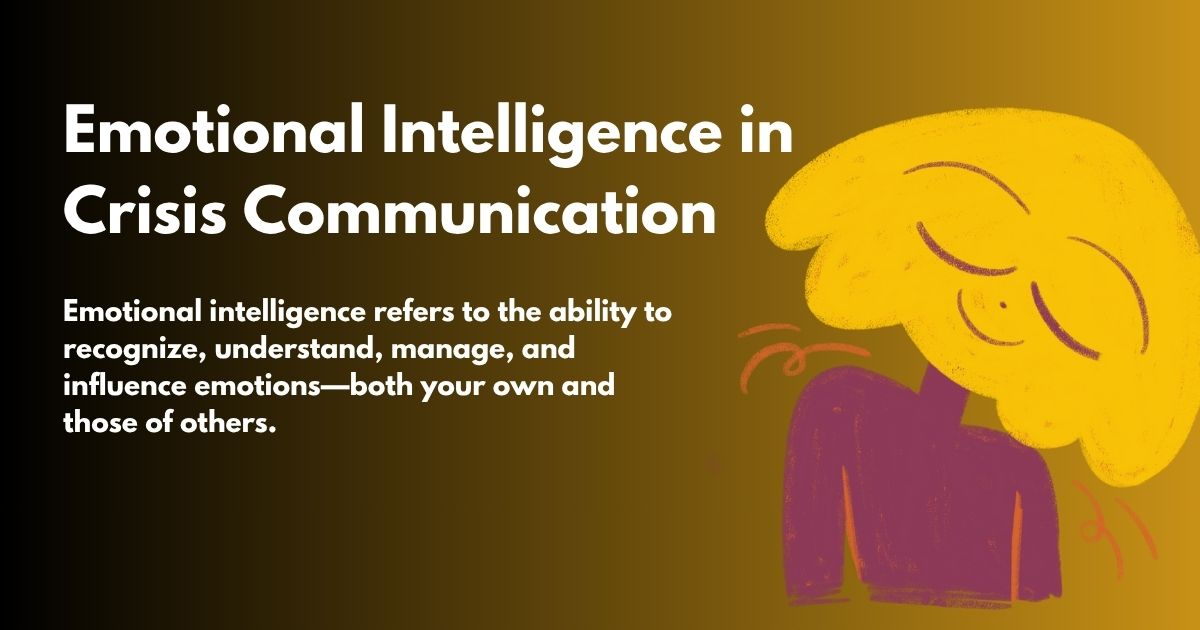
Emotional intelligence enables leaders to communicate effectively during crises by balancing empathy, clarity, and control. It builds trust, shapes message framing, and helps organizations manage fear, maintain credibility, and recover stronger from disruptions.
How leaders communicate during a disaster dictates the final outcome for their organization. One single element separates highly effective communicators from the rest of the pack: emotional intelligence. When sudden disruptions strike—whether a natural disaster, a corporate scandal, or an SM crisis—intelligence turns fear and confusion into clarity and trust.
In today’s fast-paced world, crises can emerge at any moment and from nearly any direction: a product recall trending on social media, a CEO’s off-the-cuff remark causing uproar, a data breach shaking customer confidence, or an unforeseen global event unraveling business continuity. In such high-stakes moments, information alone isn’t enough—people crave connection, reassurance, and genuine understanding from leadership. This is where intelligence becomes invaluable.
History has repeatedly shown that organizations with emotionally intelligent leaders are better equipped to weather and recover from crises. Consider, for instance, the difference between brands that ignore customer anger—resulting in long-lasting reputational damage—and those that offer an authentic apology, acknowledge the emotional impact, and actively engage with stakeholders. Emotionally intelligent crisis communication doesn’t only inform; it forges trust, mends relationships, and often guides organizations toward a stronger future.
Effective use of emotional intelligence in crisis communication can transform potential PR disasters into opportunities for growth and renewal. It empowers leaders to recognize not just what people need to know, but also what they feel, and how those feelings must be addressed for authentic recovery.
This comprehensive guide explores how intelligence drives successful crisis communication. We will examine how it shapes leadership tone, influences stakeholder reactions, and improves overall market management. You will learn the core components of intelligence and discover actionable ways to cultivate this vital skill to navigate severe turbulence.
What Is Emotional Intelligence?
Emotional intelligence goes far beyond simply being sensitive or having “people skills.” At its core, intelligence is a measurable ability to recognize, evaluate, and appropriately respond to emotions in ourselves and others. This ability is central to successful communication, especially when stakes are high—as in an SM crisis or urgent market management scenario. It involves not only understanding emotional cues in conversations but also predicting how those emotions will affect decision-making, trust, and behavior.
For leaders, intelligence means being able to read a room—whether physical or virtual—and shift their approach in real time to address fear, skepticism, anger, or confusion. For example, a CEO managing a product safety incident with high intelligence will address both the facts and the community’s feelings: acknowledging the seriousness, validating public concern, and mapping out a plan for restoring confidence. Staff leaders with emotional intelligence can ease internal anxieties by showing vulnerability and being honest about uncertainties, drawing their teams together during hardship.
Consider teams that lack intelligence: communication quickly devolves into blame or defensiveness, stakeholders feel ignored, and rumors escalate unchecked. In contrast, emotionally intelligent teams listen actively, ask clarifying questions, and proactively share updates—contributing to a culture of safety and resilience.
By fostering emotional intelligence, organizations enable their people to remain steady while navigating crises, adapt leadership messages to shifting moods, and create a feedback-rich environment that encourages learning from every event. This robust emotional infrastructure ultimately underpins effective crisis recovery, market management, and long-term brand strength.
intelligence represents the active ability to recognize, understand, manage, and influence human emotions. This applies to your own internal emotions and the feelings of everyone around you. Psychologist Daniel Goleman famously broke intelligence down into five distinct pillars.
The Five Pillars of Emotional Intelligence
When evaluating intelligence, you must look at these five specific areas:
- Self-awareness: This means recognizing your own emotional state and understanding how it impacts your decisions.
- Self-regulation: This involves managing your emotions effectively, especially when facing high-stress scenarios.
- Motivation: This requires directing your emotions toward specific goals using optimism and relentless persistence.
- Empathy: This is the capacity to understand the emotions of other people and respond to them appropriately.
- Social skills: This entails managing complex relationships, building networks, and communicating clearly.
When you apply these traits to crisis communication, leaders can deliver messages that resonate deeply. High emotional intelligence calms public fears and maintains organizational credibility. Good market management relies entirely on a foundation of strong intelligence.
Why Emotional Intelligence Matters in Crisis Communication

In moments of crisis, how a leader communicates can have long-lasting effects on an organization’s reputation and stakeholder relationships. intelligence serves as the glue that binds rational response with an authentic human touch, ensuring crisis response is both effective and compassionate. At its core, intelligence empowers communicators to tune into the undercurrents of public sentiment—acknowledging pain, fear, and uncertainty while projecting optimism and reassurance.
Emotional intelligence matters in crisis communication because it bridges the gap between facts and feelings. For example, when a company faces a major data breach, leaders with high intelligence will not only share technical solutions but also proactively address clients’ anxieties about privacy and safety. They might say, “We know this news is unsettling. Here’s how we’re protecting you and what you can expect next.” This dual focus on action and reassurance helps calm audiences and builds trust.
Another example can be seen in the airline industry: when flight disruptions occur, emotionally intelligent staff de-escalate travelers’ frustration with measured, empathetic explanations rather than rote apologies. They listen actively, validate customer feelings, and offer practical solutions—turning an angry confrontation into a constructive exchange.
When teams are under pressure, emotionally intelligent leaders maintain clarity and direction, ensuring collaboration is strengthened rather than fractured. Teams led with empathy and transparency recover quickly, adapt rapidly, and maintain morale through stressful times. From internal team huddles to press conferences, intelligence guides leaders to read the room, pivot messaging as needed, and engender unity even in adversity.
Ultimately, intelligence fortifies every aspect of crisis communication, ensuring messages aren’t just delivered, but truly heard and believed.
Emergencies automatically trigger panic, fear, anger, and deep confusion among stakeholders. A communicator with high intelligence never ignores these intense feelings. Instead, they validate the emotions and respond with carefully calibrated sensitivity.
Core Benefits of Emotional Intelligence
Here are the primary reasons emotional intelligence dramatically enhances crisis communication:
- Builds Deep Trust: Stakeholders naturally trust leaders who demonstrate genuine empathy and a clear understanding.
- Strengthens Leadership Presence: Emotional intelligence enables leaders to stay calm and project competence during an SM crisis.
- Improves Message Clarity: Leaders with high intelligence tailor their words to meet specific emotional needs.
- Facilitates Team Collaboration: Internal teams work better when leaders manage emotional responses constructively.
- Mitigates Active Conflict: By recognizing emotional triggers, leaders diffuse tension and resolve public disputes quickly.
Sometimes, a crisis stems from deliberate attacks by competitors. You can learn more by understanding negative marketing tactics and how they manipulate public emotion. Emotional intelligence helps you spot these attacks and respond without taking the bait.
The Link Between Emotional Intelligence and Message Framing
Emotional intelligence is a core foundation for effective message framing in crises. When a leader communicates during a high-stress event, how a message is constructed often matters as much as the message itself. The most emotionally intelligent communicators don’t simply recite facts—they listen to the emotional “temperature” of their audience, tailor their response to fit their audience’s needs, and intentionally choose words that comfort, clarify, and motivate.
Emotionally intelligent message framing involves balancing honesty with hope and directness with empathy. For example, when faced with layoffs, a leader who frames the news with intelligence doesn’t minimize the pain or make empty promises. Instead, they might say, “We know this change creates real uncertainty for you and your families. Here is how we are supporting you and the steps we are taking to help our team transition.” This message acknowledges the reality, reflects genuine compassion, and maintains organizational credibility.
Effective message framing also anticipates how facts might be misinterpreted or stir anxiety. Emotionally intelligent communicators avoid using overly technical language or jargon that might confuse or distance their audience. They ensure their messaging is clear, transparent, and addresses unspoken fears.
Leaders should also prepare for ripple effects—a poorly framed message can quickly escalate a crisis by inspiring backlash or spreading misinformation. By using intelligence, leaders can turn even difficult announcements into opportunities to reinforce trust and connection, demonstrate transparency, and show that they value and understand their community’s perspective.
Low vs. High Emotional Intelligence Framing
|
Low Intelligence Response |
High Intelligence Response |
Impact on Market Management |
|---|---|---|
|
“We are in serious trouble right now.” |
“This is a serious challenge, but we are actively working on solutions.” |
Projects control and optimism. |
|
“There is absolutely nothing to worry about.” |
“We understand your concerns and are addressing them carefully.” |
Validates fear while offering reassurance. |
|
“Stop listening to the rumors online.” |
“We want to provide you with the verified facts regarding this situation.” |
Establishes authority without being aggressive. |
During any severe event, message framing becomes your most critical tool. How you construct and deliver a message dictates the public response. intelligence helps you frame these messages to balance stark realism with necessary reassurance.
Reframing for Better Impact
A subtle shift in wording changes everything. intelligence guides this reframing process to maintain total transparency without triggering panic.
Table: Low vs. High Emotional Intelligence Framing
|
Low Emotional Intelligence Response |
High Emotional Intelligence Response |
Impact on Market Management |
|---|---|---|
|
“We are in serious trouble right now.” |
“This is a serious challenge, but we are actively working on solutions.” |
Projects control and optimism. |
|
“There is absolutely nothing to worry about.” |
“We understand your concerns and are addressing them carefully.” |
Validates fear while offering reassurance. |
|
“Stop listening to the rumors online.” |
“We want to provide you with the verified facts regarding this situation.” |
Establishes authority without being aggressive. |
Self-Awareness: The Foundation of Crisis Leadership
Self-awareness is the cornerstone of intelligence, especially for those tasked with steering an organization through crisis. It means more than recognizing when you are feeling anxious or stressed—it’s about understanding exactly how those internal emotions influence your words, tone, and actions in real time. Leaders with high self-awareness can “take their own temperature” before communicating, ensuring that their personal state does not negatively affect the message they deliver.
In the heat of an SM crisis, a lack of self-awareness can lead to unintended consequences, such as making defensive statements, dismissing valid concerns, or projecting frustration onto stakeholders. For example, a spokesperson who doesn’t recognize their own irritation might come across as combative during a press conference, causing audiences to distrust them or feel blamed for the crisis. On the other hand, a leader who checks in with their emotions might identify their anxiety and intentionally pause, breathe, or seek input from a trusted advisor before responding, resulting in a steadier, more composed delivery.
Self-awareness also involves situational evaluation: the ability to assess both the internal dynamics of a team and the external public mood. Before stepping into the spotlight, emotionally intelligent leaders take a moment to reflect on questions like: “What am I feeling right now, and how could that impact my communication?” and “What emotions seem to be dominating my team or audience, and how should I adjust my message?”
Practical techniques to boost self-awareness include keeping a crisis journal, seeking feedback after public communications, and practicing “self-talk” by briefly articulating emotions—such as noting, “I’m nervous because the stakes are high”—before engaging with the media or stakeholders. By consistently exercising these habits, leaders increase their ability to stay grounded, adapt their responses, and ultimately build trust even in the most volatile situations.
Self-awareness gives leaders the power to assess how their internal state alters their public communication. In high-pressure moments, unchecked emotions like anger or deep frustration cause massive damage. These raw emotions lead to rash statements, misinformation, and misinterpretation.
Practicing Self-Awareness During an SM Crisis
Leaders with high emotional intelligence always reflect before they react. They understand their specific emotional triggers and stay hyper-mindful of their vocal tone and body language.
For instance, during a live press conference addressing an SM crisis, a self-aware leader recognizes their own rising anxiety. They will take a deliberate moment to breathe or pause. This small act of intelligence ensures their delivery remains composed and authoritative.
Empathy: Understanding the Emotional Pulse of the Audience

Empathy stands out as the most critical component of emotional intelligence during a public emergency. It allows communicators to step directly into the audience’s shoes. With high emotional intelligence, you can tailor your message precisely to the current emotional climate.
Executing Empathetic Communication
Empathetic communication requires deliberate action. You must show the audience that you truly understand their perspective.
- Acknowledge people’s specific fears and frustrations immediately.
- Use inclusive language like “we,” “us,” and “together.”
- Listen actively to stakeholder feedback without acting defensively.
- Show genuine concern through your tone, written words, and follow-up actions.
When leaders display high intelligence through empathy, it humanizes the entire organization. It strengthens vital emotional connections and vastly enhances public credibility.
Self-Regulation: Managing Emotional Responses Under Pressure
Severe crises provoke incredibly intense emotional responses from everyone involved. Self-regulation helps leaders stay perfectly centered. High intelligence prevents reactive, defensive, or angry outbursts that can destroy market management efforts.
Strategies for Self-Regulation
In high-stakes settings, self-regulation requires intense discipline. Emotional intelligence provides the framework for this discipline.
- Avoid defensiveness when facing harsh public criticism.
- Take a thoughtful, measured pause before answering aggressive questions.
- Respond to blatant misinformation with patience rather than visible frustration.
- Use internal stress-reduction strategies to maintain public composure.
By modeling calmness and resilience, leaders dictate the emotional tone of the entire organization. This is intelligence in pure action.
Motivation and Purpose-Driven Messaging
Highly motivated leaders maintain strict focus and optimism, even while facing extreme adversity. Emotional intelligence helps them inspire others by emphasizing shared goals. They keep the long-term vision alive despite short-term turmoil.
Crafting Purpose-Driven Messages
Purpose-driven crisis communication acts as an anchor for the public. intelligence ensures these messages resonate with the audience’s core values.
- Reinforce your core organizational values repeatedly.
- Offer realistic hope rather than empty promises.
- Highlight collective efforts and showcase internal progress.
This approach inspires total confidence. Emotional intelligence encourages unity as the organization navigates the crisis together.
Social Skills: Coordinating Teams and Managing Stakeholder Communication
Social skills are absolutely essential for navigating complex interpersonal dynamics during an SM crisis. Emotional intelligence allows you to manage these relationships effectively.
Leveraging Social Skills for Market Management
Emotionally intelligent leaders leverage their social skills to align internal teams and coordinate external responses. This requires clear, respectful communication and active conflict resolution.
You must negotiate carefully with external stakeholders and maintain transparent dialogue with the media. Good emotional intelligence ensures your market management strategy remains consistent across every single channel.
Real-World Examples of Emotional Intelligence in Crisis Communication
History provides excellent examples of emotional intelligence saving an organization’s reputation. We can learn massive lessons from studying these specific cases.
The Tylenol Poisoning Crisis
In 1982, Johnson & Johnson faced a terrifying situation when someone tampered with Tylenol bottles. The company’s leaders used incredible emotional intelligence to manage the fallout. They expressed deep empathy for the victims, took immediate financial hits to pull products, and communicated transparently. This remains a masterclass in market management.
Sometimes, brands intentionally use controversial tactics to stir up engagement. You can review real examples of negative marketing that nailed it to see how emotional intelligence plays a role in deliberately provoking a reaction.
Building Emotional Intelligence for Crisis Readiness
Developing strong emotional intelligence does not happen overnight. It requires intentional practice, deep reflection, and a willingness to grow. Leaders must actively enhance their emotional intelligence to prepare for future crises.
Actionable Steps to Improve Emotional Intelligence
- Regular Self-Assessment: Use feedback loops to gauge your current emotional awareness.
- Mindfulness Training: Practice techniques that improve your daily emotional regulation.
- Active Listening Exercises: Practice listening entirely without interrupting or silently judging the speaker.
- Scenario Simulations: Rehearse your crisis responses while focusing specifically on your emotional tone.
- Empathy Practice: Engage constantly with diverse groups to broaden your perspective-taking abilities.
By embedding these practices into daily routines, leaders master the logistical and emotional demands of an SM crisis.
Emotional Intelligence in Digital Crisis Communication

With the absolute dominance of digital communication, emotional intelligence must extend to all online platforms. An SM crisis requires a completely different approach than a traditional PR issue.
Adapting Emotional Intelligence for Digital Platforms
Leaders must consider the specific nuances of digital platforms to maintain effective market management.
- Tone of Written Communication: Text completely lacks vocal tone and facial expression. You must convey emotional intelligence explicitly through careful word choice.
- Timely Responses: A prompt, thoughtful reply demonstrates high emotional intelligence and prevents misinformation from spreading.
- Managing Public Backlash: Responding with humility rather than defensiveness immediately de-escalates online outrage.
Emotionally intelligent digital communication requires constant awareness of public sentiment. You must tailor your responsiveness to highly diverse online audiences.
Measuring the Impact of Emotional Intelligence in Crises
Though emotional intelligence feels intangible, you can measure its direct impact on your organization. Effective market management requires tracking these specific metrics after an SM crisis concludes.
Key Performance Indicators for Emotional Intelligence
Organizations that utilize emotional intelligence tend to recover much faster than those that ignore it. You can measure this success through several avenues.
- Conduct thorough stakeholder trust surveys.
- Track internal employee morale indicators.
- Perform comprehensive media sentiment analysis.
- Measure your total crisis recovery timelines against industry benchmarks.
Frequently Asked Questions (FAQ)
1. How does emotional intelligence help during an SM crisis?
Emotional intelligence helps leaders remain calm and empathetic when social media backlash occurs. It prevents defensive, angry reactions that usually make an SM crisis much worse. Instead, leaders can validate public concerns and rebuild trust quickly.
2. What is the most important part of emotional intelligence in market management?
Empathy is the most crucial element for effective market management during a disruption. When you genuinely understand your customers’ frustrations, you can tailor your recovery campaigns to address their exact needs. This prevents tone-deaf marketing missteps.
3. Can emotional intelligence prevent a crisis from happening?
While it cannot stop natural disasters, high emotional intelligence can prevent internal PR disasters. Self-aware leaders catch poor decisions, offensive messaging, or toxic workplace issues before they become public scandals.
4. How do I show emotional intelligence if our social media is hacked?
You must communicate transparently and quickly without blaming your audience for the confusion. If you need help securing your accounts after an attack, review this guide on handling a social media security breach effectively. Acknowledge the frustration the breach caused your followers.
5. How do you measure emotional intelligence in leadership?
You measure it by observing how leaders react under extreme pressure and scrutiny. Leaders with high emotional intelligence listen more than they speak, admit their mistakes openly, and keep their teams focused.
6. Why does a lack of emotional intelligence destroy trust?
When leaders lack emotional intelligence, they often come across as cold, robotic, or entirely self-serving. During a crisis, the public needs to feel heard and protected. Cold responses invalidate their feelings and instantly shatter any existing brand loyalty.
7. How should we format our digital responses with emotional intelligence?
Digital responses should use inclusive language, clear formatting, and a highly empathetic tone. To ensure your entire digital strategy aligns with these principles, consult a complete guide for digital media strategy. Always prioritize clarity and human connection over corporate jargon.
8. Can emotional intelligence be learned, or is it a natural trait?
Emotional intelligence can absolutely be learned and developed over time. Through active listening exercises, mindfulness, and empathy training, any leader can dramatically improve their emotional intelligence.
9. How does emotional intelligence apply to writing public statements?
It dictates the tone, framing, and level of accountability within the text. If you want to see how to structure these communications properly, learn how to write an effective press release that resonates. Emotionally intelligent statements focus on the victims or affected parties first.
10. What happens if a leader loses self-regulation during a crisis?
If a leader loses self-regulation, they often act defensively, argue with the media, or insult stakeholders. This essentially creates a secondary crisis on top of the original one. It completely derails market management efforts and prolongs the recovery period.


I’m a passionate digital strategist and content creator focused on crisis communication, social media management, and online reputation. At SMCrisis, I share insights, tips, and real-world strategies to help brands navigate challenges, protect their image, and build trust in the digital space. My goal is to make crisis management simple, smart, and actionable for every business.










No Comments