


This guide explains how to craft an effective public apology on social media during a crisis, covering timing, structure, platform-specific strategies, common mistakes, and recovery steps to rebuild trust, protect reputation, and manage viral backlash.
A single misstep can spiral into a fully developed social media crisis within hours. A poorly worded tweet, an insensitive post, or a tone-deaf response can damage your reputation and alienate your audience instantly. When errors occur, a well-designed public apology on social media can mean the difference between swift recovery and long-term damage to your brand.
Delivering a public apology on social media requires a delicate balance between authenticity, responsibility, and strategic communication. This comprehensive guide will walk you through the essential elements of preparing an effective response. You will learn how to rebuild confidence, show real remorse, and move forward constructively after a major misstep.
Understanding When a Public Apology on Social Media Is Necessary
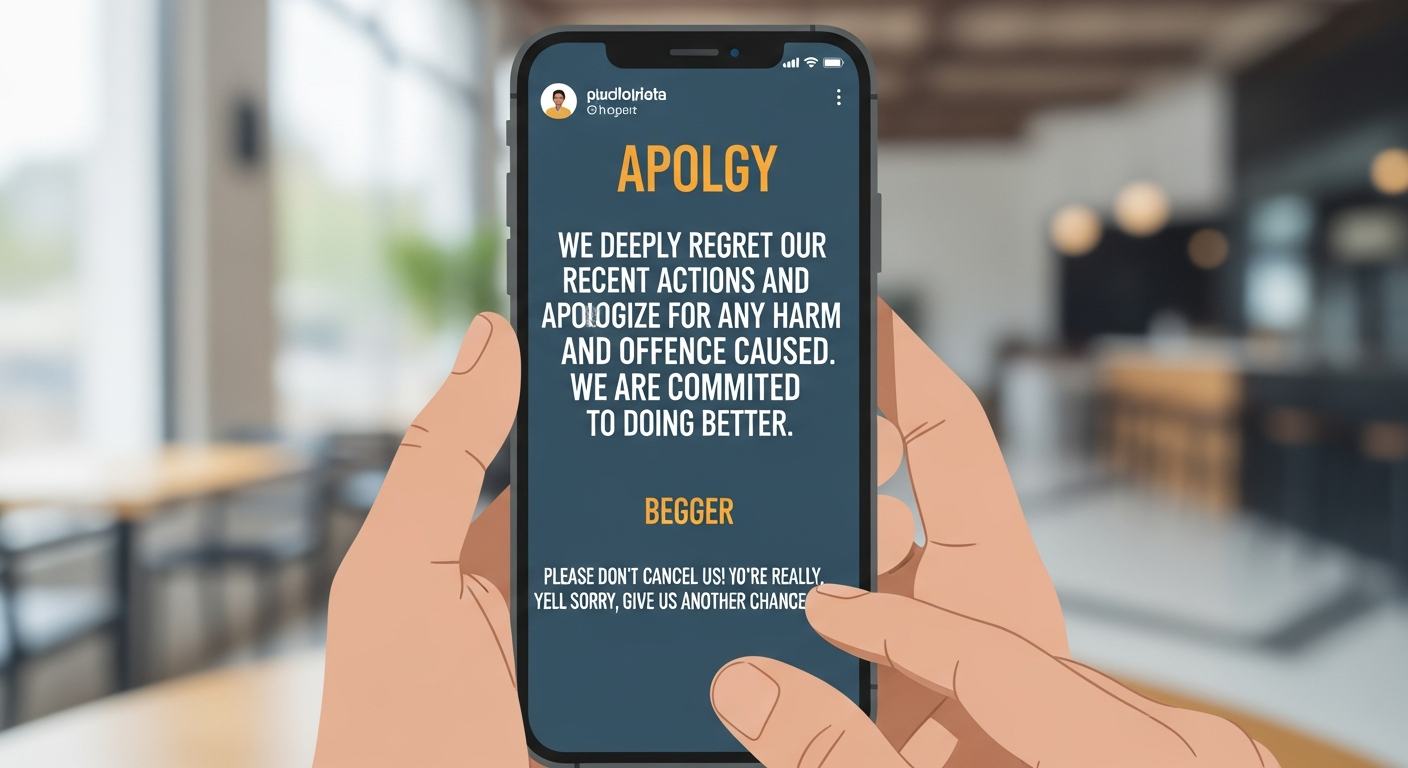
Not every mistake requires a massive public broadcast. Understanding when to issue a public apology on social media versus handling things privately can save you from unnecessary scrutiny. You must address legitimate concerns appropriately without drawing unwanted attention to minor errors.
A public apology on social media becomes absolutely necessary when your actions or words cause widespread harm, offense, or misunderstanding. If your original post generated significant negative momentum, you are likely facing a social media crisis that requires a public response.
Signs You Need a Public Apology on Social Media
Look for these specific indicators that suggest you need to address your audience publicly:
- Multiple people express deep hurt, anger, or profound disappointment regarding your content.
- Users widely share your content alongside highly negative commentary.
- Major media outlets or industry influencers begin discussing your specific mistake.
- The issue negatively affects a specific marginalized group or targeted community.
- Your actions directly contradict your previously stated core brand values.
When Private Communication Might Be More Appropriate
Sometimes a direct message or private email works much better than a public statement. Consider private outreach when the issue involves a very small number of people. If the situation contains sensitive personal information, handle it behind closed doors. You should also use private channels when the required explanation involves intricate details that simply would not fit well in a standard social media post.
Public vs. Private Apology Criteria
|
Criteria |
Public Apology on Social Media |
Private Apology |
|---|---|---|
|
Audience Size |
Large, widespread audience |
Single user or small group |
|
Visibility of Error |
The mistake was posted publicly |
The mistake happened in DMs or email |
|
Media Attention |
Press and influencers are involved |
No external media coverage |
|
Impact Level |
Brand reputation is actively dropping |
Contained customer service issue |
The Anatomy of an Effective Public Apology on Social Media
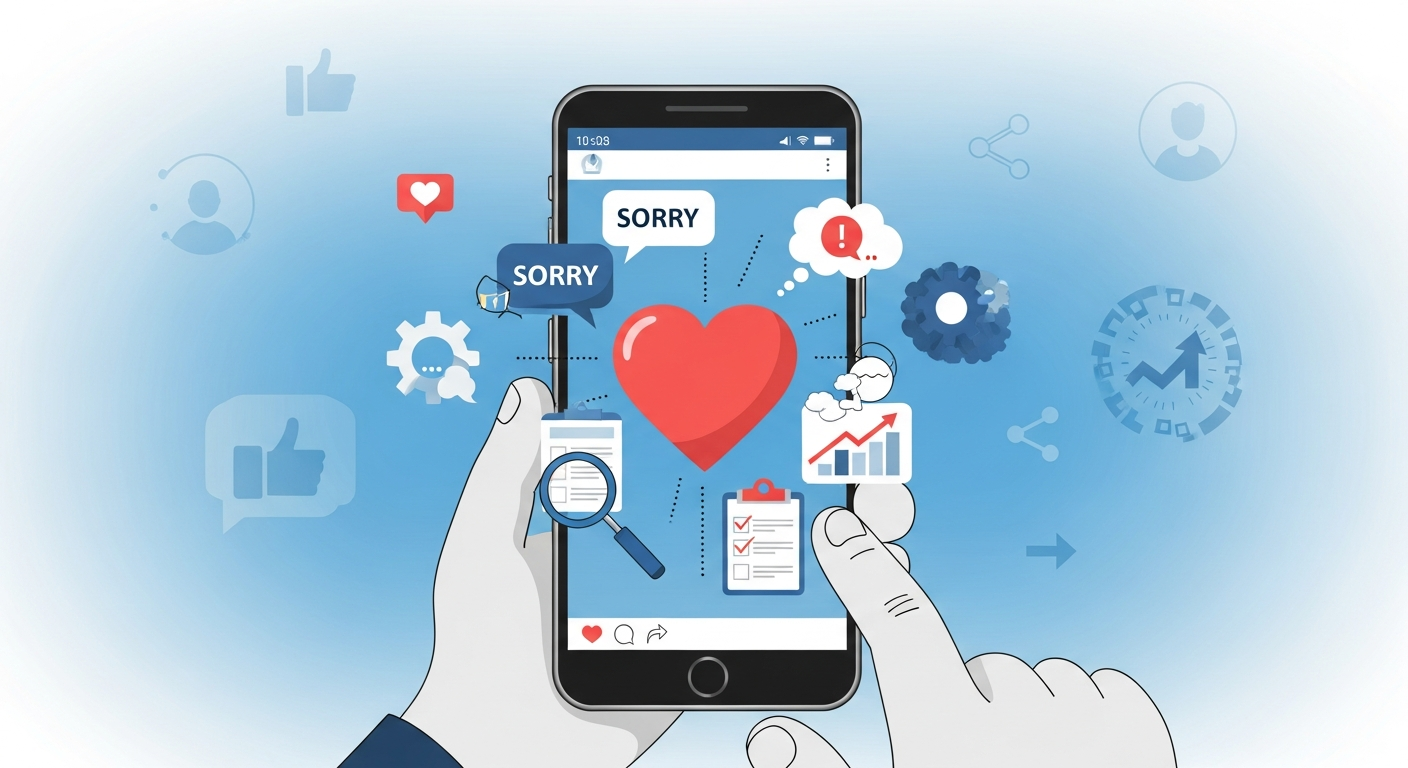
A strong public apology on social media follows a highly specific structure. This structure addresses the harm caused, takes absolute responsibility, and outlines concrete steps for future improvement. Each element plays a crucial role in rebuilding customer trust.
Start with Clear Acknowledgment
Begin your public apology on social media by clearly stating exactly what you did wrong. Avoid using vague, evasive language like “if anyone was offended” or “mistakes were made.” Instead, specifically acknowledge the exact action, video, or statement that caused the public harm.
For example, rather than saying “I’m sorry if my recent post upset people,” try a direct approach. Say, “I am sorry for sharing content that perpetuated harmful stereotypes about this specific community.” This level of clarity shows your audience that you fully understand the nature of the social media crisis.
Take Full Responsibility
Accept complete, unwavering responsibility for your actions. You must do this without making excuses or shifting the blame onto other team members. Avoid phrases like “I was having a bad day” or “That is not who I really am.” These function as primary explanations for your behavior, but the public perceives them as defensive excuses.
Own your mistake directly and plainly. State clearly: “I made a poor decision when I posted that content. There is absolutely no excuse for my actions, and I take full responsibility for the fallout.”
Express Genuine Remorse
Your public apology on social media should convey authentic, heartfelt regret for the harm caused. Focus entirely on the actual impact of your actions on others rather than how the stressful situation affects you. Show your community that you understand why people feel upset.
Explain Your Actions (Without Making Excuses)
Sometimes providing background context helps people understand how the mistake actually happened. However, you must be incredibly careful not to turn these explanations into flimsy excuses. If you choose to explain the internal process that led to the error, keep it very brief. Make it crystal clear that the internal explanation does not justify the external harm.
Outline Concrete Steps for Improvement
People want to see that you are genuinely committed to doing better. Outline specific, measurable actions you will take to prevent similar mistakes in the future. This might include mandatory team education, strict policy changes, or financial donations to relevant causes. When people read a crisis case study, they look for the specific actions the company took to fix the root problem.
Platform-Specific Considerations for a Public Apology on Social Media
Different digital platforms possess unique cultural characteristics. These quirks dictate how you should craft and deliver your public apology on social media. Understanding these specific nuances helps ensure your crucial message resonates effectively with your target audience.
Twitter/X Apologies
Twitter’s strict character limit requires concise, highly impactful language. If your public apology on social media runs longer than a single standard tweet, you must use a threaded format. Number your tweets (1/5, 2/5, etc.) to help readers easily follow the complete message. Pin your primary apology tweet to the very top of your profile to ensure maximum visibility.
Instagram Apologies
Instagram offers significantly more space for detailed explanations through main feed captions and temporary Stories. Use the main feed caption for your permanent, official apology. Consider addressing additional, minor points in your Stories.
Choose your visual element carefully for the main feed. A simple, plain text-based graphic works best. Trying to maintain your usual highly stylized aesthetic while apologizing often comes across as insincere and deeply tone-deaf.
Facebook Apologies
Facebook’s traditional format allows for longer-form apologies. You can include much more detail and background context here. Use this robust space to provide a comprehensive response to the social media crisis. Keep your paragraphs very short and highly readable to accommodate mobile users.
LinkedIn Apologies
Professional apologies on LinkedIn must maintain a strict, business-appropriate tone while still remaining genuine. Focus on how your actions directly affected your professional industry community. Highlight exactly what your corporate leadership team is learning from the difficult experience.
TikTok and Video Apologies
Video apologies often feel much more personal and authentic. However, they also require extremely careful preparation. Practice your key speaking points beforehand, but avoid sounding like you are reading directly from a robotic script. Maintain steady eye contact with the camera lens and speak clearly.
Common Apology Mistakes to Avoid During a Social Media Crisis
Many public apologies fail miserably because they include toxic elements that undermine their overall effectiveness. Recognizing these common, avoidable mistakes helps you craft a much more successful response during a massive social media crisis.
The Non-Apology Apology
Phrases like “I am sorry if you were offended” shift the responsibility directly to the audience. This implies the audience’s reaction is the problem, rather than your original action. These non-apologies almost always make the situation much worse by appearing totally insincere.
Playing the Victim
Focusing heavily on how the public backlash affects you alienates your audience even further. Statements like “I am getting terrible messages” might be entirely true, but they should never act as the central focus of your apology. Centering yourself during a social media crisis destroys your credibility.
Bringing Up Past Good Deeds
Reminding angry people of your previous positive actions or charitable donations appears highly manipulative. Let your public apology on social media stand entirely on its own merit. Do not try to balance the scales by pointing to your past good behavior.
The Role of Timing in a Public Apology on Social Media
When you apologize matters almost as much as the actual words you use. Acting quickly shows your audience you take the situation very seriously. However, rushing blindly can lead to poorly crafted responses that actively worsen the social media crisis.
Aim to respond within 24 to 48 hours of recognizing the need to apologize. This specific timeframe allows you to craft a highly thoughtful response while still demonstrating necessary urgency. Sometimes the fear of saying the wrong thing paralyzes leadership teams. Complete silence almost always makes situations worse.
Analyzing a Crisis Case Study
Reviewing a previous crisis case study helps brands understand the dynamics of public outrage. Sometimes, brands deliberately walk the line of controversy to generate buzz, which can easily backfire into a real crisis. To understand how deliberate provocation works, you can explore understanding negative marketing and its risks.
When a brand miscalculates, they must pivot instantly. Analyzing real examples of negative marketing that crossed the line demonstrates why a swift public apology on social media is the only viable exit strategy. A strong crisis case study always highlights the pivot from mistake to accountability.
Following Up After Your Public Apology on Social Media

Your public apology on social media represents just the very beginning of rebuilding customer trust. How you behave in the weeks after apologizing matters significantly more than the apology itself.
Follow through relentlessly on the specific commitments you made. If you promised to educate your staff, share updates on that training. Not everyone will accept your apology immediately, and you must accept that reality. Respond to any ongoing public criticism with quiet patience and deep humility.
Frequently Asked Questions (FAQ)
1. What is the first thing I should do when a social media crisis hits?
Stop all scheduled promotional posts immediately to avoid looking insensitive. Gather your core team to assess the scope of the damage. If you suspect malicious actors caused the issue, review protocols for a social media security breach to secure your accounts.
2. How long should my public apology on social media be?
Keep your apology concise but highly comprehensive. Aim for three to four short paragraphs that address the mistake, take accountability, and outline your next steps. Rambling apologies often sound defensive.
3. Should I delete the original offensive post?
Yes, you should generally delete the offensive post to stop it from spreading further. However, you must explicitly mention in your public apology on social media that you deleted it and explain exactly why you did so.
4. How can I align my whole team to prevent a future social media crisis?
You need strict, clear communication guidelines that apply to everyone representing the brand. Utilizing a complete guide for digital media strategy helps standardize your brand voice. This prevents rogue employees from posting unsanctioned, risky content.
5. Should I allow comments on my public apology post?
Yes, leaving comments open demonstrates true transparency and a willingness to listen. Closing the comments makes it look like you are hiding from public accountability. You must let the audience express their remaining frustrations.
6. Do I need to issue a formal press release along with my social post?
For a severe social media crisis that impacts stock prices or major partnerships, a formal press release is absolutely necessary. Learning how to write an effective press release ensures that traditional journalists quote your exact narrative accurately.
7. What makes a crisis case study useful for my brand?
A crisis case study provides a proven blueprint of what works and what fails during a public relations disaster. By studying how other companies managed their apologies, you can avoid making their exact same historical mistakes.
8. Can a public apology on social media actually save a brand?
Absolutely. Consumers are often highly forgiving if the apology is deeply authentic and followed by real, measurable changes. A well-handled social media crisis can actually increase long-term brand loyalty by showcasing your core integrity.
9. Why do people hate the phrase “I’m sorry if you were offended”?
This phrase actively places the blame on the audience’s emotional reaction rather than the brand’s original action. It invalidates their legitimate feelings. A true public apology on social media owns the action itself, not the reaction.
10. How soon after the apology can I return to normal posting?
You should wait until the highly negative sentiment visibly dies down, which usually takes a few days to a week. When you do resume normal posting, ease back into it with gentle, value-driven content rather than aggressive sales pitches.


I’m a passionate digital strategist and content creator focused on crisis communication, social media management, and online reputation. At SMCrisis, I share insights, tips, and real-world strategies to help brands navigate challenges, protect their image, and build trust in the digital space. My goal is to make crisis management simple, smart, and actionable for every business.











No Comments