


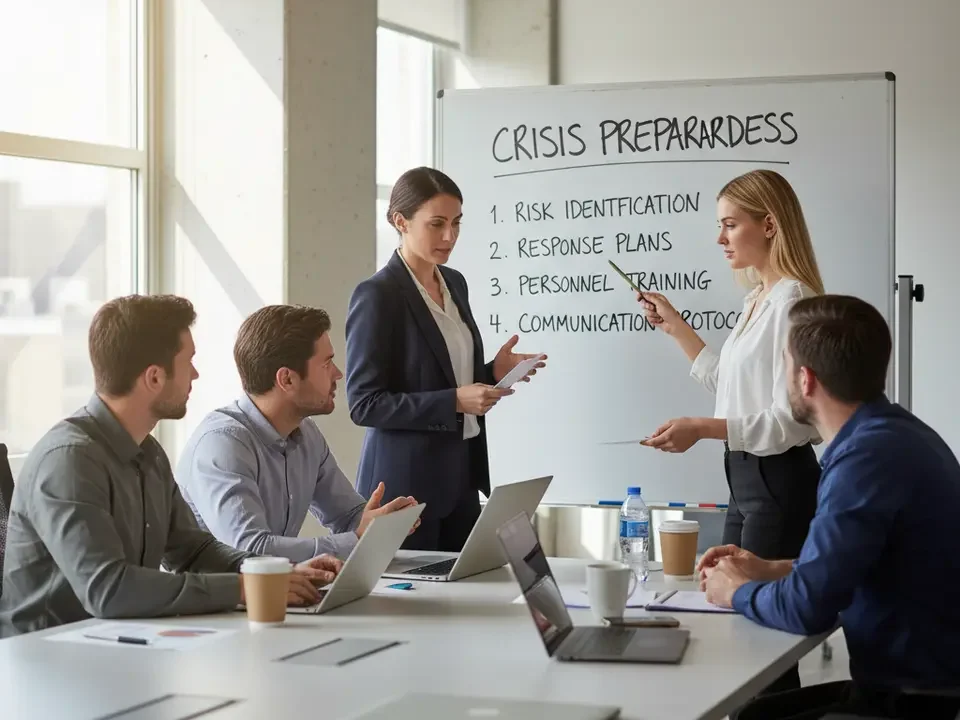
A crisis management framework helps organizations prepare for, respond to, and recover from disruptions. It includes risk assessment, crisis teams, communication plans, technology integration, training, and continuous improvement to ensure resilience and business continuity.
In today’s digital landscape, organizations face an array of unexpected disruptions from cyberattacks and supply chain breakdowns to natural catastrophes and reputational crises. Establishing a robust crisis management framework empowers teams to act swiftly, coordinate effectively, and mitigate damage before chaos escalates. As enterprises and public agencies contend with heightened interconnected risks, having a well-defined structure for prevention, response, and recovery is not optional it s essential. A comprehensive crisis management framework ensures that decision makers have clear roles, reliable communication channels, and actionable playbooks to keep stakeholders safe, maintain business continuity, and protect brand integrity.
This article offers a step-by-step guide for building a resilient crisis management framework tailored to your organization’s unique needs. We will explore how to assess vulnerabilities, establish cross-functional teams, craft communication plans, leverage technology, and instill a culture of continuous improvement. By the end of this deep dive, you’ll have a clear blueprint to follow and resources to consult, whether you are part of a multinational corporation, a government agency, or a small business. Read on to discover how to transform uncertainty into coordinated action and emerge stronger, more agile, and better prepared for whatever the future holds.
Understanding Crisis Management

Crisis management revolves around the strategies and processes that organizations use to prepare for, respond to, and recover from disruptive events. Unlike routine risk management, where potential issues are identified and mitigated over time, crises demand rapid decision-making under high pressure. The goal of an effective crisis management framework is fourfold: protect human safety and well-being, defend organizational assets and reputation, maintain critical operations, and minimize financial or legal exposure.
At its core, a crisis management framework comprises three pillars:
- Preparation: Activities and policies developed well in advance to identify risks, structure response teams, and establish tools and procedures.
- Response: Immediate actions are taken once a crisis breaks out, including activating plans, communicating clearly, and deploying resources to limit impact.
- Recovery: Actions aimed at restoring normal operations, evaluating performance, and capturing lessons learned to bolster future resilience.
Today, organizations must adopt an all-hazards approach—planning for varied incidents such as cybersecurity breaches, environmental disasters, or leadership controversies. Effective preparation starts with a thorough risk assessment, but it extends into dynamic training, real-time monitoring, and scenario-based exercises. By embedding crisis readiness into your corporate culture, you ensure that teams are alert, empowered, and equipped to act without hesitation when unexpected events strike.
Furthermore, strong leadership commitment underpins every stage of the crisis lifecycle. When executives champion preparedness and allocate adequate budget and resources, it accelerates cross-functional collaboration. This holistic mindset transforms crisis management from a reactive function into a proactive discipline that strengthens organizational agility in today’s fast-paced environment.
Key Components of a Crisis Management Framework
Building a resilient crisis management framework relies on several interconnected components. Each element contributes to a cohesive ecosystem that supports rapid, well-coordinated responses. Below, we detail the five essential components your organization should develop.
1. Comprehensive Risk Assessment
Begin by conducting a detailed risk audit. Assemble a cross-disciplinary team—IT, operations, legal, HR, supply chain, and public relations—to identify potential threats. Gather historical incident data, refer to industry benchmarks such as those provided by the National Institute of Standards and Technology (NIST), and consult subject-matter experts. Rate each scenario on likelihood and potential impact, then visualize results in a heat map. Focus efforts on high-probability, high-impact risks to allocate resources efficiently.
2. Crisis Management Team Structure
A well-defined crisis management team (CMT) forms the backbone of your framework. Key roles include an executive sponsor, crisis manager, communications lead, legal advisor, technical support representative, and operations coordinator. Document clear escalation pathways, decision authority, and backup assignments for each position. This clarity minimizes confusion and ensures that if a primary point person is unavailable, their deputy can step in seamlessly.
3. Communication Protocols
Transparent, timely, and consistent communication builds trust internally and externally. Develop separate plans for employees, customers, investors, regulators, and media. Pre-approved messaging templates and a centralized media kit streamline dissemination. Institute a unified message matrix to ensure alignment across channels—email, SMS, social media, press releases, and internal portals. Identify spokespeople trained in media engagement best practices, and maintain a living Q&A document for commonly anticipated inquiries.
4. Technology and Collaboration Tools
Leverage technology to monitor risks, manage incidents, and facilitate real-time collaboration. Implement a crisis management platform with features for incident logging, task assignment, and audit trails. Integrate mass notification systems to broadcast alerts instantly. Use social media listening tools to track brand sentiment and emerging issues in real time. Secure video conferencing ensures uninterrupted leadership coordination when physical gatherings are impossible.
5. Training and Exercises
Practical drills are critical for embedding preparedness behaviors. Conduct tabletop exercises, live simulations, and full-scale drills tailored to various scenarios. Debrief thoroughly to identify process gaps, communication breakdowns, and technology failures. Use findings to refine playbooks, update protocols, and schedule recurring refresher sessions. Engaging facilitators from institutions like the Federal Emergency Management Agency (FEMA) can lend realism and best-practice insights.
Step-by-Step Implementation Guide

With core components defined, the next phase involves systematic implementation. The steps below provide a clear roadmap to establish and operationalize your crisis management framework.
Step 1: Identify and Prioritize Risks
Launch a risk workshop with your risk committee to brainstorm potential crisis scenarios—from data breaches and product recalls to extreme weather events and leadership scandals. Refer to internal incident logs, peer-reviewed studies, and guidelines from authoritative bodies like the World Health Organization (WHO). Assign each risk a likelihood score (1–5) and an impact score (1–5), then calculate a composite risk rating. Focus initial planning efforts on those scoring 16–25 (high probability/high impact), and schedule quarterly reviews to keep the risk register current.
Step 2: Draft Policies and Playbooks
For every prioritized risk, create a detailed crisis playbook. Define activation triggers, immediate response actions, escalation protocols, and metrics for evaluating effectiveness. Include resource inventories—emergency contacts, vendor lists, contractual obligations, and legal counsel. Store digital copies in a secure cloud portal, and maintain hard copies in strategic locations. Ensure that every stakeholder knows how to access these materials instantly.
Step 3: Assemble and Train the Crisis Management Team
Recruit experienced leaders and enhance your team with subject-matter experts. Host an onboarding workshop to outline roles, decision-making authority, and communication pathways. Draft an organizational chart illustrating reporting lines during an incident, and distribute it enterprise-wide. Run table-top exercises to simulate high-pressure scenarios, enabling team members to practice decision-making, information flow, and interdepartmental coordination.
Step 4: Build Your Communication Infrastructure
Implement mass notification systems capable of reaching staff and stakeholders through multiple channels—SMS, email, voice calls, and mobile app alerts. Preload messaging templates for common crisis types, and configure automated triggers for predefined thresholds, such as a spike in negative brand mentions. Set up social media monitoring dashboards to track relevant hashtags and sentiment trends. Provide media training for spokespeople, complete with media kits, Q&A documents, and mock press conferences.
Step 5: Conduct Realistic Drills and Simulations
Design exercises that replicate plausible crises: ransomware attacks, logistics breakdowns, environmental incidents, or leadership vacuums. Invite internal staff, executive leadership, and external partners—vendors, emergency responders, and legal counsel. After each drill, host a formal debrief: assess what went according to plan, note unexpected challenges, and identify technology or process deficiencies. Revise playbooks and procedures accordingly, then schedule refresher drills at least semiannually.
Step 6: Establish Early Warning and Monitoring Systems
Create real-time dashboards that aggregate data from security operations centers, supply chain monitoring tools, customer service portals, and social listening platforms. Define key risk indicators (KRIs), such as unusual network traffic patterns or a sudden rise in customer complaints. Configure automated alerts to notify the crisis management team immediately when KRIs breach set thresholds, prompting rapid assessment and escalation.
Step 7: Conduct Post-Incident Evaluation
Once the crisis stabilizes, initiate an After-Action Review (AAR). Collate timelines of critical decisions, stakeholder communications, resource deployments, and operational impacts. Discuss what was expected versus what occurred, analyze root causes, and agree on corrective actions. Document lessons learned in a consolidated report, update your crisis management framework, and share findings with all relevant parties to reinforce organizational resilience.
Best Practices for Crisis Preparedness
Beyond these structured steps, several best practices can amplify the effectiveness of your crisis management framework:
- Keep an up-to-date, redundant contact database for internal teams, vendors, regulators, and emergency services.
- Assign alternate owners for every critical role to ensure continuity if key personnel are unavailable.
- Foster preexisting relationships with media outlets, analysts, and community leaders to streamline information flow during incidents.
- Engage third-party experts—legal counsel, public relations firms, cybersecurity consultants—to supplement internal capabilities.
- Adopt an empathetic, customer-centric tone in all communications to protect and even enhance brand reputation amid adversity.
Embedding these best practices into daily operations helps transform crisis readiness from a static checklist into a living, adaptive culture. Encourage open feedback loops so employees feel empowered to report emerging risks.
Maintaining and Evolving Your Framework
Creating a crisis management framework is only the beginning. To remain effective, your framework must evolve alongside changing risk landscapes, technological advancements, and organizational growth. Here’s how to sustain momentum:
Continuous Risk Reassessment
Schedule quarterly risk reviews to incorporate new intelligence—regulatory updates, market shifts, or emerging threats. Update the heat map and reprioritize action plans. Maintain a living risk register accessible to key stakeholders, ensuring transparency and accountability.
Regular Training and Certification
Encourage team members to pursue professional certifications in crisis management, business continuity, or cybersecurity. Offer periodic refresher courses, tabletop drills, and full-scale simulations. Document training metrics—participation rates, performance scores, and identified gaps—to track improvements over time.
Technology Upgrades and Integrations
Monitor technological trends and integrate new solutions that enhance monitoring, communication, and data analysis. Evaluate emerging tools—AI-driven incident detection, augmented reality for remote assistance, or blockchain for secure data sharing—and pilot them in controlled environments before enterprise-wide deployment.
Stakeholder Engagement and Feedback
After each real incident or drill, solicit feedback from employees, customers, regulators, and partners. Use surveys, interviews, and focus groups to gauge perceptions, identify blind spots, and capture improvement ideas. Incorporate this input into annual framework reviews.
Governance and Reporting
Report on crisis readiness metrics to senior leadership and the board annually. Highlight key achievements—reduced response times, improved training outcomes, or successful drills—and outline areas for investment. Strong governance ensures ongoing support, budget allocation, and alignment with organizational objectives.
Common Mistakes to Avoid When Building a Crisis Management Framework
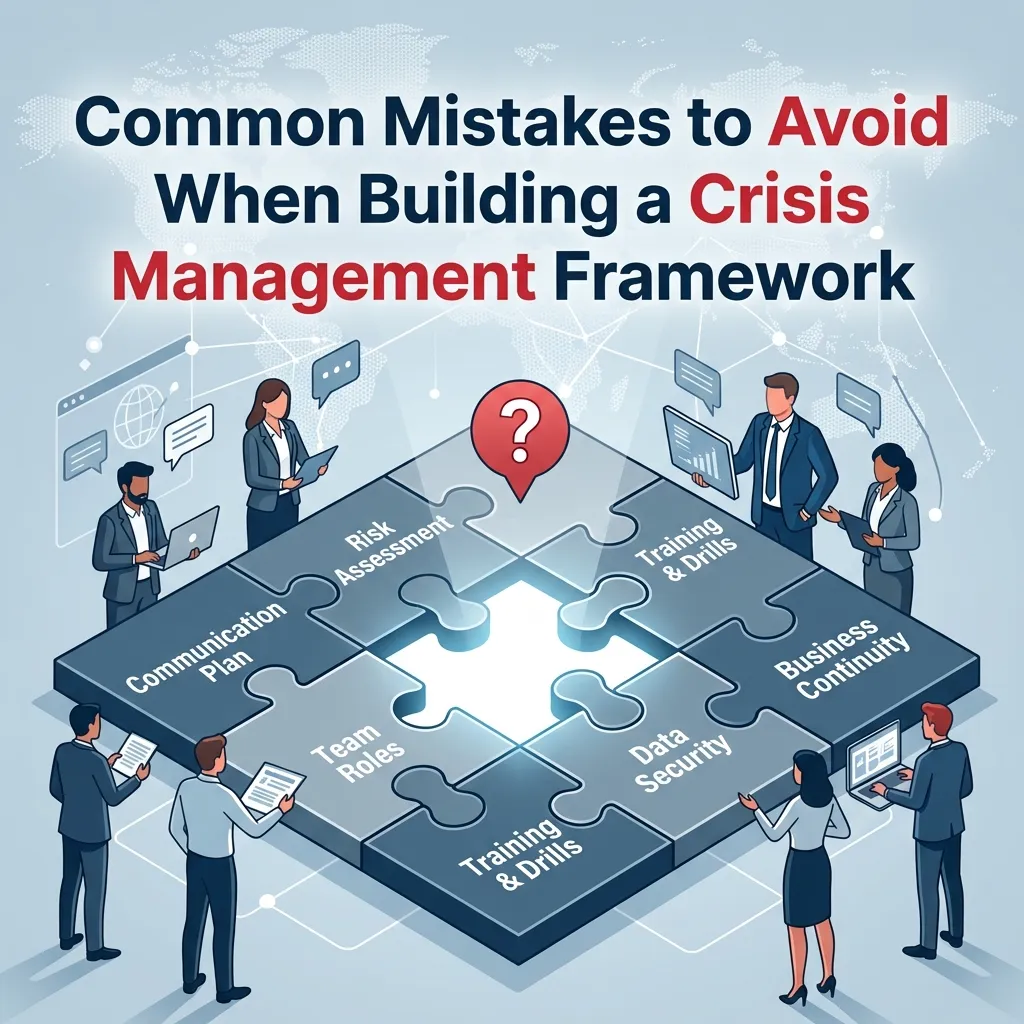
Even well-prepared organizations can fail during a crisis if the framework is weak, outdated, or poorly executed. Understanding common mistakes helps you strengthen your system before real disruptions occur.
1. Treating Crisis Management as a One-Time Project
Many organizations design a framework once and then stop updating it.
- Risks evolve constantly (cyber threats, supply chain issues, etc.)
- Outdated playbooks lead to slow or incorrect responses
- Teams lose familiarity with procedures over time
A crisis framework should be treated as a living system, not a static document.
2. Weak Internal Communication Structure
Poor communication is one of the biggest failure points during crises.
- Conflicting messages between departments
- Delays in decision approval
- Lack of clarity about who speaks to the media or stakeholders
Without a clear communication chain, even small incidents can escalate quickly.
3. Ignoring Employee Training and Simulation
Having a plan is not enough if people don’t know how to use it.
- Teams panic or freeze under pressure
- Roles become unclear during real incidents
- Coordination breaks down across departments
Regular drills and simulations ensure that response actions become second nature.
4. Over-Reliance on Technology Alone
Technology is powerful, but it cannot replace human judgment.
- AI tools may misinterpret unusual situations
- Automated alerts can miss context-specific risks
- Systems can fail during outages or cyber incidents
A strong framework always balances automation with human decision-making.
5. Poor Risk Prioritization
Not all risks are equally important, yet many organizations treat them the same.
- Resources get spread too thin
- High-impact threats may not receive enough attention
- Critical vulnerabilities remain unaddressed
Prioritizing high-likelihood and high-impact risks ensures better preparedness.
6. Lack of Post-Crisis Learning
Failing to review incidents leads to repeated mistakes.
- No improvement in future responses
- Missed opportunity to refine processes
- Weak organizational learning culture
After-action reviews are essential for long-term resilience.
A strong crisis management framework is not just about preparation—it is about discipline, practice, and continuous improvement. Avoiding these common mistakes ensures that your organization can respond faster, communicate clearly, and recover more effectively when real-world disruptions occur.
FAQ About the Crisis Management Framework
What is a crisis management framework?
A crisis management framework is a structured system for preparing, responding to, and recovering from disruptive events.
It defines roles, responsibilities, and decision-making processes during emergencies.
The goal is to ensure fast coordination and minimize operational and reputational damage.
It also helps organizations maintain stability under pressure.
How often should we update our crisis management framework?
It should be reviewed at least quarterly to stay aligned with evolving risks.
Updates are also necessary after any major incident or organizational change.
This ensures lessons learned are integrated into future responses.
Regular updates keep the framework relevant and effective.
Who should be part of the crisis management team?
A strong team includes an executive sponsor to provide authority and direction.
A crisis manager coordinates response activities and decision-making.
Communications, legal, IT, and operations representatives handle specialized tasks.
Backup members should also be assigned for continuity during emergencies.
What technologies can enhance crisis management?
Modern systems include incident tracking and automated alert platforms.
AI-driven analytics help detect risks early and prioritize responses.
Social listening tools monitor public sentiment in real time.
Secure communication tools ensure fast coordination across teams.
What are the key benefits of an AI-driven crisis management framework?
AI improves early detection of risks by analyzing large and complex datasets.
It speeds up decision-making through real-time insights and alerts.
Automation reduces human error and response delays.
Overall, it strengthens organizational resilience and operational continuity.
How does AI improve risk identification in crisis management?
AI systems analyze patterns from historical and live data sources.
They detect anomalies that may indicate emerging threats.
This includes financial, operational, and reputational risks.
Early identification allows organizations to take preventive action.
Why is training important in crisis management preparedness?
Training ensures teams understand their roles during high-pressure situations.
Simulations help employees practice real-world crisis scenarios.
It improves coordination, communication, and decision-making speed.
Regular drills reduce confusion when actual incidents occur.
How does a communication strategy impact crisis outcomes?
Clear communication prevents misinformation and internal confusion.
A defined strategy ensures consistent messaging across all channels.
AI tools can help tailor messages based on audience sentiment.
Effective communication helps maintain trust during crises.
How should crisis management systems be integrated with business operations?
Crisis systems should connect with IT, HR, and customer service platforms.
This ensures seamless data flow and faster response coordination.
Integration reduces delays caused by manual information sharing.
It also improves visibility across all departments during incidents.
What is the future of AI in crisis management?
AI will become more predictive, identifying risks before they fully emerge.
Advanced automation will handle more complex response actions.
Integration with real-time data streams will improve accuracy.
Overall, crisis management will shift from reactive to fully proactive systems.
Conclusion
In today’s hyper-connected environment, a comprehensive crisis management framework is vital for preserving safety, protecting reputation, and sustaining operations. By following this step-by-step guide—assessing risks, structuring your crisis team, establishing robust communication protocols, leveraging advanced technologies, and embracing continuous improvement—you position your organization to respond confidently and effectively to any challenge. Start today by auditing your current practices, assembling your crisis management team, and scheduling your first simulation. With the right preparation and mindset, you’ll navigate uncertainty with clarity and resilience throughout this year (2026) and beyond.


I’m a communication strategist and blogger at SMCrisis, where I cover topics on social media crises, digital reputation, and brand trust. I enjoy helping businesses stay prepared and proactive in the fast-changing online world. Every post I write aims to guide readers toward smarter crisis responses and stronger digital credibility.










No Comments