


Learn how social media crisis management protects brand reputation through proactive planning, rapid response, transparent communication, and digital PR strategies. Discover crisis response techniques, monitoring tools, and reputation recovery methods to manage online backlash effectively.
A single negative post can snowball into a trending hashtag within hours. For brands operating online, a digital crisis is an inevitable risk rather than a rare anomaly. A social media crisis is an event that negatively impacts a company’s reputation, originating or escalating on social platforms. It goes far beyond a few bad reviews. These events trigger widespread backlash, threatening brand equity, customer trust, and financial stability.
Proactive social media crisis management provides the only reliable shield against this volatility. Brands that wait for a disaster to strike before forming an online brand crisis response plan are already too late. Being prepared means you can control the narrative, mitigate damage, and demonstrate accountability when the spotlight turns on you.
The impact of digital feedback on corporate reputation cannot be overstated. Information moves rapidly, and public opinion shifts just as fast. A poorly handled situation leaves permanent digital scars on a brand’s search results and social footprint. Conversely, a swift, empathetic, and transparent response actually strengthens customer loyalty. Solid social media crisis management turns potential disasters into opportunities for showcasing your brand’s integrity.
Understanding the Scope of Social Media Reputation
Your social media reputation acts as your digital storefront. When customers search for your business, they often check your social channels before visiting your website. A crisis disrupts this ecosystem entirely. Effective social media crisis management requires understanding how different types of digital fires burn and knowing exactly which extinguishing methods to apply.
Strong social media reputation isn’t only about collecting likes and comments—it’s about building a history of trust, consistent engagement, and thought leadership. In the absence of a crisis, brands should nurture their online image by sharing value-rich content, highlighting customer stories, and proactively addressing minor issues before they escalate. Take the initiative to showcase your company values, participate in cause-related campaigns, and foster dialogue around industry trends. These efforts build a loyal digital community that can become a powerful support system during a crisis, often rallying in defense of brands they trust.
It’s equally important to monitor emerging platforms and evolving online etiquette. A misstep on a new platform, or failing to recognize shifting social norms, can quickly put your brand at risk. Spend time understanding the major platforms where your audience gathers, and set monitoring alerts not only for your brand name, but also for key executives, major product lines, and campaign hashtags. This vigilance helps ensure no threat goes unnoticed, and every opportunity for positive engagement is seized.
Types of Online Brand Crisis Response Scenarios
Not all crises look the same. Categorizing the threat helps your team deploy the correct social media damage control tactics.
Product and Service Failures
When a product malfunctions or a service fails on a large scale, the internet is the first place customers go to vent. Widespread outages, dangerous product defects, or massive shipping delays trigger intense online backlash. Customers expect immediate acknowledgment and clear timelines for a resolution. Effective social media crisis management dictates that you address the failure openly and honestly.
Brands should be ready to provide regular updates as information evolves. Even a simple acknowledgment—”We’re aware of the issue and working to resolve it”—can buy time and build goodwill, as long as it’s followed by concrete action. Share remediation steps, frequently asked questions, and timelines through multiple channels (social posts, stories, direct messaging, company blog updates) to maximize reach and reassure anxious customers.
Customer Service Failures
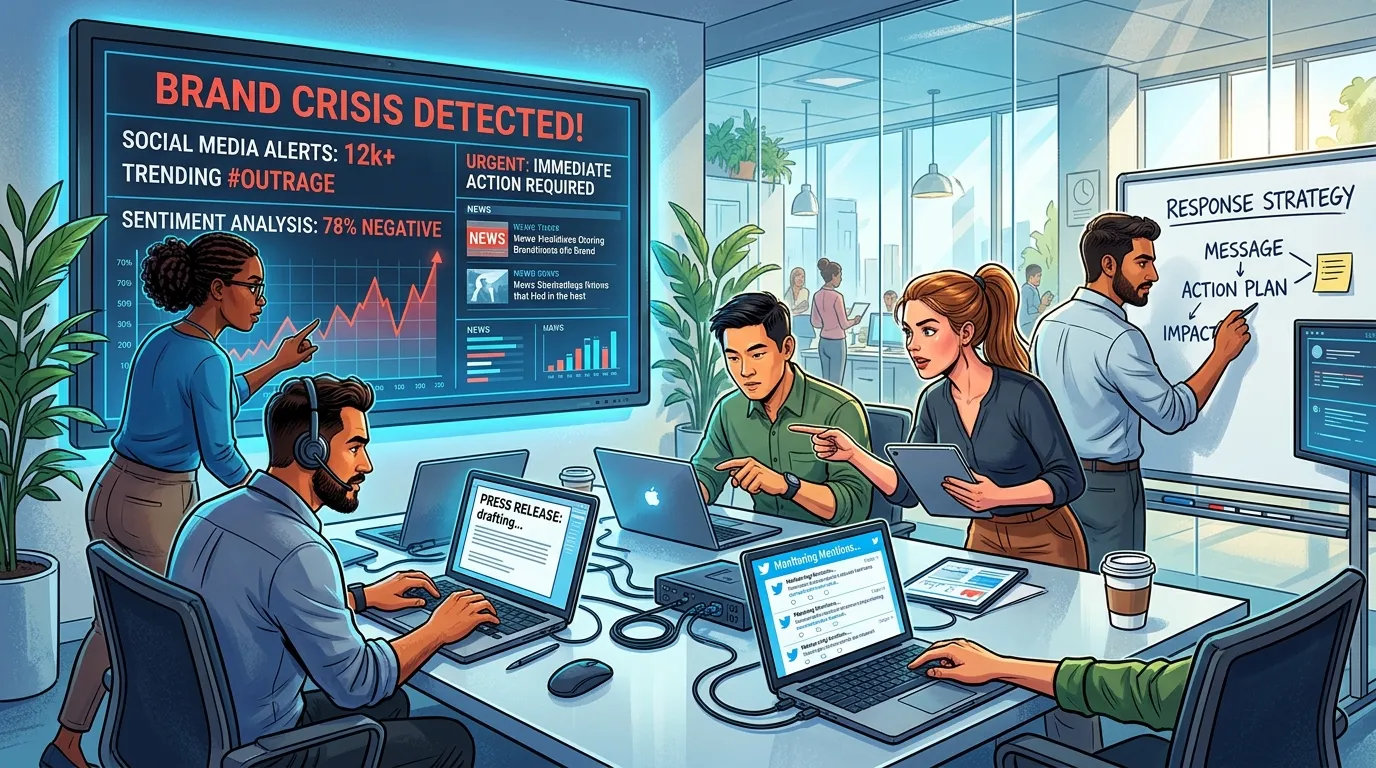
A single negative interaction with a customer service representative can go viral. If a customer records a rude exchange, or if a company ignores repeated pleas for help, the internet often rallies behind the consumer. These crises highlight systemic issues within a company’s customer care framework and require swift social media crisis management to resolve.
Proactive brands train all customer-facing employees in positive engagement best practices, emphasizing empathy, patience, and solution-orientation. Establish escalation protocols for complex cases, ensuring issues can quickly move beyond the standard support playbook if needed. When the issue is made public, quickly acknowledge the concern, apologize, and offer a visible path to resolution—ideally inviting the affected party into a private conversation while still updating the public as appropriate.
Ethical Misconduct and Controversial Statements
Executives, employees, or brand ambassadors can easily spark outrage with insensitive comments, offensive behavior, or unethical business practices. Social media users demand high moral standards from the brands they support. Silence in the face of controversy is frequently interpreted as complicity, requiring aggressive social media damage control.
To reduce risk, brands should develop clear social media and code of conduct policies for team members and affiliated spokespeople. In the event of a misstep, transparency matters: own up to mistakes, clarify what is being done to investigate, and announce any values-based changes implemented as a result. Consider holding open Q&A sessions or webinars to field questions, showing your company is listening and willing to course-correct.
Data Breaches and Security Issues
Trust shatters instantly when customer data is compromised. If a company suffers a cyberattack, social media channels flood with anxious users demanding to know if their personal information is safe. Handling this requires a delicate balance of legal compliance and public transparency.
Work in tandem with your legal, IT, and communications teams. Release what you know as soon as you can, even if all details aren’t available. Provide resources such as credit monitoring, a dedicated hotline, or a secure website FAQ for those affected. Making public commitments to boost future security—such as investing in better encryption or third-party audits—demonstrates the seriousness with which your brand treats its community’s information.
Additional Scenarios: Misinformation, Influencer Issues, and Platform-Wide Crises
In addition to the main crisis types above, be aware of scenarios like misinformation campaigns, influencer controversies, or widespread outages on platforms you use for marketing. For example, a viral rumor that harms your brand should trigger a fast response, debunking falsehoods with evidence and transparency. If an influencer you’ve partnered with is embroiled in scandal, prepare guidance for questions and review your relationship quickly. Platform-wide issues (like Instagram outages) require you to communicate on unaffected channels, letting your customers know the problem is universal and not specific to your brand.
Developing a Social Media Crisis Management Plan
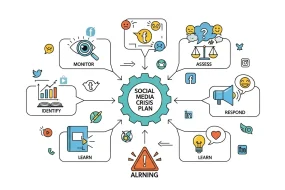
A social media crisis management plan serves as your playbook for worst-case scenarios. It removes panic from the equation, allowing your team to act decisively and protect your social media reputation.
Planning begins well before a crisis happens. Conduct a vulnerability audit: identify your main business priorities, past PR issues, and any present-day online risks. Map potential crisis triggers unique to your industry. Practice tabletop exercises and live simulations, where your team rehearses their plan under time pressure—this reveals gaps that are hard to see on paper.
Assembling a Crisis Response Team
Your online brand crisis response team should include representatives from public relations, legal, customer service, and executive leadership. Designate clear roles immediately.
- The Decision Maker: Who has the final say on public statements?
- The Communicator: Who actually drafts the responses?
- The Monitor: Who actively watches the social feeds and gathers data?
For global brands or those with multiple locations, appoint regional liaisons to ensure coverage across time zones and languages. Empower your team members to escalate urgent matters rapidly, skipping layers of red tape when speed is paramount.
Establishing a chain of command prevents internal bottlenecks when every minute counts during a crisis.
Establishing Monitoring and Listening Protocols
You cannot fix a problem you do not know exists. Set up robust social listening protocols to track brand mentions, sentiment shifts, and industry keywords. Catching a negative trend early allows you to address a complaint before it goes viral. Consistent monitoring forms the backbone of proactive social media crisis management.
Invest in tools that consolidate data from multiple platforms and filter noise, surfacing critical incidents fast. Designate after-hours monitoring responsibilities during high-risk campaigns or sensitive product launches. Encourage employees and brand advocates to report emerging threats internally before posting about them online.
Creating Pre-Approved Holding Statements
When a crisis hits, you will not have time to draft a response from scratch while waiting for legal approval. Prepare holding statements for your identified vulnerabilities. These short, empathetic messages acknowledge the issue and promise further investigation. They buy you time to gather facts while showing the public you remain engaged.
Store holding templates for a variety of scenarios—data breach, shipping delay, public controversy, etc.—and update them regularly. Pre-approve both long-form and short-form versions, suitable for social, blogs, or press.
Integrating Your Digital PR Strategy
Crisis management cannot operate in a vacuum. It must connect seamlessly with your broader public relations efforts. When an issue escalates beyond a few angry tweets, your response needs to be coordinated across all communication channels.
A unified approach ensures that your message remains consistent whether a customer reads a tweet, an email, or a press release. Aligning your internal teams guarantees that customer service representatives do not contradict the statements made by the executive team.
Your digital PR strategy should also involve engaging relevant stakeholders, such as board members, major customers, or regulatory bodies, before a crisis spills further. Consider drafting a list of industry reporters or influencers who can help relay your corrective measures during reputation rebuilding.
Learn how to structure this alignment with a comprehensive digital PR strategy.
Executing Social Media Damage Control
When the storm hits, it is time to put your preparation into action. Execution requires a cool head and strict adherence to your established social media crisis management protocols.
Assessing the Situation and Verifying Information
Do not react blindly. Take the time to gather the facts. Is the viral video authentic? How many customers are actually affected by the outage? Responding with incorrect information only damages your social media reputation further.
Take advantage of your monitoring tools to gather evidence and measure the real reach of the crisis. Consult with internal technical or operations teams as needed for facts. Erroneous or speculative information can make the damage worse, so designate a final fact-checker before issuing any broad public statements.
Crafting Transparent and Empathetic Responses
Your audience wants to know you care. Avoid corporate jargon and legal speak. Apologize if you are at fault, take ownership of the mistake, and explain exactly how you plan to fix it. Empathy and transparency represent your most valuable assets during a public relations nightmare.
Personalize your messaging, using language that reflects your brand voice. Consider video statements from executives for severe crises, as they create a sense of authenticity and directness. Diversify your outreach: provide written updates, live Q&A sessions, and open comment threads for customers to voice concerns.
Essential Elements of a Crisis Response
- Acknowledgment: Recognize the issue immediately.
- Apology: Offer a sincere apology without shifting blame.
- Action: Detail the exact steps you are taking to resolve the problem.
- Follow-up: Commit to providing updates at specific intervals.
Always outline the timeline for when additional information will be provided—even if you cannot yet share all the details. This reassures your audience that you are engaged and not ignoring the issue.
Tools and Technologies for Crisis Management
Technology gives you a significant advantage in spotting and managing an online crisis. Using the right tools streamlines your social media crisis management efforts and provides data-backed insights.
Invest in platforms that support keyword tracking, sentiment analysis, and image recognition to spot not only explicit mentions, but also memes or parodies that can quickly go viral. Sentiment dashboards enable you to shift messaging tone in real time, while advanced reporting tools allow comparison between pre- and post-crisis metrics.
Platform Comparison for Crisis Monitoring
|
Tool Category |
Primary Function |
Benefit for Social Media Crisis Management |
|---|---|---|
|
Social Listening |
Tracks mentions and hashtags |
Catches brewing issues before they go viral. |
|
Sentiment Analysis |
Measures tone (positive/negative) |
Alerts teams to sudden spikes in public anger. |
|
Internal Comms |
Connects response teams |
Ensures fast, secure approval of public statements. |
|
AI Early Warning |
Detects data anomalies |
Provides head starts on uncharacteristic activity. |
Additionally, look for plugins or integrations with your existing workflow management or project management tools to ensure seamless communication and documentation. Automating certain alerts for specific keywords or sentiment scores saves precious time during an unfolding scenario.
Learning from a Crisis and Moving Forward

A crisis does not end when the negative comments stop. The aftermath serves as a critical period for reflection and improvement in your social media crisis management strategy. Gather your response team to review what happened. Honest analysis remains the only way to improve your future performance and refine your online brand crisis response.
Conducting a Post-Crisis Review
Schedule a formal debrief where all involved parties share feedback on what went well and where processes lagged. Did communication flow freely and rapidly? Were decision-makers available and responsive? Did you see unforeseen reputational risks that should be included in future protocol drafts?
Document lessons clearly and circulate them to both the crisis team and senior leadership. Whenever possible, set measurable benchmarks for future crises—such as aiming for a sub-10 minute internal escalation time or public apology issued within the “golden hour.”
Updating Crisis Management Plans
Take the findings from your review and immediately update all protocols and response documents. If new vulnerabilities or third-party platform risks emerged (for example, if your brand was affected by a trend on a new app), add new sections to your crisis plan to cover these scenarios.
Use the opportunity to role-play new scenarios and involve a wider group of employees in future preparedness training.
Restoring Trust and Reputation
Trust is lost in buckets and gained in drops. Follow through on the promises you made during the crisis. Highlight positive customer stories, lean into corporate social responsibility initiatives, and consistently deliver excellent service. Social media crisis management is an ongoing commitment to transparency, preparation, and accountability.
Consider launching post-crisis campaigns that not only inform stakeholders of improvements made, but also celebrate the values your brand stands for. Publicly reward employees or teams who played a vital role in recovery. Continue to update your customers on long-term reforms or results; this level of communication enhances your reputation as a brand that acts with integrity, even in the face of setbacks.
Frequently Asked Questions
What exactly is social media crisis management?
Social media crisis management involves anticipating, identifying, and resolving negative events that threaten a brand’s reputation online. It requires a coordinated strategy of monitoring, rapid response, and transparent communication to mitigate damage and restore public trust.
How quickly should a brand respond to a crisis online?
Brands should aim to respond within the first hour of a crisis escalating. Even if you do not have all the facts, issuing a pre-approved holding statement acknowledges the issue and shows your audience that you are actively investigating the situation.
Can we just delete negative comments during a crisis?
Deleting negative comments usually backfires and intensifies the crisis, making the brand look guilty and defensive. Instead of deleting, practice active social media damage control by addressing the concerns transparently and moving the conversation to a private channel.
Who should be on the crisis response team?
Your team should include key decision-makers from public relations, legal, customer service, and executive leadership. Having these specific roles defined ensures that messaging is legally compliant, empathetic, and approved without unnecessary internal delays.
How does social media differ from traditional media during a crisis?
Social media moves instantly and allows for a two-way dialogue, whereas traditional media is often slower and one-directional. Reviewing the dynamics of digital media vs traditional media helps teams understand why rapid, authentic engagement is strictly necessary online.
What is a holding statement?
A holding statement is a pre-drafted, legally approved message used to acknowledge an issue immediately. It prevents public silence while your team gathers facts, usually stating that the company is aware of the situation and actively working on a resolution.
How do we know if negative feedback is actually a crisis?
A few negative reviews represent normal business operations, but a crisis involves a rapid, widespread surge in negative sentiment that threatens your core business. You must monitor volume and virality to distinguish between a customer service issue and a full-blown crisis.
Should the CEO issue a public apology?
For severe crises involving ethical misconduct, data breaches, or massive systemic failures, an apology from the CEO is highly recommended. It shows ultimate accountability and demonstrates that the company takes the online brand crisis response incredibly seriously.
How do we rebuild our social media reputation after a crisis?
Rebuilding a social media reputation takes time and requires consistent, positive actions. Follow through on any promises made during the crisis, highlight customer success stories, and maintain a high standard of transparent, empathetic customer service moving forward.
What role does a digital PR strategy play in crisis management?
A digital PR strategy ensures that your crisis messaging is consistent across all online platforms, from social media to news outlets. It helps coordinate the distribution of press releases and aligns internal teams to present a unified front during turbulence.


I’m a communication strategist and blogger at SMCrisis, where I cover topics on social media crises, digital reputation, and brand trust. I enjoy helping businesses stay prepared and proactive in the fast-changing online world. Every post I write aims to guide readers toward smarter crisis responses and stronger digital credibility.










No Comments