


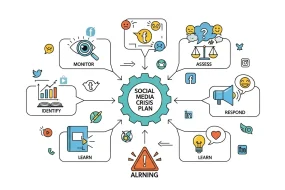
This guide explains Real-Time Crisis Communication strategies for managing a social media crisis, covering rapid response systems, monitoring tools, stakeholder engagement, AI-driven alerts, and crisis case study insights to protect brand reputation and ensure instant, effective communication.
A crisis strikes without warning. A severe data breach exposes sensitive customer information. A flagship product reveals sudden safety issues. An insensitive social media post ignites public outrage. When these critical moments hit, the exact speed of your organizational response determines whether your brand survives or faces permanent, irreversible damage.
Real-Time Crisis Communication now serves as the absolute cornerstone of modern reputation management. This discipline involves monitoring, responding to, and handling intense conditions exactly as they unfold—often within mere minutes of the triggering incident. This proactive approach converts crisis management from a slow, reactive scramble into a highly strategic operational advantage.
This comprehensive guide examines the foundational elements of Real-Time Crisis Communication. We will explore core components, analyze a crisis case study, and show how modern organizations protect their hard-earned reputations when public scrutiny matters most.
Understanding Real-Time Crisis Communication
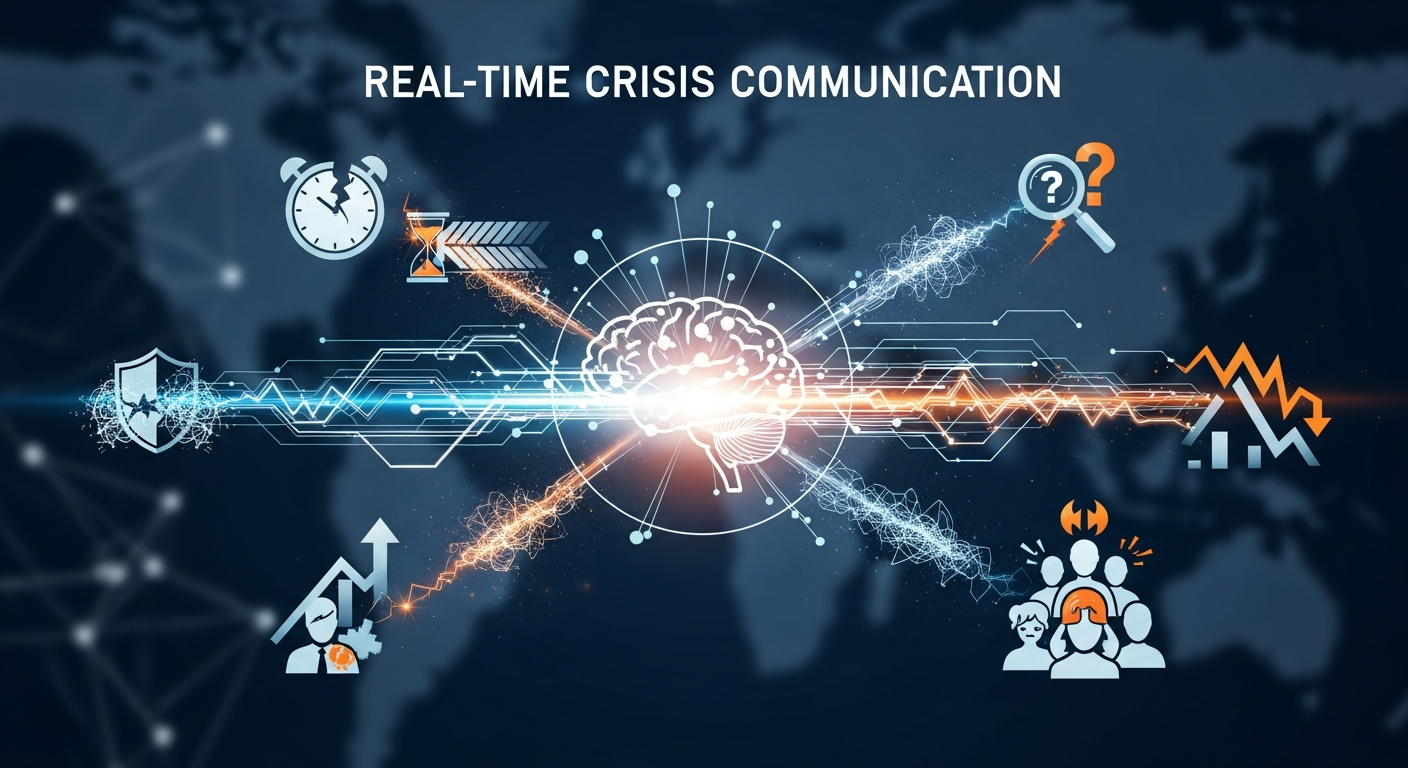
Real-Time Crisis Communication refers to the immediate identification, rapid assessment, and decisive response to emergencies using advanced digital tools. Unlike traditional crisis management, which historically took days to mobilize a press conference, Real-Time Crisis Communication enables your team to respond within minutes.
This approach encompasses several critical elements that keep your brand ahead of the narrative. Let’s explore these elements in more detail to sharpen your Real-Time Crisis Communication readiness.
Speed of Response
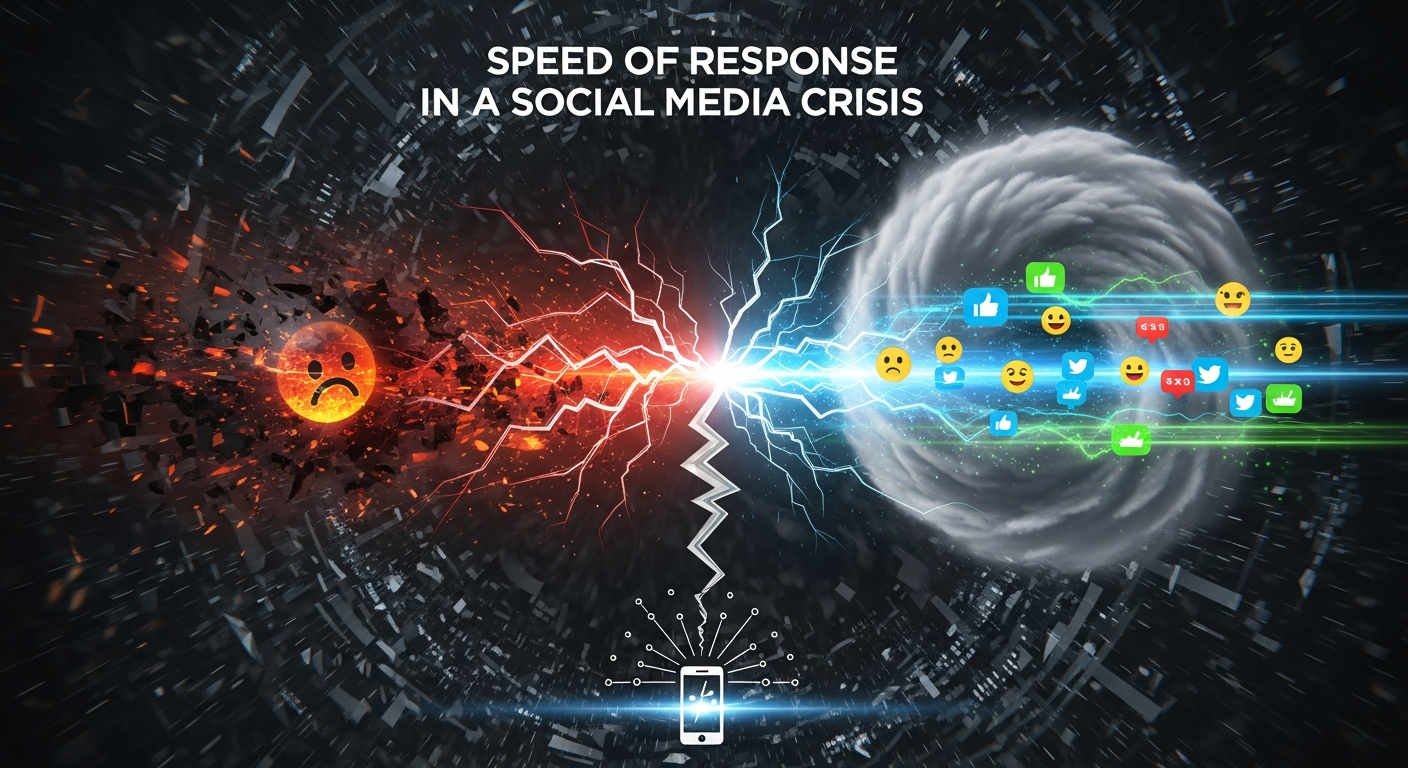
In Real-Time Crisis Communication, timely action is more than an advantage—it’s a necessity. Internal teams must monitor multiple digital channels simultaneously using cutting-edge tools. For instance, a potential social media crisis can be detected when sentiment analysis signals a spike in negative mentions or when a viral post starts trending on X or Facebook within your niche.
Early detection creates vital opportunities for damage control that simply did not exist in the era of print and broadcast media. If your team can catch the first wave of chatter—like when a product recall hashtag starts to trend—you have a greater chance of shaping the narrative.
Multi-Channel Coordination
Real-Time Crisis Communication demands coordinated messaging across all points of contact—social media, news outlets, company blog, email newsletters, even SMS for urgent customer alerts. While each channel requires tailored responses, maintaining message consistency is crucial to ensure stakeholders get the same factual update, regardless of where they interact with your brand. In a true social media crisis, conflicting information leads to confusion and distrust.
Stakeholder Engagement
Modern crises unfold in a public, multi-stakeholder environment. Effective Real-Time Crisis Communication acknowledges this by prioritizing direct, two-way communication rather than relying solely on top-down official statements. For example, when facing a data breach, companies like Capital One have responded publicly via Twitter while also emailing affected customers and updating their support pages, reducing uncertainty and panic.
Sometimes, competitors actively try to fuel the fire. Understanding the mechanics of intentional outrage is important. You can learn more by studying what is negative marketing to recognize when your brand faces a coordinated attack rather than an organic complaint.
The Digital Transformation of Crisis Management
Digital platforms fundamentally changed how a crisis develops, mutates, and spreads. A social media crisis can amplify negative brand events within minutes, turning an isolated, local incident into a global spectacle.
This shift creates unique challenges alongside new opportunities for resilient organizations. The primary challenge lies in the terrifying pace of negative information. Once a harmful story gains momentum online, controlling the narrative becomes incredibly difficult.
How Digital Channels Reshape Crises
In the digital age, the timeline for a crisis shrinks dramatically. Years ago, a print story could take a day to circulate. Now, a viral TikTok or an angry customer tweet can trigger a social media crisis within an hour. Fast-moving information means your Real-Time Crisis Communication system must be agile, proactive, and omnipresent.
Leveraging Digital Opportunities
Digital platforms also offer incredible tools for direct customer engagement. Companies can post video responses, share behind-the-scenes looks at their response efforts, launch polls to gather real-time feedback, and even host live Q&A sessions to address stakeholder concerns.
The key to mastering a social media crisis lies in understanding that digital networks operate as continuous conversations, not one-way broadcast centers. Success requires authentic engagement with your stakeholders instead of just publishing sterile official statements.
Sometimes, viral controversy is actually by design. Analyzing real examples of negative marketing that nailed it shows how certain brands manage intentional chaos, though unintentional crises require a much more defensive posture.
Core Components of Real-Time Crisis Communication
To execute Real-Time Crisis Communication effectively, you need a robust, heavily structured framework. Attempting to figure out your strategy while the crisis happens guarantees failure.
Monitoring and Detection Systems
Effective Real-Time Crisis Communication begins with aggressive, always-on surveillance systems. These platforms track mentions, monitor brand sentiment, and catch new problems as they originate.
- Social Media Surveillance: Enterprise tools scan platforms like Twitter, Facebook, and LinkedIn for your brand name, core products, and key executives.
- AI Sentiment Analysis: Advanced systems use artificial intelligence to detect abnormal spikes in negative sentiment.
- News Monitoring Services: These tools track traditional media, industry blogs, and online publications to identify when journalists start covering your situation.
- Internal Reporting: Secure internal channels allow grassroots employees to report potential problems before they reach the public sphere.
Traditional vs. Real-Time Monitoring
|
Feature |
Traditional Monitoring |
Real-Time Crisis Communication |
|---|---|---|
|
Speed |
Daily or weekly reports |
Instant alerts and live dashboards |
|
Scope |
Print and major broadcast |
All social channels, blogs, and news |
|
Analysis |
Manual reading |
AI-driven sentiment analysis |
|
Action |
Delayed response |
Immediate mitigation |
Accurate monitoring often marks the point where an emerging issue stays contained, or explodes into a crisis case study.
The Response Team Structure
Real-Time Crisis Communication requires a dedicated, highly trained team with clearly defined roles. Confusion over who holds decision-making authority will paralyze your response.
- Crisis Communication Manager: The central leader who oversees all communication efforts and maintains message consistency.
- Social Media Specialists: Experts who craft platform-specific responses and engage directly with the public during a social media crisis.
- Legal Advisors: Compliance representatives who ensure all communications meet regulatory requirements and limit legal exposure.
- Executive Decision-Makers: Senior leadership empowered to make rapid decisions regarding resource allocation and company policy.
- Subject Matter Experts: Technical or operational staff who provide accurate, factual details about the specific incident.
This team should train together using realistic crisis case study scenarios, so they can synchronize their decision-making when a real social media crisis strikes.
Communication Protocols
Successful Real-Time Crisis Communication relies entirely on pre-established protocols. These rules guide team decision-making under intense public pressure.
- Escalation Procedures: Clear guidelines dictating when a situation requires immediate executive attention.
- Message Approval: Streamlined workflows for reviewing statements quickly, balancing speed with legal accuracy.
- Channel Prioritization: Predetermined strategies outlining which platforms require the first response.
- Documentation Standards: Strict rules for recording all decisions, published statements, and public reactions for post-crisis analysis.
Having checklists and escalation matrices on hand can save precious minutes during a full-blown social media crisis.
Examining a Crisis Case Study
Learning from a relevant crisis case study helps solidify these concepts. Consider a hypothetical scenario where a major airline experiences a massive software failure, grounding thousands of flights globally.
In this crisis case study, a traditional response might involve waiting six hours to issue a formal press release. By that time, angry passengers would dominate the narrative on social networks, posting videos of chaotic terminals and unresponsive staff. This creates a massive secondary social media crisis.
By applying Real-Time Crisis Communication, the airline’s response looks entirely different. Within fifteen minutes of the software failure, social listening tools alert the crisis team. The team immediately publishes a holding statement across all platforms, acknowledging the outage. Social media specialists begin replying directly to stranded passengers, offering digital rebooking links and continuous updates every thirty minutes.
This crisis case study demonstrates how rapid, empathetic communication prevents a logistical failure from becoming a permanent reputational disaster.
Building Your Real-Time Crisis Communication System

You must build your infrastructure long before you actually need it. Preparing your team and your technology ensures you can deploy Real-Time Crisis Communication smoothly.
Essential Technology Infrastructure
- Secure Communication Platforms: Encrypted systems that enable instant messaging and file sharing among your crisis team.
- Comprehensive Monitoring Tools: Software that tracks your brand footprint globally in real-time.
- Content Management Systems (CMS): Tools allowing the rapid creation, legal approval, and publishing of updates across your entire website and social footprint.
- Mobile Readiness: Infrastructure ensuring every team member can manage the crisis securely from mobile devices if they are away from their desks.
Invest in platforms that can issue real-time alerts via apps, SMS, or email when a problem arises—because in a social media crisis, seconds matter.
Training and Preparedness
Technology alone cannot save your brand. Your team needs consistent training to perform effectively under massive public pressure.
- Simulation Exercises: Run regular drills that test your Real-Time Crisis Communication systems using a realistic crisis case study.
- Role-Playing: Practice handling difficult, hostile conversations with angry customers in a controlled training environment.
- Message Crafting: Train your staff to write clear, empathetic, and highly accurate updates under strict time limits.
A crisis case study should be part of your training toolkit—review industry examples to anticipate pitfalls.
Stakeholder Mapping and Engagement
Understanding your key stakeholders and their unique communication preferences drives effective Real-Time Crisis Communication. A single message rarely satisfies every group.
Tailoring the Message
- Customers: They prefer direct, honest communication via social platforms. During a social media crisis, even a simple “We’re aware and working on it” message inspires more confidence than silence.
- Employees: Your staff needs frequent internal updates. They must understand how the situation impacts their jobs and what to tell external clients.
- Investors: Shareholders require formal, data-driven communications addressing financial implications and operational recovery plans.
- Media and Journalists: Reporters expect timely, highly accurate information and direct access to authorized corporate spokespeople.
Develop a stakeholder contact matrix so you know exactly whom to reach on each channel in a crisis scenario. Incorporate crisis case study examples of when stakeholder engagement succeeded and failed.
Common Challenges and Solutions
Executing Real-Time Crisis Communication naturally presents difficult operational challenges. Anticipating these hurdles keeps your response strategy on track.
Information Overload
Real-time monitoring generates overwhelming amounts of data. The key lies in developing smart filters to separate the signal from the noise. Establish clear criteria defining what constitutes a genuine social media crisis versus routine negative feedback.
For example, set alert thresholds for negative mentions per minute, or establish “triggers” for product-related keywords that appear in unusually high volume.
Maintaining Accuracy Under Pressure
The immense pressure to respond quickly often leads to inaccurate communications. Develop strict fact-checking protocols. Create pre-approved message templates for common scenarios. This allows your team to act fast while ensuring the foundational information remains legally sound.
Managing Emotional Responses
A social media crisis generates incredibly strong emotional responses from the public. Train your team in advanced empathetic communication techniques. Acknowledge customer frustration, validate their emotions, and provide clear, actionable next steps to help restore order.
The Future of Real-Time Crisis Communication
The landscape of Real-Time Crisis Communication evolves constantly as technology advances. Several major trends currently shape the future of reputation management.
Artificial Intelligence Integration
AI tools now detect emerging issues much faster than human operators. They predict how a social media crisis will develop based on historical data and can even draft initial response frameworks for human review. AI-powered chatbots can also field customer queries en masse during the first hours of a social media crisis, buying your core team time to craft an official response.
Video Communication
Live video streaming provides unparalleled authenticity. Organizations increasingly use direct-to-camera executive updates to add human transparency to their Real-Time Crisis Communication efforts. Some companies leverage CEOs or lead managers on live streams to offer updates, take questions, and visibly demonstrate their commitment to resolving the crisis.
Predictive Analytics
Organizations now use deep data analysis to identify operational vulnerabilities before they explode publicly. Predictive models allow companies to draft specific crisis case study responses for events that have not even happened yet. This approach supports pre-emptive Real-Time Crisis Communication strategies and preparedness.
Personalization and Automation
Personalized communication drives connection. Automated tools can segment audiences to deliver targeted Real-Time Crisis Communication, ensuring employees, customers, and external partners get the information most relevant to them.
Building Resilience Through Real-Time Crisis Communication
Real-Time Crisis Communication represents far more than simple damage control. It provides a distinct opportunity to build unshakeable stakeholder trust. Organizations that communicate with extreme transparency during their worst moments often emerge with an enhanced reputation.
Look at communication as an ongoing organizational capability. Invest heavily in your systems, your software, and your people. When the next social media crisis strikes, your investment in Real-Time Crisis Communication will determine whether the event becomes a minor speed bump or a catastrophic failure.
Consider conducting annual crisis case studies and updating your protocols based on lessons learned from both industry best practices and your own experiences. Over time, a culture that prioritizes Real-Time Crisis Communication helps organizations become nimbler, more adaptable, and better positioned to survive—if not thrive—through any social media crisis.
Frequently Asked Questions (FAQ)
1. What is the first step in Real-Time Crisis Communication?
The immediate first step is assessing the situation to gather verified facts before speaking. You must pause all automated marketing posts to avoid appearing tone-deaf while your team drafts an initial holding statement.
2. How do we secure our accounts if a hack causes the crisis?
If unauthorized users take over your channels, you must lock down internal access immediately to stop the bleeding. Reviewing a guide on handling a social media security breach helps your IT team regain control swiftly.
3. What constitutes a full social media crisis?
A social media crisis features rapid, highly visible negative sentiment that actively threatens your brand’s financial standing or public trust. It spreads across multiple platforms and requires immediate intervention from leadership.
4. How fast should we issue our very first public statement?
In Real-Time Crisis Communication, you should issue an initial holding statement within 30 to 60 minutes. This tells the public you are aware of the situation and actively investigating, which buys you time to gather facts.
5. How can we train our team to avoid publishing insensitive content?
Prevention requires aligning your entire marketing department under strict brand voice guidelines and approval workflows. Following a complete guide for digital media strategy ensures your team understands the boundaries of appropriate online behavior.
6. Should we delete angry comments during a crisis?
No, you should never delete comments unless they contain severe profanity, hate speech, or direct threats of violence. Deleting valid criticism destroys trust and accelerates the anger driving the social media crisis.
7. Why is a crisis case study important for our preparation?
Reviewing a relevant crisis case study allows your team to learn from the real-world mistakes of other organizations. It provides a blueprint for what communication tactics actually calm the public and which ones cause further outrage.
8. How do we format official statements for traditional journalists?
While you must post rapid updates on social channels, you also need formal documentation for the press. Learning how to write an effective press release ensures that major news outlets quote your exact corporate narrative accurately.
9. Who should be the public face of the company during a crisis?
For a severe social media crisis, the CEO or a high-ranking executive should address the public directly. For smaller operational issues, a designated PR spokesperson or the head of customer service is usually sufficient.
10. How do we know when the crisis is officially over?
A social media crisis stabilizes when online sentiment metrics return to their normal, pre-crisis baseline levels. However, internal Real-Time Crisis Communication monitoring must continue for weeks to ensure the issue does not flare up again.


I’m a passionate digital strategist and content creator focused on crisis communication, social media management, and online reputation. At SMCrisis, I share insights, tips, and real-world strategies to help brands navigate challenges, protect their image, and build trust in the digital space. My goal is to make crisis management simple, smart, and actionable for every business.













No Comments