


This guide explains how brands can prepare for, manage, and recover from social media crises through fast communication, transparent messaging, strategic planning, crisis response teams, and post-crisis analysis to protect reputation, maintain customer trust, and strengthen long-term resilience.
Social media allows brands to connect directly with their audiences and build loyal communities. However, this direct line of communication also means that a single misstep can escalate into a full-blown public relations disaster within minutes. A poorly timed post, a misunderstood marketing campaign, or a prominent customer service failure can quickly spiral out of control and permanently damage your brand reputation.
Understanding the sheer speed and reach of platforms like X (formerly Twitter), Facebook, and Instagram is crucial. What may have once taken days to become headline news can now trend worldwide in mere hours, or even minutes, due to algorithms prioritizing high-engagement, emotionally charged content. Social conversations are amplified by viral sharing, and a single screenshot can immortalize mistakes. For brands, this means the stakes have never been higher. Missteps in handling such situations can inflict long-lasting harm and erode the hard-earned trust of your audience.
When the digital crowd gathers and the negative comments start pouring in, silence is rarely an option. Businesses need a clear, actionable strategy to address issues head-on and regain public trust. Waiting until a disaster hits to figure out your response is a guaranteed recipe for panic and poor decision-making. Organizational paralysis can set in, where teams are unsure of who should respond, or what tone to adopt, resulting in a confusing and inconsistent public narrative.
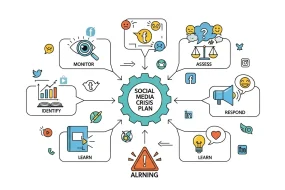
This comprehensive guide breaks down exactly how to create a robust social media crisis communication plan. You will learn how to identify potential threats, assemble the right response team, and communicate with the speed and transparency needed to protect your brand. Beyond the basics, we’ll dive deeper into advanced tactics, real-life lessons from successful (and unsuccessful) crisis management, and step-by-step preparation tips.
Why a Social Media Crisis Plan is Essential
The digital landscape does not sleep. Social media platforms operate 24/7, making it possible for crises to emerge at any hour—on weekends, holidays, or in the middle of the night. This constant connectivity means your brand must always be ready to step up, address issues instantly, and keep your narrative under control.
Social media algorithms prioritize high-engagement content, meaning controversy and outrage spread rapidly. A localized issue can become global news in a matter of hours. Without a documented social media crisis communication strategy, companies often freeze, shift blame, or issue tone-deaf apologies that only fuel the fire. Moreover, a lack of clear policy can result in rogue messaging—where different departments or staff members communicate inconsistent, or even contradictory, statements online.
Having a social media crisis communication plan acts as a digital fire extinguisher. It removes the guesswork from stressful situations, ensuring your team knows exactly what steps to take, who needs to approve messaging, and how to communicate effectively. This preparedness minimizes reputational damage, preserves customer trust, and can even turn a negative situation into an opportunity to demonstrate your company’s core values. Effective social media management requires that you always expect the unexpected.
A robust plan sets expectation for every stakeholder, aligns real-time decision-making, and provides checklists you can use under pressure. It also increases team confidence, reducing the chance of emotional, defensive, or off-brand reactions. In a high-stress environment, prepared teams are proven to make better decisions.
The Cost of Unpreparedness
Failing to prepare for a crisis can result in severe financial and reputational losses. When a brand lacks a solid crisis response mechanism, they face:
- Immediate loss of follower trust and customer loyalty. Research has shown that 65% of customers will stop buying from a brand after a single major negative incident if they perceive the brand’s response is inadequate.
- Plummeting stock prices or sales revenue. History is littered with cases where poor crisis responses led to consumer boycotts, loss of partnerships, and significant financial repercussions. In the digital age, even small companies are susceptible.
- Long-term damage to brand reputation that takes years to rebuild. Negative incidents are easily retrievable via search engines and social archives. Even after the crisis fades, mentions may linger, affecting future hiring, PR outreach, and brand valuation.
- Increased scrutiny from media and regulatory bodies. High-profile crises may attract attention from journalists, regulators, and advocacy groups, further escalating the situation and potentially leading to legal action or fines.
Consider the infamous example of United Airlines’ 2017 incident, where video of a passenger being forcibly removed went viral. The company’s initial response was perceived as defensive and dismissive, leading to widespread public backlash, plummeting stock prices, and a fierce media focus. It took months—and several leadership changes—before the airline started to regain trust.
Key Components of an Effective Crisis Communication Plan

A strong social media crisis communication plan is proactive, not just reactive. To build a strategy that actually works under pressure, you need to establish a few foundational elements long before things go wrong. These elements should be documented, shared across teams, and rehearsed through drills or scenario planning.
Identifying Potential Crises
Not every negative comment constitutes a crisis. A true crisis is an event that significantly threatens your brand reputation, disrupts business operations, or causes financial harm. Start by brainstorming potential vulnerabilities specific to your industry.
Think about previous crises that have affected your competitors or sector. Are there recurring themes, such as data privacy breaches, product safety concerns, or cultural insensitivity? Work with department heads to identify situations that might trigger large-scale negative attention.
Categorizing Threats
Categorize these threats by severity so your team knows when to monitor a situation and when to sound the alarm.
- Level 1 (Low): Minor customer complaints, easily resolvable service issues, negative online reviews. These can often be handled by your frontline social media team with standard replies and no escalation.
- Level 2 (Medium): System outages, offensive remarks by a lower-level employee, localized backlash, or minor leaks. These require holding statements, internal alerts to management, and pausing scheduled content until resolved.
- Level 3 (High): Data breaches, major product recalls, executive scandals, viral insensitive marketing, or anything that threatens user safety. These should trigger a full crisis response with C-level involvement, legal review, and 360-degree communication.
For example, tech brands may put data security incidents in Level 3, while hospitality chains may classify food-borne illness outbreaks at the highest threat level. Creating a simple crisis matrix for your organization allows rapid assessment and response.
Developing a Response Team
During a crisis, you cannot afford bottlenecks. Establish a dedicated crisis response team with clear roles and responsibilities. Your team should typically include:
- A team leader to orchestrate the response, coordinate updates, and act as the primary decision-maker.
- Social media managers to monitor platforms, triage incoming messages, and publish timely and approved updates.
- Public relations experts to shape the messaging, liaise with media outlets, and keep the public narrative under control.
- Legal counsel to review statements and social posts for liability, privacy, or compliance concerns, particularly when regulatory or legal risk is high.
- Customer support leads to handle direct user inquiries, de-escalate frustrated customers, and provide personalized responses through DMs or email support.
You may also want to include IT experts, HR leaders, and regional representatives for organizations with international presence. Establishing a rapid-response protocol is key—every team member should know where to find current guidelines, who to notify, and who has approval power for messaging.
To further streamline your workflow, develop contact trees, escalation schedules, and authorize backups for holidays or time zone coverage. Conduct training sessions to ensure every participant is comfortable and familiar with their responsibilities under pressure.
Crafting Your Message
When a crisis strikes, your audience expects accountability. Pre-drafting holding statements for various scenarios allows you to acknowledge the issue quickly while you gather more information. A strong crisis response message is empathetic, transparent, and action-oriented. Avoid corporate jargon and defensive language.
If your company made a mistake, own it, apologize sincerely, and explain the steps you are taking to fix the problem. For example, “We are aware of the incident and are investigating the details. We apologize for any distress caused and will provide more updates as soon as possible.” Even a short acknowledgement shows concern and presence—silence, by contrast, looks evasive.
To prepare, draft templates for your most likely crisis scenarios and place them in an easily accessible crisis communication manual. Regularly review and update these templates so they stay relevant and on-brand.
Consider the impact of multimedia: short video apologies or visual infographics can convey body language and tone more effectively than text, helping audiences perceive your message as authentic and sincere.
Choosing the Right Channels
If a crisis breaks out on X, your initial response should happen on X. You need to meet your audience where the conversation is happening. Once you have a handle on the situation, you can distribute a more comprehensive statement across your other channels, company blog, and via email newsletters.
- Respond directly on the most active platform first.
- Post additional details to your owned channels for transparency: website banners, newsroom updates, and email newsletters.
- Use video or livestreams for urgent press conferences or major crises.
Evaluate whether paid promotions or algorithm boosting are appropriate—it is often better to use organic posts during crises to avoid appearing opportunistic.
For global brands, coordinate messaging in multiple languages and ensure regional managers are ready to localize responses as needed.
Integrating Online PR and Social Media Management
Your social media crisis communication efforts cannot exist in a silo. They must be tightly integrated with your broader online PR strategy. A unified front ensures that media outlets, influencers, and everyday consumers all receive the same accurate information.
Media monitoring and influencer engagement should be part of your plan. In some cases, negative stories can be picked up by journalists or bloggers, spreading misinformation or deepening the crisis. Proactive outreach, direct corrections, and relationships with key media players can help stem the tide.
By aligning your internal teams, you can ensure that your crisis response is consistent. For more insights into bridging the gap between public relations and digital platforms, you can explore effective online PR strategies to bolster your overall brand reputation.
Establish guidelines for the following:
- Who is authorized to speak to the media.
- Approved talking points for interviews.
- Regular briefing schedules and internal updates.
Crisis simulation exercises that involve both PR and social media teams will help surface weak links and uncover areas for improvement.
Crisis Communication Matrix
|
Crisis Level |
Action Required |
Key Personnel Involved |
Expected Response Time |
|---|---|---|---|
|
Low |
Standard reply, monitor sentiment |
Social Media Management |
Under 2 hours |
|
Medium |
Holding statement, pause ads |
PR Team, Customer Support |
Under 1 hour |
|
High |
Full crisis protocol, CEO statement |
Executive Board, Legal, PR |
Immediate (Under 30 mins) |
Real-Life Examples of Social Media Crises
Observing how other brands handle adversity provides valuable lessons in social media crisis communication.
Consider the notorious KFC chicken shortage in the UK. When supply chain issues forced the fast-food chain to close hundreds of stores, the backlash was immediate. Instead of issuing a stiff corporate press release, KFC took out a full-page ad with an empty bucket of chicken, rearranging their logo to read “FCK.” They paired this with a humble, humorous apology on social media. The response was widely praised for its authenticity and alignment with the brand’s voice, turning a logistical nightmare into a masterclass in online PR.
Another example: Starbucks faced a PR firestorm after a racially charged incident in one of its stores. Instead of shifting blame, Starbucks’ leadership took direct action by closing more than 8,000 stores for racial-bias education, delivering public apologies, and engaging directly with affected communities. This swift, transparent approach mitigated much of the potential long-term reputation damage.
On the negative side, we frequently see brands delete critical comments or block users during a controversy. This approach almost always backfires, leading to the “Streisand Effect,” where attempts to hide information only draw more attention to it. A famous example is when a major electronics brand disabled comments on all its posts during a product recall, which only drove frustrated customers to other platforms and viral posts, multiplying the negative exposure.
Key lessons from real crises:
- Humor, when used appropriately and in line with brand voice, can defuse tension.
- Quick, transparent updates prevent rumor cycles from filling the vacuum.
- Removing comments or going silent is almost always perceived as evasive or guilty.
- Long-term outreach and corrective action (community support, visible changes) can eventually repair even highly damaged reputations.
Best Practices for Monitoring and Responding

Effective social media crisis communication requires constant vigilance. Utilize social listening tools to monitor brand mentions, relevant keywords, and overall sentiment. Invest in robust social media management platforms like Hootsuite, Sprout Social, or Brandwatch that provide real-time alerts and analytics for emerging threats.
Set up alerts for sudden spikes in negative mentions so you can catch a brewing storm before it hits the front page. Some platforms offer AI sentiment analysis, flagging rapidly shifting moods or abnormal keyword trends.
When responding, pause your scheduled promotional posts immediately. Continuing to run automated marketing campaigns during a serious crisis makes your brand appear oblivious and insensitive. Shift your entire social media focus to addressing the issue and supporting your community. Share information proactively, and invite open questions to prevent speculation.
Actionable Steps:
- Designate team members to review all scheduled posts during a crisis.
- Assign social listening shifts for 24/7 coverage if needed.
- Use dashboards to track engagement, sentiment, and trending crisis topics.
- Engage with fact-checkers if misinformation is spreading, and provide supporting evidence or corrections openly.
At all times, ensure your tone is supportive, not defensive. Avoid escalation by acknowledging upset customers’ emotions and focusing responses on actions, not excuses.
The Role of Speed and Transparency
In social media crisis communication, the “golden hour” rule applies. You have a very narrow window to take control of the narrative before the public forms its own conclusions. Even if you do not have all the facts immediately, a quick post stating that you are aware of the situation and actively investigating is far better than silence.
Transparency must accompany that speed. Modern consumers are incredibly savvy and can spot a disingenuous apology from a mile away. Share what you know, admit what you do not know yet, and keep your audience updated as you learn more.
Regular status updates, even if little has changed, reassure your audience that you are present and accountable. Consider using pinned posts, highlight reels, or story updates for ongoing crises. Designate a single hashtag for updates if the incident is trending.
Transparency also extends to sharing next steps—whether you are launching an internal investigation, reaching out to affected customers, or suspending certain services as a precaution.
Failing to provide consistent updates can cause rumors, speculation, and frustration. On the other hand, brands that over-communicate—offering frequent, honest updates with empathy—often emerge from crises with their reputations intact, or even strengthened.
Post-Crisis Analysis and Learning
A crisis does not end when the negative comments stop. Once the dust settles, bring your response team together for a comprehensive debrief. Analyze what worked well and where the breakdowns occurred.
The debrief process should involve:
- Reviewing response times for each team and communications channel.
- Evaluating the clarity and empathy of outgoing messages.
- Soliciting feedback from staff, partners, and customers who were closely involved.
- Tracking media coverage, sentiment scores, and brand reputation shifts during and after the crisis.
Ask your team the hard questions:
- Did your holding statements sound natural and reassuring to followers?
- Were there delays in getting legal approval, and if so, why?
- Did you miss the early warning signs, and are your social listening tools properly configured?
- Were escalation procedures clear, or did approval bottlenecks cause confusion?
- Did any department or staff member act out of alignment with the plan?
Use these insights to update and refine your social media crisis communication plan so you are better prepared for the future. Continuous improvement is the backbone of exceptional brand reputation management.
Consider developing “lessons learned” documents that become part of ongoing training. Encourage open, blame-free conversation—it is important to learn without fear of repercussion or scapegoating, so your crisis culture values growth and adaptability.
Building Resilience in the Digital Age
Social media crises are an inevitable risk of doing business online. While you cannot prevent every mistake or anticipate every customer reaction, you have complete control over how you respond. By establishing a clear social media crisis communication plan, empowering a dedicated response team, and prioritizing transparency, you can navigate even the toughest digital storms. Preparation is the key to protecting your reputation and proving to your audience that you are a brand worthy of their trust.
To build true resilience:
- Invest in ongoing training for your social media management and PR teams.
- Hold annual or semi-annual crisis drills simulating different threat levels.
- Keep your communication playbooks updated with new scenarios and template messages.
- Build relationships with industry peers to share knowledge openly—often, collective learning prevents repeated mistakes.
- Foster a brand culture that values humility, accountability, and proactive communication above perfection.
Remember, in the digital age, every brand will eventually face a crisis. Excellence is measured not by an absence of mistakes, but by your ability to respond with empathy, speed, and honesty—and to demonstrate growth from each challenge you survive.
Frequently Asked Questions
What is social media crisis communication?
Social media crisis communication involves the strategies and actions a brand takes to address and mitigate a public relations disaster on social platforms. It requires swift, transparent, and empathetic messaging to protect brand reputation. For a deeper understanding, review these social media crisis management best practices to ensure your team is always prepared.
How quickly should a brand respond to a crisis online?
The general rule is to respond within the first hour of a crisis breaking to establish control over the narrative and show accountability. Speed is essential to prevent misinformation from spreading out of control. Adhering to established social media crisis management best practices helps teams meet this tight deadline effectively.
Who should be on a crisis response team?
A robust team should include social media managers, PR experts, legal counsel, customer support leads, and an executive team leader. Everyone must know their specific role before an emergency occurs. You can organize your personnel by following standard social media crisis management best practices for team structure.
Should we delete negative comments during a crisis?
Deleting negative comments is generally ill-advised as it can trigger the Streisand Effect, causing even more outrage and drawing further attention to the issue. Transparency and direct, polite engagement align much better with proven social media crisis management best practices.
What is a holding statement?
A holding statement is a pre-drafted message used immediately after a crisis hits to acknowledge the situation while you gather more facts. It buys your team critical time without resorting to silence. Developing these templates in advance is a core part of social media crisis management best practices.
How do we know if a negative comment is an actual crisis?
A true crisis threatens your brand’s reputation at scale, impacts revenue, or involves severe ethical, legal, or safety concerns. Minor complaints should be handled through normal customer service channels. Differentiating between the two is covered extensively in social media crisis management best practices.
Why is pausing automated posts important?
Continuing to post lighthearted or promotional content during a serious crisis makes a brand appear tone-deaf and disconnected from reality. Halting all automation ensures your feed reflects the gravity of the situation, a key rule within social media crisis management best practices.
Can a crisis actually improve brand reputation?
Yes, if a brand responds with radical transparency, sincere apologies, and tangible corrective actions, it can actually build stronger trust with its audience. Turning a negative into a positive requires strict adherence to social media crisis management best practices.
What role does legal counsel play in a social media crisis?
Legal counsel reviews outgoing statements to ensure the company is not admitting to unnecessary liability while still sounding human and empathetic. Balancing legal safety with public relations is a delicate aspect of social media crisis management best practices.
What should a post-crisis debrief include?
A debrief should analyze response times, team communication efficiency, the effectiveness of the messaging, and areas for procedural improvement. Learning from past mistakes and updating your strategy is essential to maintaining social media crisis management best practices.


I’m a communication strategist and blogger at SMCrisis, where I cover topics on social media crises, digital reputation, and brand trust. I enjoy helping businesses stay prepared and proactive in the fast-changing online world. Every post I write aims to guide readers toward smarter crisis responses and stronger digital credibility.








One reply on “How to Create a Social Media Crisis Communication Plan”
[…] the modern digital landscape, false information spreads rapidly across social media platforms and online news aggregators. Unchecked misinformation can distort public perception, […]