


A social media crisis plan helps brands respond quickly to online emergencies, protect reputation, and maintain customer trust. By combining proactive monitoring, clear communication strategies, trained response teams, and AI-driven tools, businesses can effectively manage and recover from digital crises.
Digital platforms move quickly, and a single negative comment can snowball into a full-blown public relations disaster within hours. Brands can no longer afford to treat online reputation management as an afterthought. You need a dedicated strategy to address negative sentiment before it causes irreversible damage to your bottom line.
Every organization needs a social media crisis plan because online emergencies strike without warning. When a crisis hits, hesitation and confusion only make the situation worse. A well-documented social media crisis plan provides your team with a clear roadmap, ensuring that your response is swift, empathetic, and aligned with your brand values.
The cost of inaction is steep. We have seen countless examples of major corporations mishandling product failures or employee missteps online, resulting in tanked stock prices, lost customer loyalty, and long-lasting reputational damage. By preparing in advance, your brand can navigate digital turbulence with confidence and transparency. This comprehensive guide will walk you through exactly how to build a social media crisis plan from the ground up.
What Exactly Constitutes a Social Media Crisis?
A social media crisis is any online event that severely threatens a company’s reputation, disrupts normal business operations, or causes significant financial loss. Unlike routine customer complaints, a crisis generates overwhelming negative attention that outpaces your standard customer service capabilities.
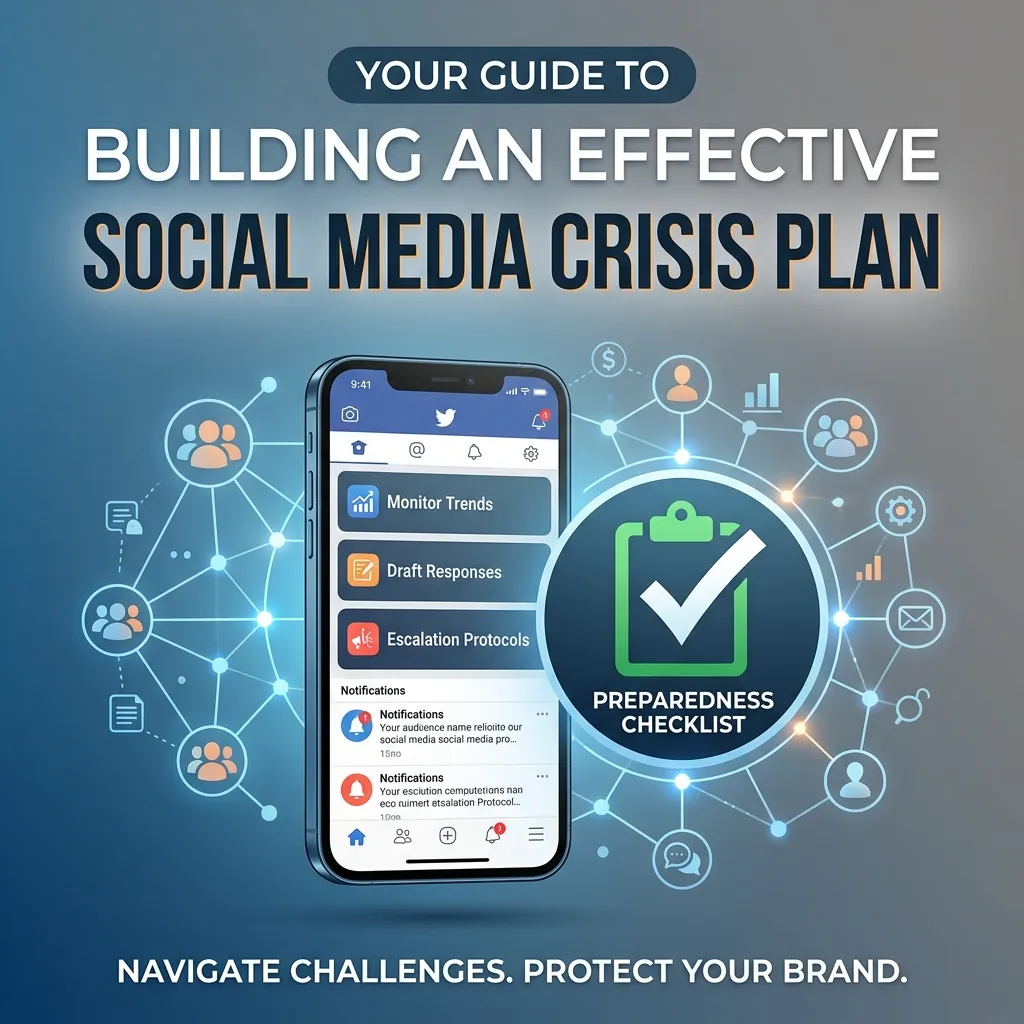
To effectively utilize your social media crisis plan, you must first know how to identify an actual crisis. A sudden spike in negative mentions does not always mean the sky is falling, but it does mean you need to pay attention.
The Tipping Point: Complaint vs. Crisis
Understanding the difference between a loud customer and a systemic crisis is vital. A complaint affects one person and can be solved by customer service. A crisis affects a wide audience and threatens the brand’s core reputation.
Here is a clear breakdown of the differences:
|
Feature |
Routine Customer Complaint |
True Social Media Crisis |
|---|---|---|
|
Scale of Issue |
Affects an individual or a small group |
Affects a massive, widespread audience |
|
Velocity |
Slow or isolated spread |
Rapid, viral spread across multiple platforms |
|
Brand Threat |
Minimal; solvable with standard support |
Severe; threatens stock, sales, and reputation |
|
Required Response |
Customer service agent |
Executive leadership, PR, and Legal teams |
|
Resolution Time |
Minutes to hours |
Days, weeks, or even months |
Key takeaway: Your social media crisis plan should clearly define the threshold at which an issue is escalated from customer support to the crisis management team.
Common Triggers for Online Crises
Online crises rarely happen in a vacuum. They are typically triggered by specific events that capture public attention and spark outrage. Recognizing these triggers is the first step in effective crisis management and a core component of any social media crisis plan.
Customer Experience Failures
When a single user’s negative experience with a product or service goes viral, it can spark a wider conversation. This often happens when a customer feels ignored by standard support channels and takes their grievance public. If other users chime in with similar experiences, the narrative can quickly spiral out of your control.
Product or Service Outages
Dangerous defects, widespread software outages, or severe quality control issues are guaranteed crisis triggers. If your service goes down and users cannot access their accounts, they will flood social media with complaints. Your social media crisis plan must account for operational failures.
Employee Mishaps and Rogue Accounts
Inappropriate behavior by staff members, either on company accounts or their personal profiles, can instantly damage your brand. A rogue employee tweeting from the corporate account or a high-level executive making an insensitive comment online requires immediate activation of your social media crisis plan.
Tone-Deaf Marketing and Public Missteps
Tone-deaf marketing campaigns, insensitive remarks by executives, or poorly timed promotional content often result in severe backlash. When a brand tries to capitalize on a sensitive cultural moment and misses the mark, the internet is notoriously unforgiving.
Types of Social Media Crises
Understanding the nature of the emergency helps dictate the appropriate response. Your social media crisis plan should have specific branches for the four main categories of crises.
Reputational Crises
These are events that damage the public’s perception of your brand. Examples include an offensive advertisement, an insensitive tweet, or a sudden boycott movement. The goal here is to apologize, clarify, and rebuild trust through transparent communication.
Operational Crises
These involve physical or technical disruptions, like a massive data breach, a global shipping delay, or a factory fire. During an operational crisis, your social media crisis plan must focus on frequent, factual updates to keep the public informed of your recovery progress.
Financial Crises
News regarding bankruptcy, severe stock drops, or financial fraud falls into this category. Communications must be tightly controlled by the legal and executive teams to avoid violating financial regulations while simultaneously reassuring customers and investors.
Ethical Crises
Scandals involving corporate malpractice, environmental damage, or unfair labor practices are deeply damaging. A social media crisis plan dealing with ethical issues requires profound empathy, a total lack of defensiveness, and a commitment to sweeping internal changes.
Step-by-Step: Building Your Proactive Social Media Crisis Plan

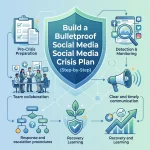
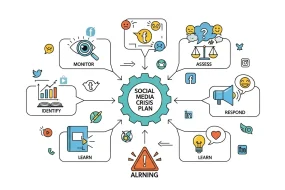
Preparation is the foundation of successful crisis management. Building a proactive social media crisis plan ensures your organization is ready to respond immediately when an issue arises.
Step 1: Assemble Your Crisis Response Team
Your crisis response team needs clear roles and responsibilities to function efficiently under pressure. A standard team defined in your social media crisis plan should include:
The Social Media Manager
This person monitors the platforms, identifies the initial spark, and publishes the approved responses. They act as the eyes and ears of the organization on the digital frontlines.
The Public Relations (PR) Specialist
The PR specialist crafts the core messaging and handles media inquiries. They ensure that the tone of your response aligns with broader corporate communications.
Legal Counsel
Legal counsel reviews public statements to prevent the company from assuming unnecessary legal liability. However, they must balance legal protection with the need for a human, empathetic response.
Executive Leadership
Executive leadership approves high-level strategy and serves as the public face for severe crises. When an apology needs serious weight, it should come from the CEO.
Establish a dedicated communication channel—such as a specific Slack channel or a secure WhatsApp group—so the team can collaborate instantly, regardless of the time of day.
Step 2: Establish Effective Monitoring and Social Listening Systems
You cannot manage a crisis you do not know about. Establish robust monitoring systems to catch negative sentiment early. This is the radar system of your social media crisis plan.
Setting Up Keyword Alerts
Use social listening tools to track mentions of your brand, key executives, and specific products. Set up alerts for specific keyword combinations that indicate trouble, such as your brand name paired with words like “scam,” “broken,” “boycott,” or “racist.”
Baseline Sentiment Analysis
Implement sentiment analysis features within these tools to establish a baseline of normal online conversation. When sentiment suddenly drops from positive to overwhelmingly negative, your alert triggers should immediately notify the crisis team.
Step 3: Develop Crisis Communication Protocols
During an emergency, drafting a response from scratch takes too much time. Develop crisis communication protocols within your social media crisis plan to streamline your initial reaction.
Pre-Approved Messaging Templates
Create fill-in-the-blank templates for common scenarios. Include templates for issuing an initial apology, acknowledging an ongoing issue, and promising a formal investigation. These holding statements buy you time to gather facts.
Tone and Voice Guidelines
Crisis communication requires a shift in your usual brand voice. Guidelines should emphasize empathy, transparency, and professionalism. Your social media crisis plan must explicitly dictate the removal of any humor, sarcasm, or emojis during an active emergency.
The Escalation Matrix
Define exactly when an issue moves from a routine customer service ticket to a full crisis. For example, if a negative post receives more than 500 shares within an hour, the escalation matrix should dictate that the PR specialist and Legal Counsel be notified.
Step 4: Define Your Specific Response Strategy
A strong response strategy dictates how you engage with the public during the height of the crisis. Your social media crisis plan must outline exactly how to speak to the audience.
The “Acknowledge, Apologize, Act” Framework
Rely on the “Acknowledge, Apologize, Act” framework. First, acknowledge the issue publicly so users know you are listening. Second, apologize for the frustration or harm caused, avoiding defensive language. Finally, state the specific actions your company is taking to resolve the problem.
Public vs. Private Responses
Decide when to use public versus private responses. Issue broad updates publicly, but move individual, heated arguments to direct messages to de-escalate the situation. Additionally, recognize when to stay silent. Engaging with internet trolls or highly politicized bait can sometimes fan the flames rather than extinguish them.
Exploring advanced marketing trends can also help you pivot your strategy safely post-crisis.
Discover partnership marketing trends in digital advertising here to see how collaborative efforts can reshape brand perception.
Step 5: Train Your Team for a Crisis
A social media crisis plan is only effective if your team knows how to use it. Conduct regular training sessions to keep everyone sharp.
Provide media training for any spokespersons or executives who might need to deliver a public video apology. Furthermore, run quarterly simulation exercises. Create a fictional crisis scenario, feed injects to your team in real-time, and evaluate how quickly and effectively they navigate the protocols.
Executing Your Social Media Crisis Plan in Real-Time
When the alerts start flashing, it is time to put your plan into action. A well-executed social media crisis plan relies on speed and accuracy.
Performing an Initial Assessment
First, determine if you are facing a true crisis or just a loud customer complaint. If the issue is gaining viral traction and spreading to multiple platforms, activate your crisis team immediately. Gather all the facts before making any sweeping statements.
Crafting the Initial Response
Speed and empathy are your top priorities. Issue an initial holding statement within the first 60 minutes. This statement does not need to have all the answers, but it must acknowledge the situation.
For example: “We are aware of the issue regarding [Product] and are urgently investigating. We apologize for the frustration and will provide a full update shortly.” This simple step is a cornerstone of a functional social media crisis plan.
Monitoring and Adapting as the Situation Evolves
A crisis is dynamic. Consistently monitor the public reaction to your initial statement. If the community feels the apology was insincere, you must adapt your strategy and provide more transparency. Choose the right platform for your response based on where the crisis originated. If a viral video is damaging your brand on TikTok, your primary response should be a video on TikTok.
Leveraging AI in Your Social Media Crisis Plan

Artificial intelligence provides modern organizations with a significant advantage in predicting and managing online emergencies. Integrating AI into your social media crisis plan enhances your reaction time.
AI-Powered Social Listening and Predictive Analytics
AI-powered social listening tools analyze vast amounts of unstructured data across the internet. By utilizing predictive analytics, these AI systems can spot emerging trends and warn your team about a potential crisis before human operators even notice a shift in the conversation.
Automating Initial Triage
During a massive outage, your team will be flooded with thousands of identical questions. AI chatbots can handle the triage process, automatically responding to users with the pre-approved holding statement defined in your social media crisis plan. This frees up your human team to focus on high-level strategy.
Ethical Considerations and Human Oversight
While AI is incredibly useful, brands must be cautious of AI bias. Automated systems might misinterpret cultural nuances or sarcasm, leading to inappropriate automated responses. Always ensure a human oversees the AI’s output during a sensitive crisis to maintain genuine empathy.
Post-Crisis Analysis and Reputation Recovery
The work does not end when the negative comments stop. Post-crisis analysis is vital for long-term brand survival and is the final phase of your social media crisis plan.
Debriefing and Updating the Plan
Once the dust settles, gather the crisis response team for a comprehensive debrief. Document what went right, what went wrong, and where the bottlenecks occurred. If the legal review process took too long, update your social media crisis plan to streamline that specific pipeline.
Rebuilding Trust and Online Reputation
Rebuilding trust requires a deliberate effort. Shift your focus toward proactive content creation that highlights your company’s positive values, community involvement, and the concrete changes you made. Engage heavily with positive feedback to slowly bury the negative sentiment. Long-term brand building relies on proving to your audience that you learned from the mistake.
Frequently Asked Questions (FAQ)
What is a social media crisis plan?
A social media crisis plan is a structured, pre-approved strategy designed to help organizations identify, navigate, and recover from online emergencies. It outlines team roles, communication protocols, and specific actions to protect brand reputation when disaster strikes.
What is the most important first step during a social media crisis?
The most important first step is acknowledging the issue publicly as quickly as possible. Issuing a swift, empathetic holding statement shows your audience that you are aware of the problem and taking it seriously, which helps prevent the spread of misinformation.
Who should speak on behalf of the company during a crisis?
For severe crises that threaten the company’s core operations or reputation, the CEO or a designated executive should serve as the public spokesperson. For lower-level operational issues, the Public Relations Director or the official branded social media accounts can handle the communications.
How long does it take for a brand to recover from a social media crisis?
Recovery timelines vary significantly depending on the severity of the crisis and the quality of the brand’s response. Minor missteps may be forgotten in a few weeks, while major ethical scandals can require years of consistent, proactive reputation management to rebuild consumer trust.
Should I choose manual monitoring or AI tools for crisis detection?
Choose AI-powered social listening tools if you have a high volume of daily brand mentions and need real-time predictive alerts. Choose manual monitoring only if you are a very small local business with a highly limited online presence, where software investments are not yet justifiable.
How do I know if a negative comment is an actual crisis?
A single negative comment is usually a customer service issue, whereas a crisis involves a rapid, viral spread of negative sentiment across multiple platforms. If the issue begins to attract media attention or threatens your company’s financial standing, it has escalated to a crisis.
Why is the “Acknowledge, Apologize, Act” framework effective?
This framework is effective because it removes defensiveness and centers the response on empathy and solutions. Acknowledging validates the customer’s feelings, apologizing shows accountability, and acting demonstrates your commitment to fixing the underlying problem.
Should we delete negative comments during a crisis?
You should never delete negative comments unless they violate clear community guidelines, such as containing hate speech, threats, or severe profanity. Deleting valid criticism looks like a cover-up and will only incite further anger from your audience.
How often should a social media crisis plan be updated?
Your social media crisis plan should be reviewed and updated at least twice a year. You must update it whenever there is a change in your core crisis team personnel, a shift in social media platform algorithms, or after completing a post-crisis debrief.
Can a social media crisis plan prevent emergencies from happening?
While a plan cannot prevent every emergency, robust social listening and proactive protocols can stop minor issues from escalating. A strong social media crisis plan minimizes the damage and drastically reduces the time it takes for your brand to recover.


I’m a communication strategist and blogger at SMCrisis, where I cover topics on social media crises, digital reputation, and brand trust. I enjoy helping businesses stay prepared and proactive in the fast-changing online world. Every post I write aims to guide readers toward smarter crisis responses and stronger digital credibility.










No Comments