



This guide explains how to apologize in marketing during a social media crisis, covering responsibility, emotional impact, action plans, timing, communication channels, and recovery strategies to rebuild trust, protect brand reputation, and strengthen customer relationships.
When a brand makes a misstep, the entire world watches. Social media amplifies every misunderstanding, allowing customers to voice their frustrations publicly. This rapid amplification can turn a minor error into absolute chaos. Still, the most harmful damage rarely comes from the original mistake itself. Instead, the damage stems from how brands react to it.
If you want to know how to apologize in marketing, you must understand that a well-designed apology offers a unique opportunity. It allows you to stabilize a social media crisis, rebuild lost trust, and ultimately strengthen customer relationships. Conversely, a poorly handled apology can destroy a decade of hard-earned goodwill overnight.
This comprehensive guide will lead you from the initial shock of a crisis to long-term brand recovery. We will explore the essential elements of an effective apology strategy, examine real-world crisis case studies, and turn a marketing blunder into a masterclass in brand accountability.
The Anatomy of a Brand Crisis
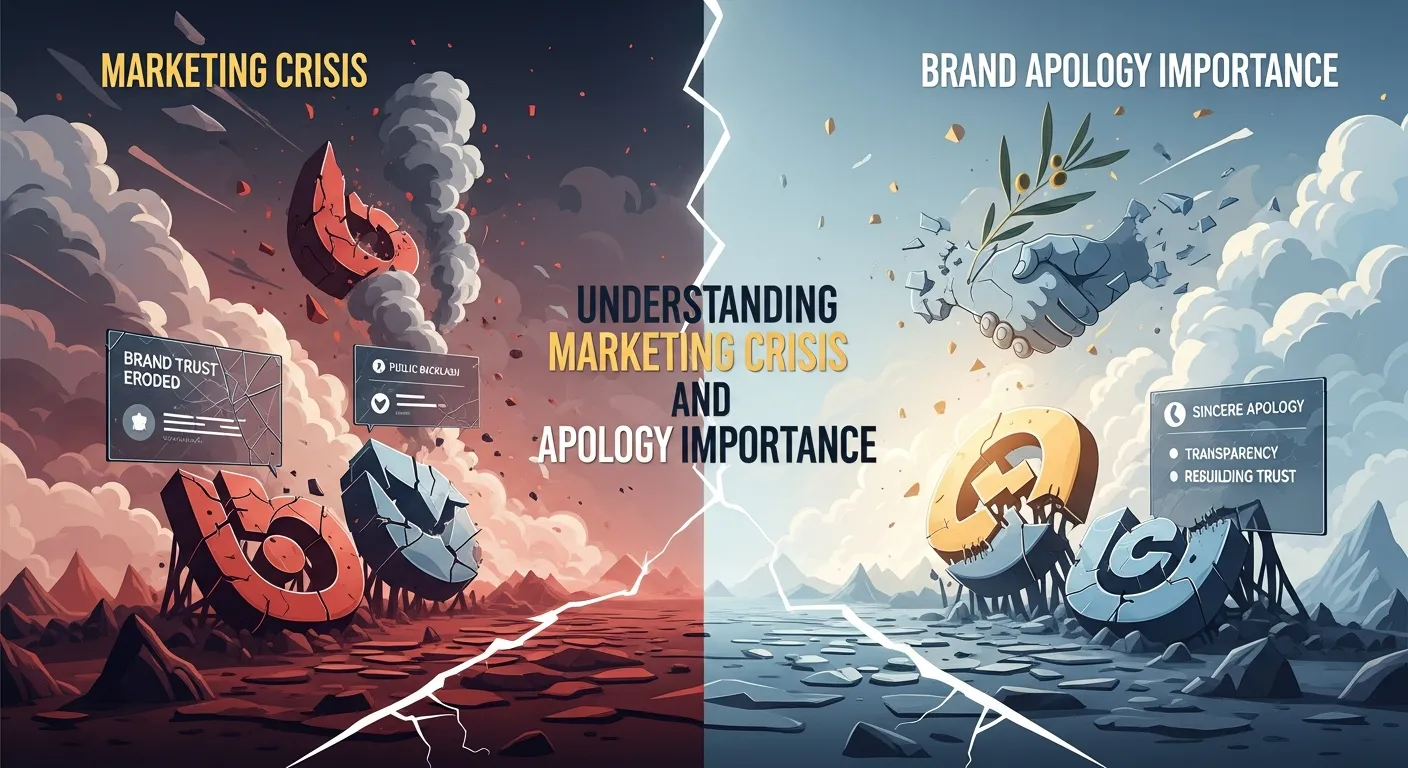
Corporate apologies come in many forms. Sometimes a product recall threatens customer safety. Other times, a data breach compromises sensitive individual information. Often, an insensitive marketing campaign offends entire communities. Perhaps a rogue employee reflects poorly on the company’s culture.
Each type of social media crisis requires a tailored reaction. However, they all share general properties. They manifest quickly, generate acute public scrutiny, and demand immediate action. The stakes for brands are incredibly high and include issues surrounding brand reputation, customer loyalty, and financial results.
Research consistently shows that 86% of consumers will stop buying from a company after a severe negative experience. However, brands that react quickly and appropriately—and apologize in marketing with skill—can emerge even stronger. Understanding how and when to apologize in marketing provides an effective shield against permanent damage, helping you prevent a social media crisis from spiraling out of control.
Types of Marketing Crises
To effectively apologize in marketing, you must first identify the exact type of crisis you are facing. Each situation demands a unique approach and communication strategy.
- Insensitive Campaigns: Culturally or socially tone-deaf advertisements.
- Service Failures: Major outages, undelivered services, or broken promises.
- Security Breaches: Customer data exposures or hacks.
- Executive or Employee Misconduct: Leaders’ or staff actions that go public and reflect negatively on brand culture.
- Product Safety Issues: Recalls or customer harm from defective items.
Standard Complaint vs. Social Media Crisis
|
Metric |
Standard Complaint |
Social Media Crisis |
|---|---|---|
|
Visibility |
Contained to one thread |
Spreading across multiple platforms |
|
Speed |
Slow, manageable |
Lightning-fast, viral spread |
|
Threat Level |
Low |
High threat to brand survival |
|
Action Required |
Basic customer support |
Immediate need to apologize in marketing |
The Five Pillars of Effective Brand Apologies
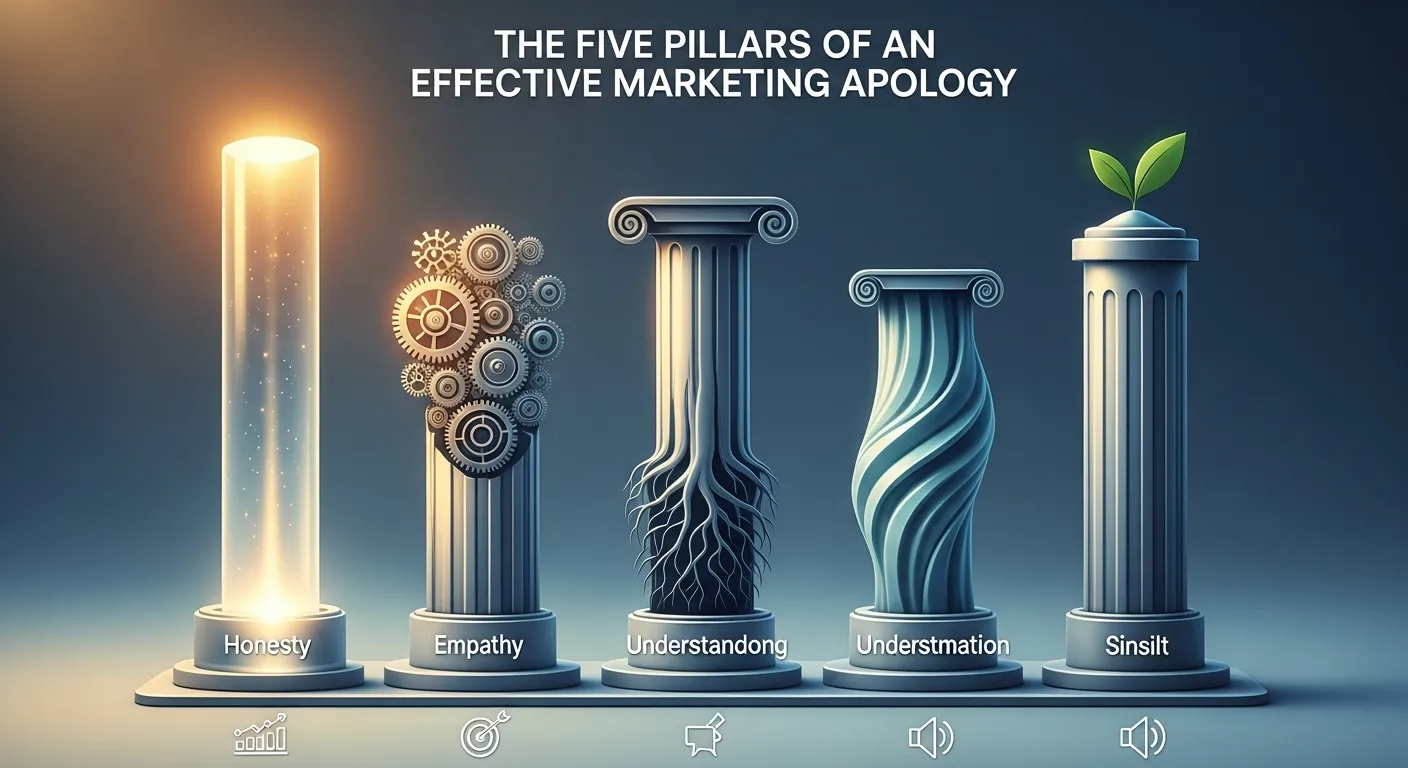
When you need to apologize in marketing, do not rely on empty corporate jargon or vague statements. Build your apology on these five unshakeable pillars for maximum effectiveness.
Accept Full Responsibility
The first step toward a meaningful apology in marketing is taking complete ownership of the mistake. Avoid the passive voice and stop deflecting blame. Don’t use language like “Mistakes were made” or “We’re sorry if anyone was offended.” Instead, say exactly what went wrong and your role in it, such as “We failed to properly test our product before launch” or “Our campaign was insensitive and hurtful.” Directly accepting responsibility prevents audiences from feeling ignored or gaslit, starting the repair of trust in moments of a social media crisis.
Why Direct Ownership Matters
Customers are quick to notice evasions. In any crisis case study, brands that apologize directly invariably fare better than those that hide behind corporate speak. Real ownership sets the tone for authentic engagement.
Acknowledge the Impact
Next, brands must specifically recognize how their actions have affected people. Directly referencing the tangible or emotional harm, such as “Our breach caused you anxiety about your information” or “Our service failure disrupted your business,” validates the customer’s experience. This acknowledgment demonstrates genuine empathy, which is essential for repairing relationships and emerging resilient from a social media crisis.
How to Listen Effectively
- Invite feedback from those harmed.
- Reference stories or testimonials that bring the impact to life.
- Include real examples in your message.
Express Genuine Remorse
When you apologize in marketing, your words should include real, heartfelt regret—not just sorrow over exposure or legal risk. Phrases like “We are deeply sorry for breaking your trust” or “We feel terrible about the pain our actions caused” go much further than standard, hollow statements.
Humanizing the Brand
In high-profile crisis case study analyses, emotional recognition is consistently highlighted as a driver of forgiveness. Customers understand that brands are made of people—showing emotion is not a weakness, it’s a strength in a social media crisis.
Commit to Specific Action
Words must be matched by tangible changes. Commit to specific, measurable steps—refunds, transparent reporting, team retraining, or policy revision—that directly address the issue and work toward preventing a recurrence. For example, “We will refund all affected customers within 10 business days” inspires much more confidence than “We’re working to do better.”
Tips for Setting Actionable Solutions
- Set deadlines.
- Appoint visible accountability leads.
- Share periodic progress updates with affected parties.
- Integrate lessons learned into your larger brand playbook.
Follow Through Consistently
Following through is what sets apart apologies in marketing that matter from those that do more harm than good. Audiences expect regular updates, not just a one-time statement. Transparency throughout the recovery process—such as continuous reporting on remediation efforts—proves you mean what you say and cements trust. In any lasting relationship, everyone wants to see actions match words.
Building a Trust Cycle
- Update your audience at major milestones.
- Celebrate fixes achieved.
- Publicly address setbacks with honesty.
Common Apology Mistakes That Backfire
Even as you strive to apologize in marketing, beware of classic pitfalls that can ruin your progress.
The Non-Apology Apology
Phrases like “We’re sorry if you were offended” blame recipients. Such non-apologies damage trust and escalate a social media crisis. Be direct, acknowledging that your choices—not the customer’s feelings—caused harm.
The Excuse-Heavy Response
Jumping straight to explanations excuses the mistake rather than owning it. In crisis case study examples, brands that first accept blame and then, separately, provide context tend to recover trust faster.
The Delayed Response
Silence allows negative sentiment to fester and drives more customers away. Even if you need more time to provide details, issue a rapid initial acknowledgment: “We’re aware of the issue, and we’re investigating solutions right now.” This transparency is core to apologizing in marketing.
The Overly Legal Response
Overly legalistic apologies may protect your company from liability but alienate your community. Prioritize sincerity—once the human connection is restored, legal messaging can take a supporting role.
Crafting Your Apology: A Step-by-Step Process
Step 1: Assess the Situation
Thoroughly understand what went wrong before you apologize in marketing. Use cross-functional teams to gather facts (from support logs, social listening tools, staff, and media reports). Get to the root cause so you can communicate with confidence and accuracy.
Step 2: Identify Your Audience
Customers, employees, investors, and regulators all have unique perspectives. Use segmentation to customize your apology, addressing each group in a language that resonates with them.
Step 3: Choose Your Spokesperson
The more severe the social media crisis, the higher the spokesperson should be in the company. A CEO-led apology demonstrates leadership’s personal investment.
Step 4: Select the Right Channels
Deploy your message on the platforms your audience trusts. Social media may be better for immediate, transparent mass communication; emails can be used for more personalized messages, and press statements lend authority for wide-scale issues. Learn more about crafting a proper response here:
Read about effective post-crisis apologies.
Step 5: Draft and Review
Follow the five pillars as a checklist. Involve people outside of crisis response to review your draft and spot any tone, clarity, or empathy issues. This cross-check prevents backfires and helps capture nuance.
Channel-Specific Considerations
Social Media Apologies
- Keep apologies concise while addressing the facts.
- Prepare for real-time engagement—answer questions openly and respectfully.
- Don’t ignore direct messages or replies; every interaction is a chance to show accountability.
Email Communications
- Start with the apology and then expand on actions being taken.
- Segment recipient lists to tailor additional support or solutions as needed.
- Clearly signpost next steps and customer service contacts.
For more platform guidance: Explore social media apology strategies.
Press Statements
- Offer comprehensive context for news outlets and stakeholders.
- Maintain a steady tone—neither overly defensive nor too casual.
- Consider hosting briefings or Q&As for especially large crises.
Internal Communications
- Share information with employees before the public announcement, if possible.
- Supply FAQs, talking points, and escalation contacts.
- Check for employee understanding; they’re the frontline of your reputation after a social media crisis.
Learning from Apology Success Stories
Many brands have transformed disaster into opportunity through strategic, authentic apologies in marketing. For example, a global food chain faced backlash after a supply chain breakdown. Their fast, personal apology—combined with transparent reporting of steps to fix the issue—not only restored their reputation but increased customer loyalty, as documented in several crisis case study reviews.
Key Elements of Success
- Speed: Rapid acknowledgment keeps you “in the conversation.”
- Sincerity: No tricks—just truth.
- Specificity: Concrete action plans.
- Follow-Through: Consistent and visible progress.
Building Long-Term Trust Through Transparency

An apology, when you apologize in marketing, is simply your opening move in a longer game. To truly rebuild your brand, embrace transparency as a business value. This might mean regular social media updates about your progress, third-party audits on post-crisis reforms, or creating customer panels for feedback.
- Progress Reports: Share metrics and updates publicly.
- External Audits: Publish third-party assessments of corrective actions taken.
- Community Engagement: Invite customer voices into recovery planning and solution design.
The Evolving Role of Apologies in Marketing
Today, apologizing in marketing is not just about fixing an incident—it’s about building a culture where learning from mistakes is public and celebrated. Internally, share what you learned with your team. Externally, invite your audience to join your journey toward better business practices. The brands that thrive are those that see every crisis as a chance to demonstrate growth, not just damage control.
Trends to Watch:
- Video apologies: Direct, unfiltered access to leadership.
- Community forums: Public listening sessions to understand impact.
- Interactive reports: Progress tracking customers can see and comment on.
Use moments of apology in marketing as catalysts for ongoing improvement, culture change, and continual customer engagement.
Your Path Forward After the Apology
The true test comes in the days, months, and even years following a public apology. To sustain trust after a social media crisis:
- Continue to seek feedback and act on it.
- Stay vigilant with monitoring to detect emerging risks.
- Evolve policies, products, and training to address discovered weaknesses.
- Share success stories as you meet milestones—showing that apologizing in marketing isn’t just crisis management, but a tool for long-term brand evolution.
Remember: authenticity is everything. Consumers recognize when brands genuinely care. Commitment to improve—manifest through actions, not just promises—turns apology moments into some of your brand’s most powerful memory links.
Frequently Asked Questions (FAQ)
1. What is the very first step when a social media crisis hits?
The first step is pausing all outgoing promotional content immediately to avoid looking tone-deaf. Gather your core team, assess the situation’s scope, and issue an initial holding statement while preparing a comprehensive apology in marketing.
2. How do we know if our accounts were compromised to cause this crisis?
If uncharacteristic, offensive content suddenly posts from your accounts, you might be hacked. Your IT team must act quickly; reviewing a guide on handling a social media security breach helps you regain control.
3. Should we delete negative comments while we prepare to apologize in marketing?
Generally, avoid deleting comments unless they break platform rules. Addressing valid criticism publicly in your apology shows accountability and transparency, essential in resolving a social media crisis.
4. How fast should a brand apologize in marketing during a crisis?
Issue a holding statement within the first hour, followed by a detailed apology within 24 hours. Quick, empathetic communication shows your commitment to learning from the crisis case study.
5. How can we ensure our entire digital strategy is crisis-resistant?
Develop robust guidelines across channels. Align your marketing efforts with social media crisis management best practices to protect your brand voice and prevent avoidable mistakes.
6. Who should be the public face of the company when we apologize in marketing?
In serious social media crisis cases, a CEO or another senior executive should speak directly to the public. For smaller issues, a PR rep can handle communication.
7. Should we allow comments on our public apology post?
Yes. Enabling comments shows genuine openness and willingness to listen, turning critics into collaborators and demonstrating your resolve to do better after apologizing in marketing.
8. What triggers most marketing crises in the first place?
Most crises come from failures in campaign approvals, insensitive content, or customer service missteps that go viral. Understanding the common causes of social media crisis will help you design safer workflows.
9. Can a past crisis case study really help us in a modern crisis?
Absolutely. Reviewing prior crisis case study materials reveals which apology tactics work and which don’t—providing blueprints for how to apologize in marketing more effectively now.
10. How soon after we apologize in marketing can we return to normal posting?
Wait until public anger subsides and sentiment improves—which may take days or weeks, depending on the severity of the social media crisis. Resume normal activity with value-driven content, not hard selling.


I’m a passionate digital strategist and content creator focused on crisis communication, social media management, and online reputation. At SMCrisis, I share insights, tips, and real-world strategies to help brands navigate challenges, protect their image, and build trust in the digital space. My goal is to make crisis management simple, smart, and actionable for every business.










No Comments