


This guide explains how brands choose between full apology and strategic acknowledgment during crises, highlighting legal risk, responsibility levels, and stakeholder expectations to manage social media crises effectively while protecting reputation and trust.
A public crisis can make or break your company’s reputation in a matter of minutes. The words you choose under pressure do not just form public opinion. They determine whether your organization remains strong or faces permanent, irreversible damage.
Two distinct approaches dominate modern response strategies: offering a complete, unreserved apology or choosing to acknowledge in crisis communication without accepting direct blame. Both methods serve entirely different goals and carry different levels of risk. They also perform better in highly specific situations.
Understanding when to use each approach helps you navigate a social media crisis efficiently. This extensive guide examines the significant differences between a full apology and a strategic acknowledgment. We will explore how to protect your organization’s long-term interests during your next major crisis.
Understanding Apologies vs. Acknowledgments
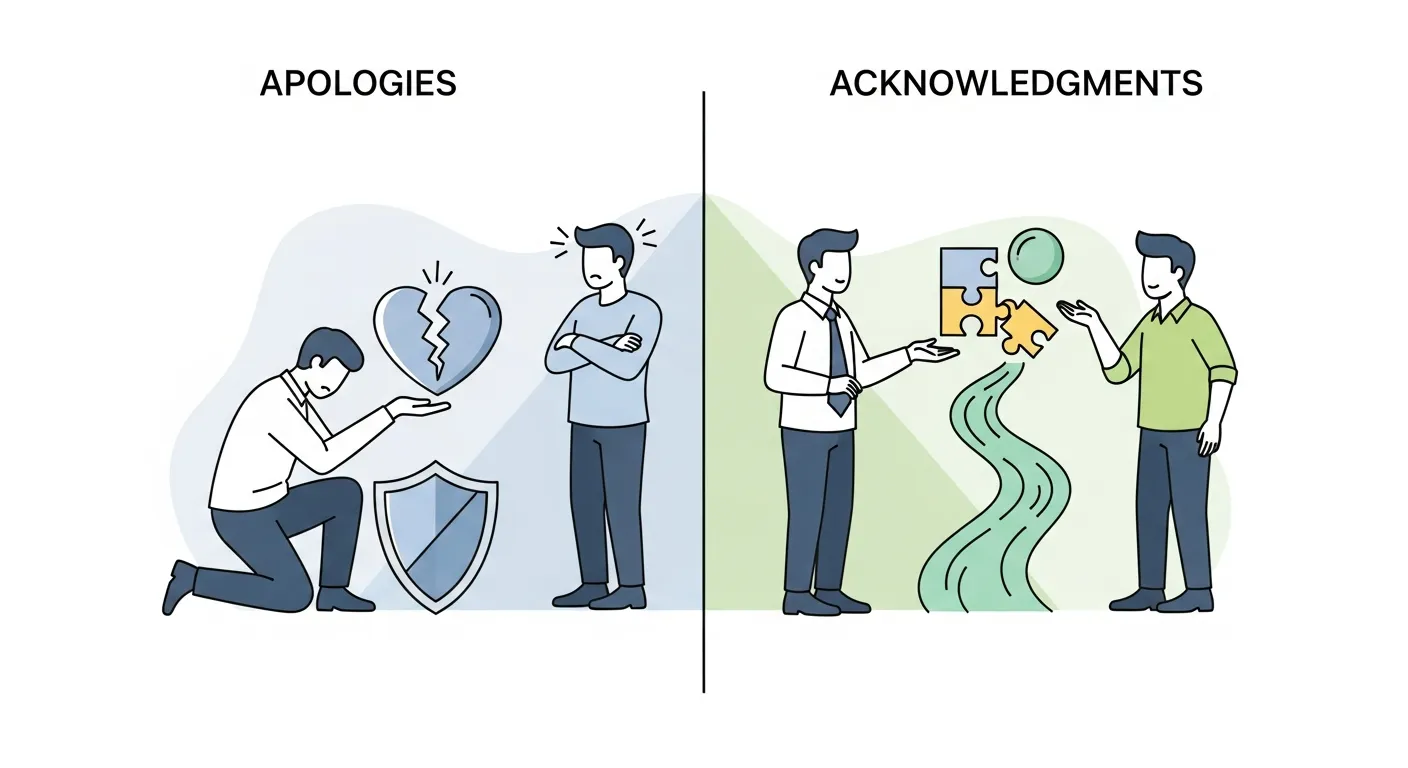
When dealing with a public disaster, leadership teams often confuse apologizing with acknowledging. Mixing these two distinct approaches often worsens a social media crisis. You must understand the precise anatomy of each method.
What Makes a True Apology
A genuine, effective apology in crisis communication consists of three essential elements. You must accept full responsibility, express authentic repentance, and outline a clear obligation to change. When organizations apologize properly, they clearly admit they did wrong.
Effective apologies use direct, active language. You must say, “We made a severe mistake,” “We are completely responsible,” or “We failed to meet our safety standards.” You must actively avoid passive, evasive language. Phrases like “mistakes were made” or “we are sorry if someone was offended” only fuel the public’s anger.
The best apologies always emphasize specific, measurable steps. You must explain exactly how the organization will prevent similar problems from ever occurring again.
The Strategic Role of Acknowledgments
Choosing to acknowledge in crisis communication takes an entirely different approach. You recognize that a serious problem exists and express deep concern for those affected. However, you do this without admitting legal or moral responsibility for the event.
This strategy allows organizations to show genuine empathy while protecting themselves from potential legal liabilities. Statements that acknowledge in crisis communication typically include phrases like, “We deeply understand your concerns.” You might also say, “We recognize the massive impact this has had on your business.”
The primary focus remains on expressing care for your stakeholders. You offer support without accepting direct blame for the underlying situation.
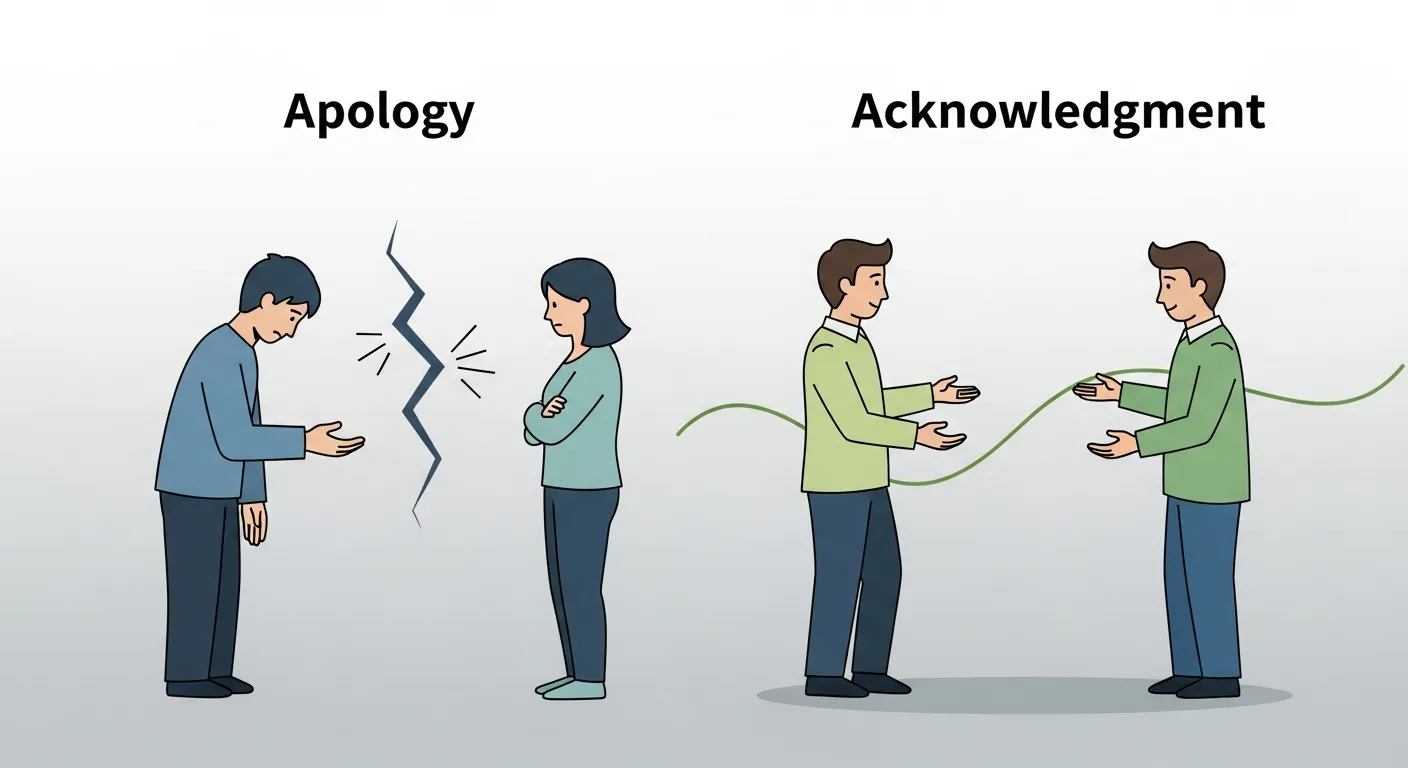
Apology vs. Acknowledgment
|
Feature |
Full Apology |
Acknowledge in Crisis Communication |
|---|---|---|
|
Primary Goal |
Accept blame and rebuild trust |
Express empathy and validate feelings |
|
Legal Risk |
High (admission of guilt) |
Low (no admission of fault) |
|
Best Used When |
The company is clearly at fault |
The cause is external or unknown |
|
Key Phrase |
“We are responsible for this failure.” |
“We recognize how difficult this is.” |
Legal and Reputational Considerations
Every word you publish during a social media crisis carries weight. You must balance the public’s demand for accountability with your company’s legal safety.
When Apologies Create Legal Risk
Full corporate apologies can severely strengthen legal cases against your organization. In many jurisdictions, public admissions of guilt serve as direct evidence in court proceedings. Industries with high litigation risks face intense pressure to avoid full apologies.
Healthcare, manufacturing, and financial services sectors often lean heavily on strategies that acknowledge in crisis communication. However, some regions feature specific apology laws. These laws protect certain expressions of sympathy from being used as evidence of liability. You must consult your legal team to understand your local legal landscape.
Reputation Management Through Different Approaches
Research shows that public expectations vary significantly based on the exact nature of the crisis. When organizations clearly cause harm through gross negligence, stakeholders demand full apologies. Choosing to simply acknowledge in crisis communication in these situations appears highly evasive and insincere.
Conversely, some crises occur beyond an organization’s direct control. Natural disasters, sudden supply chain failures, or third-party vendor hacks require a different tone. In these scenarios, statements that acknowledge in crisis communication often prove much more appropriate and effective.
Strategic Frameworks for Decision-Making
You need a reliable framework to decide between an apology and an acknowledgment. Making this decision under pressure often leads to disastrous results.
The Responsibility Matrix
Consider your organization’s actual level of responsibility using this simple matrix:
- High Responsibility: Your organization directly caused the problem through poor decisions or negligence. Full apologies work best here.
- Medium Responsibility: Your organization contributed to the problem, but external factors played significant roles. Consider modified apologies that acknowledge your role while noting other factors.
- Low Responsibility: External factors entirely caused the issue. Choosing to acknowledge in crisis communication proves most appropriate here.
Learn more about crafting these responses:
How to make an effective post-crisis apology
Stakeholder Expectations Assessment
Different stakeholder groups hold varying expectations for your official response. Customers prioritize emotional validation and assurances of future prevention. Regulators focus entirely on compliance and rapid corrective action.
Investors care deeply about financial impacts and management competence. Mapping these expectations helps you craft targeted messages. You must address key concerns while maintaining consistency across all corporate communications.
Industry-Specific Considerations

Different industries require different crisis communication tactics. A strategy that saves a tech company might destroy a hospital.
Healthcare and Patient Safety
Healthcare organizations face incredibly unique challenges during a crisis. Patient safety incidents require a careful balance between transparency, deep empathy, and strict legal protection.
Many healthcare systems adopt disclosure programs that emphasize acknowledgment and clear explanations. They reserve full apologies only for clear, documented cases of preventable medical harm.
Technology and Data Security
Technology companies frequently deal with severe data breaches and massive service outages. These brands typically benefit from strategies that acknowledge in crisis communication. They focus on the impact on users while providing technical explanations.
Full apologies work best when security failures result directly from poor coding practices or ignored warnings. Any technology crisis case study reveals that users demand speed and transparency above all else.
Financial Services and Trust
Financial institutions survive entirely on stakeholder trust. They must manage severe regulatory scrutiny during any crisis. Acknowledgments often prove highly effective for market-driven issues beyond the bank’s control.
However, internal operational failures or embezzlement scandals require much stronger apologies. You must restore public confidence quickly to prevent a devastating bank run.
Crafting Effective Messages
The specific words you use dictate how the public receives your message. You must draft your statements with absolute precision.
Elements of Strong Acknowledgments
Effective statements that acknowledge in crisis communication demonstrate deep understanding without admitting fault. They typically include a clear recognition of stakeholder concerns. You must also express genuine empathy and care for the affected parties.
Include a firm commitment to investigate the issue thoroughly. Always provide clear next steps and a strict timeline for future updates.
Get further insights on crafting social responses:
Social media apologies and crisis management
Components of Meaningful Apologies
When full apologies prove appropriate, they must remain specific about what went wrong. Be absolutely clear about your organizational responsibility. Focus entirely on the affected parties rather than defending your company’s past record.
Always accompany your apology with concrete, measurable corrective actions. A good crisis case study shows that actions speak much louder than words.
Language Choices That Matter
Active voice always sounds more accountable than passive voice. Saying “We failed” works better than “A failure occurred.” Specific timelines demonstrate real commitment more effectively than vague promises of future improvement.
Avoid language that minimizes the severity of the issue. Never shift the focus to the positive aspects of your organization during an apology. Stay hyper-focused on addressing the immediate pain points of your stakeholders.
Common Pitfalls to Avoid
Many companies make a bad situation worse by stumbling into predictable communication traps. Avoid these common errors during a social media crisis.
The Half-Apology Trap
Half-apologies sound like apologies but actively dodge true responsibility. These statements always backfire during a social media crisis. Phrases like “We apologize for any inconvenience” sound robotic and dismissive.
Saying “We are sorry you feel that way” invalidates the customer’s experience. These phrases generate massive additional criticism and prolong the crisis.
Over-Explaining or Under-Communicating
Providing too much technical detail creates brand new legal vulnerabilities. It also confuses the general public. However, insufficient communication leaves angry stakeholders to fill information gaps with wild speculation.
You must strike a careful balance. Address the key concerns clearly without offering unnecessary, confusing elaboration.
Inconsistent Messaging Across Channels
Ensure your strategy remains consistent across all communication channels. You cannot issue a full apology on Twitter while posting a vague acknowledgment on your website. Mixed messages undermine your overall credibility and create massive confusion.
Measuring Communication Effectiveness
You must measure the impact of your chosen strategy. Guessing is not a viable crisis management tactic.
Key Performance Indicators
Track specific metrics to gauge your success. Monitor media sentiment analysis closely. Watch your social media engagement rates and the overall tone of the comments.
Track rapid drops or spikes in your customer satisfaction scores. Measure employee confidence levels through rapid internal surveys. Finally, monitor any regulatory feedback you receive.
Long-Term Reputation Monitoring
Crisis communication effects extend far beyond the immediate 48-hour response period. You must monitor long-term brand perception and customer loyalty.
Assess whether your decision to apologize or acknowledge in crisis communication actually achieved your desired outcomes. A thorough crisis case study always reviews the brand’s standing six months after the event.
Building Your Crisis Communication Framework
Do not wait for a disaster to build your response plan. Develop clear criteria for choosing between apologies and acknowledgments today.
Create flexible message templates and establish strict approval processes. This preparation enables rapid, confident responses while maintaining high quality.
Train your communications team extensively on both approaches. Establish clear decision-making protocols that weigh legal, reputational, and stakeholder factors. Regular scenario planning exercises help your team apply these frameworks under extreme pressure.
Moving Forward After the Crisis
Whether you choose a full apology or decide to acknowledge in crisis communication, the aftermath determines your long-term success. You must implement your promised changes diligently.
Provide regular, transparent progress reports to your audience. Maintain open communication channels with all affected stakeholders. Conduct a thorough assessment after the crisis fades. Evaluate your communication efficiency and identify crucial areas for improvement.
Your choice between an apology and an acknowledgment shapes your long-term legacy. By understanding the strategic implications of each approach, you can navigate any social media crisis with total confidence. You will protect your organization’s reputation while earning the lasting respect of your stakeholders.
Frequently Asked Questions (FAQ)
1. What does it mean to acknowledge in crisis communication?
To acknowledge in crisis communication means recognizing that a problem exists and expressing empathy for those affected. You validate the public’s feelings without legally admitting direct fault or responsibility for the underlying incident.
2. How do we respond if a hack causes the crisis?
If cybercriminals compromise your systems, you must prioritize transparency while investigating. Reviewing a guide on a social media security breach helps you communicate the impact to users without prematurely admitting internal negligence.
3. When is a full apology absolutely mandatory?
A full apology becomes mandatory when your organization directly causes undeniable harm through negligence, poor oversight, or unethical decisions. Deflecting blame in these clear-cut situations destroys brand trust and escalates the social media crisis.
4. How can we train our team to handle these decisions quickly?
Preparation requires having established protocols and clear leadership hierarchies before disaster strikes. Implementing social media crisis management best practices ensures your team knows exactly when to apologize and when to acknowledge.
5. Does an acknowledgment protect us from lawsuits?
While an acknowledgment avoids a direct admission of guilt, it does not offer absolute immunity from future lawsuits. However, it significantly lowers your immediate legal risk compared to a full, unreserved corporate apology.
6. What usually triggers the need for these communication strategies?
Most crises stem from offensive ad campaigns, rogue employee behavior, or sudden product failures. Understanding the common causes of social media crisis events helps your brand monitor vulnerabilities and prepare the appropriate response strategy.
7. Why do people hate the phrase “mistakes were made”?
This specific phrase uses passive voice to completely dodge personal or organizational accountability. It tells the angry audience that the company refuses to own its specific actions, which always worsens a social media crisis.
8. Can we use a hybrid approach of both strategies?
Yes, a hybrid approach often works well for complex situations involving multiple third parties. You can fully apologize for your specific role while choosing only to acknowledge the broader, external factors you could not control.
9. How do we know which strategy worked better in hindsight?
You determine success by conducting a post-incident crisis case study on your own brand. If your customer retention rates stabilize and negative media sentiment drops quickly, your chosen communication strategy was highly effective.
10. Who should deliver the final public statement?
For severe crises requiring a full apology, the CEO must deliver the message to show ultimate accountability. For minor issues requiring only an acknowledgment, a senior PR representative or customer success manager is usually sufficient.


I’m a passionate digital strategist and content creator focused on crisis communication, social media management, and online reputation. At SMCrisis, I share insights, tips, and real-world strategies to help brands navigate challenges, protect their image, and build trust in the digital space. My goal is to make crisis management simple, smart, and actionable for every business.



No Comments