


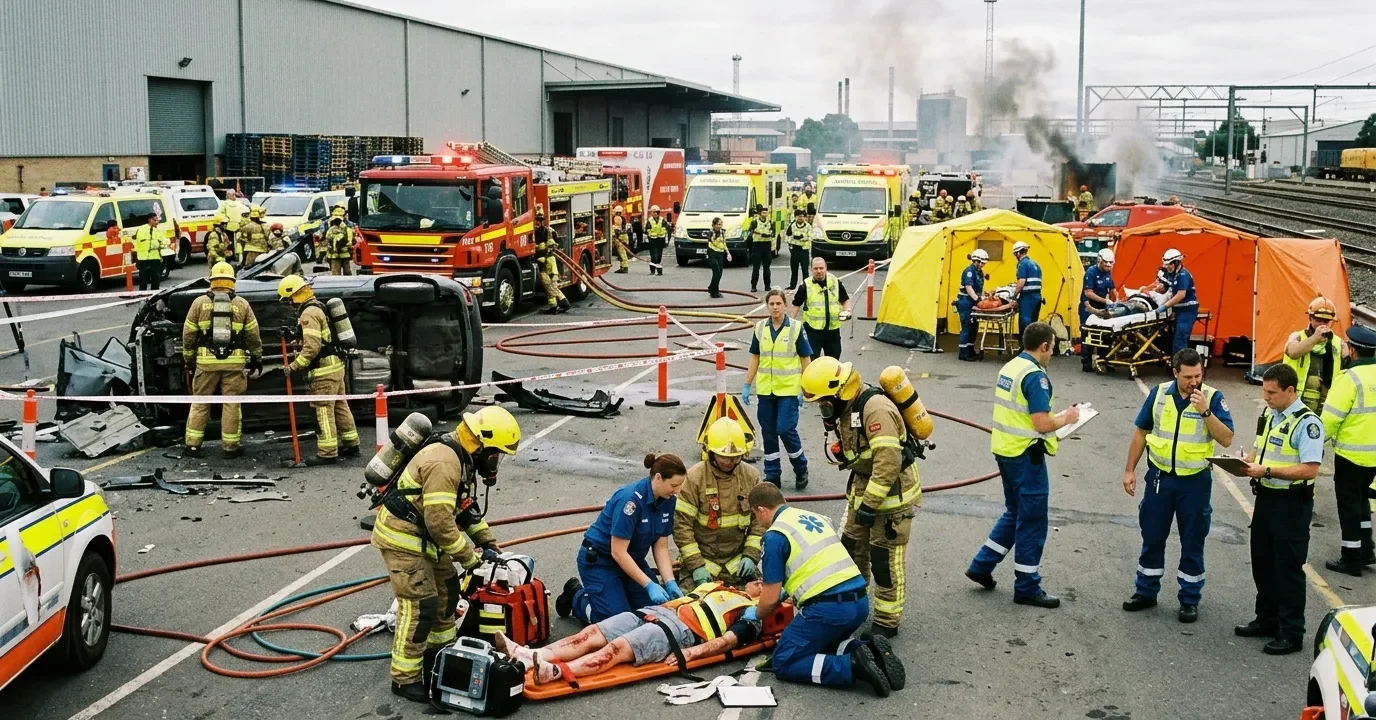
Unexpected disasters can paralyze unprepared organizations within minutes. Implementing robust crisis simulation drills ensures your teams respond with speed, precision, and coordination. By replicating high-pressure scenarios, companies transform theoretical safety plans into muscle memory, safeguarding personnel, mitigating risk, and preserving operational continuity.
This comprehensive guide explores advanced methodologies for designing, executing, and evaluating crisis simulation drills. Discover how to map operational vulnerabilities, engage cross-functional stakeholders, overcome common execution mistakes, and leverage real-time analytics to build an unshakeable organizational response framework that protects your enterprise against catastrophic disruptions.
The Strategic Importance of Emergency Preparedness and Readiness
Modern business environments face an unprecedented spectrum of disruptions, ranging from sophisticated cyber attacks and supply chain collapses to physical security threats and severe weather events. Organizations that rely solely on static emergency response manuals often discover their vulnerabilities only when disaster strikes. Written plans sit quietly on digital shelves until an actual incident occurs, at which point panic and confusion override bureaucratic protocols. Transitioning from passive documentation to active preparation requires a fundamental cultural commitment to operational resilience. Leadership teams must recognize that emergencies do not announce themselves in advance; therefore, workforce readiness demands regular, rigorous testing under simulated pressure.
When an enterprise conducts systematic crisis simulation drills, employees shift from a state of hopeful ignorance to active competence. People learn how to communicate across departments when primary channels fail, how to execute failover procedures without hesitation, and how to maintain emotional composure during high-stress moments. According to preparedness guidelines published by the Federal Emergency Management Agency (FEMA), organizations that routinely practice emergency scenarios recover their core operational functions significantly faster than those that test plans infrequently or only after an actual incident occurs. Furthermore, insurance providers, regulatory bodies, and enterprise partners increasingly evaluate third-party risk based on documented testing cadence and employee training efficacy.
Building a resilient organizational culture also involves dismantling departmental silos that typically hinder emergency communication. During a major crisis, legal, public relations, human resources, executive leadership, and IT operations must work in absolute synchronization. Regular testing exposes friction points in inter-departmental handoffs, clarifying chain-of-command hierarchies before real stakes test them. By investing time and resources into structured simulation exercises, organizations safeguard their physical assets, protect their brand reputation, and most importantly, ensure the physical and psychological safety of every employee on site or working remotely.
Designing Realistic Scenarios for Effective Testing

The success of any emergency preparation program hinges entirely on the realism and relevance of the scenarios you construct. Generic, one-size-fits-all disaster plans fail to engage participants because employees immediately recognize when a scenario does not reflect their actual operational reality. Designing impactful crisis simulation drills requires a meticulous threat assessment tailored specifically to your industry, geographic footprint, technological infrastructure, and historical risk profile. For instance, a financial institution operating cloud-based software requires vastly different simulation scenarios than a manufacturing plant managing heavy machinery and hazardous material storage.
Collaboration across multiple business units during the scenario design phase ensures comprehensive coverage of potential vulnerabilities. Begin by mapping out your organization’s mission-critical functions—the essential processes that, if halted for more than a few hours, would threaten business survival. Once these pillars are identified, build hypothetical disruption events that stress-test those exact dependencies. Incorporate realistic injection events, such as sudden media inquiries, cascading system failures, key stakeholder unavailability, and conflicting information flows. This complexity forces participants to prioritize tasks under duress, mimicking the chaotic nature of real-world emergencies.
-
Threat Vector Identification: Analyze internal audit data, historical incident logs, and external industry threat intelligence to pinpoint your organization’s highest-probability and highest-impact vulnerabilities.
-
Progressive Complexity Scaling: Design multi-stage scenarios that begin with a minor anomaly and escalate into a multi-system emergency, testing the adaptability of your response teams over an extended timeline.
-
Inject Management: Prepare timed, realistic disruptions (such as fake news reports, panicked client emails, or regulatory notices) to introduce real-time pressure during the simulation.
Cross-Functional Team Alignment and Stakeholder Roles
An emergency response plan is only as strong as its weakest human link, making cross-functional alignment an absolute priority. During crisis simulation drills, every participant must understand their explicit responsibilities, decision-making authority limits, and communication protocols. Ambiguity regarding who holds the authority to shut down a facility, authorize public statements, or initiate disaster recovery protocols can cause fatal delays. Training sessions must clearly delineate roles between the incident command team, operational execution units, and administrative support staff.
Achieving true cross-functional synergy requires breaking down historical barriers between technical responders and business-facing departments. For example, when a ransomware attack simulation occurs, IT security personnel must communicate technical containment steps in language that executive leadership and corporate communications can translate into accurate, reassuring messaging for customers and media outlets. Regular simulation practice builds trust and mutual understanding among team members who might rarely collaborate during standard daily operations. This familiarity proves invaluable when high-pressure decisions must be made in seconds rather than days.
-
Incident Commander Designation: Establish clear primary and secondary leaders who hold absolute operational authority during the simulation and subsequent real-world incidents.
-
Communication Channel Redundancy: Test alternative communication pathways—such as out-of-band messaging platforms, satellite phones, or physical rally points—to ensure coordination persists even when primary corporate networks go offline.
-
Stakeholder Accountability Matrices: Utilize detailed RACI (Responsible, Accountable, Consulted, Informed) frameworks specifically mapped to emergency response actions to eliminate decision-making paralysis.
Execution Methodologies: From Tabletop Exercises to Full-Scale Drills

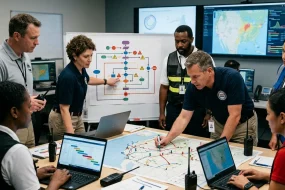
Organizations possess a wide spectrum of methodologies when executing crisis simulation drills, allowing them to scale complexity based on available budgets, resource constraints, and maturity levels. Selecting the appropriate exercise format ensures maximum learning retention without causing unnecessary operational disruption or employee burnout. Tabletop exercises represent the foundational entry point, bringing key decision-makers into a conference room to walk step-by-step through a hypothetical crisis narrative, discussing responses, identifying gaps, and refining policies collaboratively.
As an organization matures, it can advance toward functional exercises, which test specific operational capabilities in real-time across isolated departments, such as dispatching an IT disaster recovery team to restore databases from cold storage while maintaining standard business chatter. At the peak of preparedness complexity lie full-scale exercises. These immersive, high-fidelity simulations involve physical evacuations, mock media interviews, live operational shutdowns, and multi-agency coordination with local emergency responders, law enforcement, and municipal governments. According to resilience frameworks outlined by organizations like Ready.gov, scaling exercises progressively allows teams to build foundational competence before subjecting themselves to chaotic, high-stress full-scale environments.
| Exercise Type | Complexity Level | Primary Focus | Resource Investment | Operational Impact |
| Tabletop Exercise | Low to Moderate | Policy review, decision logic, and role clarity | Minimal (Hours of discussion) | Zero operational downtime |
| Functional Exercise | Moderate to High | Technical execution and department-specific response | Moderate (Prep and targeted testing) | Minimal to localized disruption |
| Full-Scale Drill | High to Extreme | Total enterprise readiness, physical safety, and multi-agency coordination | Substantial (Extensive planning and logistics) | High (Requires scheduled downtime or mock execution) |
Measuring Performance Through Quantitative and Qualitative Metrics
Conducting crisis simulation drills without rigorous measurement yields little long-term organizational benefit. To determine whether your emergency protocols actually work, you must establish clear, objective performance indicators before the exercise begins. Evaluation teams should consist of neutral observers, industry experts, or internal auditors who do not participate directly in the simulation, allowing them to record actions, timing delays, and communication breakdowns objectively.
Quantitative metrics might include the time elapsed between initial threat detection and executive notification, the speed of system failover execution, or the percentage of personnel successfully accounted for during a headcount procedure. Qualitative metrics focus on behavioral observations, such as leadership composure, clarity of internal messaging, active listening during cross-departmental briefings, and the overall psychological resilience demonstrated by participants. Following every simulation, leadership must conduct a comprehensive after-action review (AAR) to analyze collected data, celebrate successful responses, and candidly address identified operational deficiencies.
The insights gathered during the after-action review must directly translate into concrete revisions of your formal emergency response documentation. Assign specific owners and strict deadlines for updating software scripts, adjusting contact escalation trees, and procuring redundant safety equipment. If a vulnerability discovered during a drill goes uncorrected, future simulations lose credibility, signaling to employees that leadership treats safety and emergency preparation as a superficial compliance exercise rather than an operational imperative.
Common Pitfalls and Strategic Mistakes to Avoid
Even well-intentioned organizations frequently compromise the effectiveness of their crisis simulation drills by falling into predictable operational traps. Recognizing and actively avoiding these common mistakes ensures your training investments deliver maximum value and genuine resilience.
-
Treating Drills as Check-the-Box Compliance: Running predictable, identical exercises year after year solely to satisfy regulatory mandates breeds complacency and leaves teams entirely unprepared for novel, complex threats.
-
Failing to Debrief Honestly: Sweeping communication breakdowns and leadership failures under the rug during after-action reviews prevents the organization from learning critical lessons and fixing systemic flaws.
-
Overcomplicating Initial Exercises: Launching directly into terrifying full-scale operational shutdowns without first validating foundational communication protocols through tabletop exercises overwhelms participants and stalls progress.
-
Ignoring Remote and Hybrid Workers: Designing evacuation and crisis response plans exclusively for physical office buildings while completely neglecting the security and connectivity needs of distributed remote teams.
Advanced Pro Tips for Continuous Organizational Resilience
To elevate your crisis response program from standard corporate compliance to elite operational readiness, industry veterans recommend implementing advanced, forward-looking strategies. These expert insights help future-proof your organization against evolving global threat vectors.
-
Integrate ISO 22301 Standards: Align your simulation frameworks with international business continuity management standards to ensure compliance, structural rigor, and seamless interoperability with global enterprise partners.
-
Incorporate Unannounced Flash Drills: Periodically inject micro-simulations without prior warning to test how quickly teams pivot from daily tasks to emergency triage when caught completely off guard.
-
Simulate Media and Social Media Storms: Partner with internal communications teams to test how rapidly and accurately your enterprise handles hostile public relations inquiries, viral misinformation, and leaked internal data during a crisis.
Regulatory Compliance and Industry Standards Integration
Navigating regulatory requirements is a critical driver for formalizing crisis simulation drills across highly regulated sectors such as finance, healthcare, aviation, and critical infrastructure. Regulatory frameworks established by bodies like the Securities and Exchange Commission (SEC), the Department of Homeland Security (DHS), and international standards organizations mandate documented evidence of operational resilience testing. Compliance is not merely about avoiding fines; it demonstrates fiduciary responsibility to investors, clients, and the public.
Integrating industry standards into your preparation framework provides a proven roadmap for structuring exercises. For example, adhering to business continuity guidelines helps organizations establish rigorous recovery time objectives (RTO) and recovery point objectives (RPO). During simulations, teams can measure their actual performance against these established benchmarks, identifying whether their technical and operational recovery capabilities meet contractual and regulatory expectations. Documenting these achievements and subsequent remediation efforts creates an unassailable audit trail that satisfies regulators and reassures enterprise stakeholders.
Furthermore, integrating compliance requirements into your simulation scenarios ensures that legal and regulatory reporting obligations are practiced under pressure. During a major cyber breach or physical accident, mandatory notification windows for regulatory authorities can be remarkably short. Practicing these legal disclosures during drills ensures that compliance officers, legal counsel, and technical teams know precisely what data must be reported, to whom, and within what legal timeframe, drastically reducing the risk of costly regulatory penalties resulting from delayed or inaccurate disclosures.
Conclusion
Proactive planning protects your enterprise from catastrophic failure. Executing structured crisis simulation drills turns uncertainty into a competitive advantage, ensuring your personnel act decisively during critical moments. Prioritize regular practice, refine your emergency response protocols, and secure long-term organizational resilience today.
Frequently Asked Questions
1. What are crisis simulation drills and why are they necessary?
Crisis simulation drills are controlled, realistic exercises designed to test an organization’s emergency response plans, communication channels, and decision-making capabilities. They are necessary because they transform theoretical safety documents into practical muscle memory, reducing panic and minimizing downtime during real emergencies.
2. How often should an organization conduct emergency simulation exercises?
Organizations should conduct tabletop exercises at least quarterly and full-scale functional simulations annually. However, high-risk industries or companies experiencing rapid technological or physical infrastructure changes should increase this testing frequency to maintain peak readiness.
3. What is the difference between a tabletop exercise and a full-scale drill?
A tabletop exercise is a discussion-based session where key leaders walk through a hypothetical scenario in a conference room without operational disruption. A full-scale drill is an immersive, high-fidelity exercise that involves physical actions, operational shutdowns, and live multi-agency coordination.
4. How do we measure the success of a crisis simulation drill?
Success is measured by evaluating predetermined quantitative metrics—such as notification speed and system recovery times—alongside qualitative observations regarding leadership composure, communication clarity, and inter-departmental collaboration during the after-action review.
5. How can remote and hybrid employees be included in emergency drills?
Remote employees can be integrated by simulating cyber incidents, phishing attacks, and communication outages that require distributed workers to execute secure login protocols, out-of-band check-ins, and alternative operational workflows from their home offices.
6. What role does leadership play during a crisis simulation?
Leadership plays a critical decision-making and tone-setting role. Executives must actively participate in simulations rather than delegating entirely, as their ability to maintain composure, prioritize resources, and communicate transparently dictates overall organizational success.
7. How do we prevent employees from panicking during realistic simulations?
Combat anxiety by communicating clearly that the exercise is a controlled training and evaluation tool designed to support learning and safety, ensuring all participants understand that mistakes made during simulations are valuable opportunities for improvement.
8. What standards guide organizational crisis management planning?
Organizations frequently rely on international standards such as ISO 22301 for business continuity management, alongside guidelines from federal agencies like FEMA and Ready.gov to structure their emergency response and simulation frameworks.
9. What are the most common mistakes made during emergency preparation?
Common mistakes include treating exercises as rigid compliance checkboxes, failing to conduct honest after-action debriefs, overcomplicating initial tests without building foundational protocols, and neglecting remote workforce integration.
10. How do after-action reviews improve future emergency responses?
After-action reviews analyze performance data collected during simulations to identify operational bottlenecks, communication failures, and policy gaps. Documenting these findings allows organizations to update their safety plans and assign accountability for corrective actions.
Emergency management, Business continuity, Risk mitigation, Safety training


I’m a communication strategist and blogger at SMCrisis, where I cover topics on social media crises, digital reputation, and brand trust. I enjoy helping businesses stay prepared and proactive in the fast-changing online world. Every post I write aims to guide readers toward smarter crisis responses and stronger digital credibility.






One reply on “Crisis Simulation Drills: Preparing Teams for Emergencies”
[…] undergo comprehensive annual reviews led by cross-functional risk committees. Crucially, every live emergency and simulation exercise must feed directly into structural plan updates. Incorporating post-mortem findings into revised […]