


Social media crisis management helps brands protect their reputation during online controversies. This guide explores real-world crisis examples, response strategies, reputation management tactics, common mistakes, and practical steps for handling social media challenges effectively.
A single message, posted at the wrong moment, can reshape the way the world sees a brand. In an environment where conversations move at the speed of a refresh button, reputation is both fragile and precious — earned slowly, tested suddenly, and defended through wisdom and preparation. We believe the most enduring brands are not those that avoid difficulty altogether, but those that respond to it with grace, clarity, and conviction.
That is precisely why social media crisis management examples have become such valuable teachers. They reveal, in vivid and instructive detail, how brands stumble and how they recover. They show us the difference between a defensive reaction and a thoughtful response. And they remind every organization that a moment of pressure is also a moment of opportunity — a chance to demonstrate character, accountability, and trust.
In this comprehensive guide, we explore the most illuminating social media crisis management examples, examine the strategies behind effective online crisis response, and outline the brand reputation management tactics that protect what you have worked so diligently to build. Whether you lead a global enterprise or guide a growing business, this resource is crafted to prepare you for the moments that matter most.
What Is Social Media Crisis Management?
Social media crisis management is the disciplined practice of preparing for, responding to, and recovering from negative events that unfold across public digital channels. It encompasses the policies, people, and processes that allow a brand to act swiftly and wisely when reputation is threatened.
A crisis differs from ordinary criticism. A single complaint, a disappointed review, or a difficult question is simply part of doing business in a connected world. A genuine crisis, by contrast, carries the potential for widespread damage — a story that spreads rapidly, an outrage that gathers momentum, or a misstep that threatens the trust your audience has placed in you.
We define effective social media crisis management by three enduring qualities: speed, sincerity, and strategy. Speed ensures that you respond before a small spark becomes a consuming fire. Sincerity ensures that your audience believes you. And strategy ensures that every action serves a larger purpose — the protection and restoration of trust.
Why Social Media Crises Spread So Quickly
The digital landscape rewards immediacy. A post shared, screenshotted, and amplified can reach millions within hours, long before traditional communication channels would have responded. This velocity makes preparation essential.
Several forces accelerate the spread of a crisis online:
- Virality: Emotionally charged content travels faster than measured, neutral messaging.
- Permanence: Screenshots and archives ensure that even deleted content endures.
- Visibility: Public platforms allow audiences, journalists, and competitors to observe every move in real time.
- Community: Engaged audiences often coordinate their responses, amplifying both criticism and support.
Understanding these dynamics is the foundation of every successful online crisis response. When you appreciate how quickly perception forms, you act with the urgency and care that the moment demands.
The Anatomy of a Social Media Crisis
Every crisis follows a recognizable arc, and understanding this rhythm allows us to respond with composure rather than panic. While each situation is distinct, the underlying structure remains remarkably consistent.
The Trigger
The trigger is the originating event — the post, product, statement, or incident that ignites concern. Triggers vary widely, from an insensitive advertisement to a service failure, from an employee’s misstep to a customer’s viral complaint. Recognizing a trigger early is the first and most decisive advantage.
The Escalation
Escalation occurs as the initial concern gathers attention. Shares multiply, hashtags emerge, and commentary intensifies. This is the phase in which silence is most dangerous, for an absent brand allows others to define the narrative on its behalf.
The Peak
At the peak, the crisis commands the widest attention. Media coverage may follow, influencers may weigh in, and the volume of conversation reaches its height. A thoughtful, well-prepared response during this phase can shape the entire outcome.
The Resolution
Resolution arrives as the conversation subsides. The quality of your response — its honesty, its timeliness, its humanity — determines whether your brand emerges diminished or strengthened. The finest brands treat resolution not as an ending, but as the beginning of renewed trust.
Powerful Social Media Crisis Management Examples to Learn From
History offers a wealth of instructive social media crisis management examples. By studying how organizations have navigated genuine pressure, we extract timeless lessons that apply to every brand and every industry. These social media crisis management examples illustrate both the perils of mishandling and the rewards of grace under pressure.
Example One: The Swift and Sincere Apology
Consider the brand that, upon releasing a campaign perceived as insensitive, faced immediate and widespread criticism. Rather than defending the decision or deflecting blame, the organization responded within hours. It acknowledged the harm, expressed genuine remorse, and committed to meaningful change.
The lesson is profound. Audiences forgive mistakes far more readily than they forgive arrogance. A swift, sincere apology — free of excuses and rich in accountability — can transform a moment of outrage into a demonstration of integrity. This remains one of the most enduring social media crisis management examples precisely because it honors honesty above all.
Example Two: The Product Failure Handled with Transparency
When a beloved product experienced a significant failure, the company faced a choice. It could minimize the problem, or it could embrace transparency. It chose the latter. The brand communicated openly about what had gone wrong, explained the steps it was taking to resolve the issue, and kept its audience informed throughout the process.
This approach reflects a fundamental truth of brand reputation management. Transparency, even when difficult, builds trust. Audiences respect a brand that tells the truth, owns its shortcomings, and demonstrates a sincere commitment to improvement.
Example Three: The Misjudged Response That Worsened a Crisis
Not every example offers a model to emulate. Some serve as cautionary tales. Consider the brand that, faced with criticism, responded defensively — dismissing concerns, deleting comments, and arguing with its audience. This reaction transformed a manageable situation into a prolonged crisis.
The lesson here is equally valuable. A poor online crisis response often inflicts greater damage than the original trigger. Defensiveness, denial, and silence amplify outrage rather than soothing it. Among all social media crisis management examples, these missteps remind us that how we respond matters far more than the event itself.
Example Four: The Brand That Listened and Adapted
One particularly inspiring example involves a company that received persistent feedback about a controversial decision. Rather than resisting, the organization listened attentively, reconsidered its position, and publicly reversed course. It thanked its community for the candor and credited them with shaping a better outcome.
This example reveals the quiet power of humility. By treating its audience as partners rather than adversaries, the brand strengthened loyalty and deepened trust. The crisis became a celebrated chapter in the brand’s story — a testament to responsiveness and respect.
Example Five: The Employee Misstep Addressed with Accountability
When an employee posted content that conflicted with a brand’s values, the organization faced reputational risk through no fault of its leadership. The company responded with clarity. It addressed the situation directly, reaffirmed its values, and outlined the steps it would take internally.
This example underscores the importance of consistent values and clear policies. A brand that knows precisely what it stands for can respond to internal missteps with confidence and conviction. Among social media crisis management examples, this demonstrates that preparation and principle are inseparable.
A Comparative Overview of Crisis Responses
To distill the lessons of these social media crisis management examples, we present a refined comparison of effective and ineffective approaches. This overview illustrates how specific choices shape outcomes during moments of pressure.
|
Crisis Element |
Effective Response |
Ineffective Response |
Outcome |
|---|---|---|---|
|
Speed |
Acknowledge within hours |
Delay for days |
Fast response contains the crisis |
|
Tone |
Sincere and humble |
Defensive and dismissive |
Sincerity restores trust |
|
Transparency |
Open and honest |
Evasive or silent |
Honesty builds credibility |
|
Accountability |
Owns the mistake |
Blames others |
Ownership earns respect |
|
Engagement |
Listens and adapts |
Argues and deletes |
Listening deepens loyalty |
|
Follow-Through |
Commits to change |
Offers empty promises |
Action proves sincerity |
This comparison serves as a practical reference, illustrating the qualities that distinguish exemplary online crisis response from costly mismanagement. Each row reflects a lesson drawn from real-world experience — a guide for navigating every future challenge with wisdom and care.
Step-by-Step Online Crisis Response Strategy
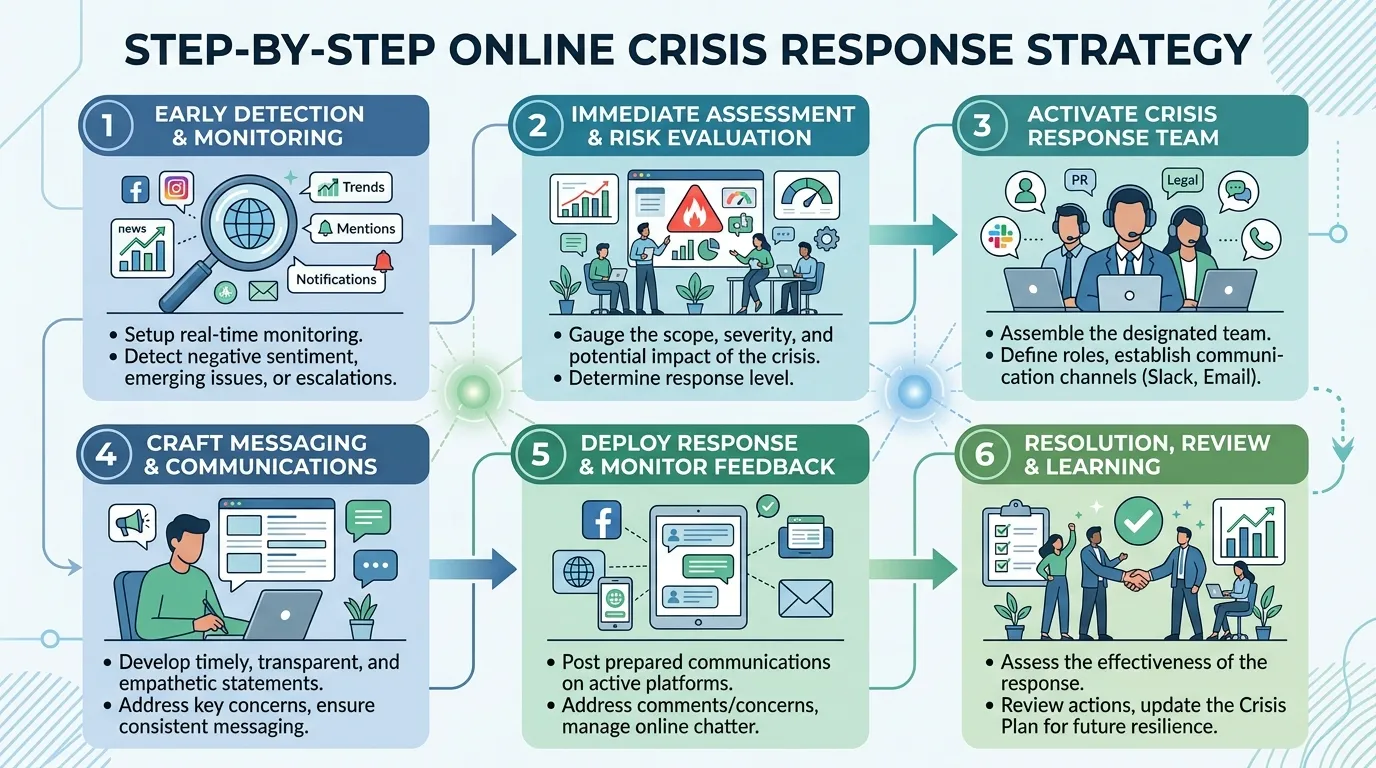
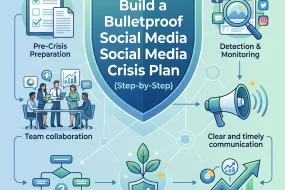
A thoughtful, well-rehearsed strategy transforms chaos into clarity. We offer the following step-by-step framework — a refined approach to online crisis response that prepares your brand for every eventuality.
Step One: Establish a Crisis Response Plan in Advance
The most successful brands prepare before a crisis ever arrives. A comprehensive plan defines roles, responsibilities, and procedures, ensuring that everyone knows precisely what to do when pressure mounts.
Your plan should include:
- A designated response team: Identify the individuals responsible for monitoring, deciding, and communicating.
- Clear escalation protocols: Define how a situation moves from monitoring to active response.
- Pre-approved messaging templates: Prepare holding statements that can be adapted swiftly.
- Approval workflows: Establish who must approve public statements and how quickly.
Step Two: Monitor and Listen Continuously
Effective social media crisis management begins long before a crisis emerges. Continuous monitoring allows you to detect early signals — a rising complaint, an unusual surge in mentions, or a shift in sentiment.
We recommend establishing dedicated listening practices that track brand mentions, relevant keywords, and audience sentiment across every platform. The earlier you detect a concern, the more gracefully you can respond.
Step Three: Assess the Situation with Clarity
Not every negative comment constitutes a crisis. Before responding, assess the situation honestly. Determine the scope, the severity, and the potential for escalation. Ask whether the concern is isolated or widespread, and whether it threatens genuine reputational harm.
This measured assessment prevents overreaction to minor matters and underreaction to serious ones. Clarity in this phase guides every subsequent decision.
Step Four: Respond Swiftly and Sincerely
When a genuine crisis emerges, respond promptly. Even a brief acknowledgment — confirming that you are aware and taking the matter seriously — reassures your audience and prevents others from controlling the narrative.
Your response should reflect the qualities that define exemplary brand reputation management: honesty, humility, and accountability. Avoid defensiveness, resist the temptation to delete, and never argue. Instead, listen, acknowledge, and commit to action.
Step Five: Communicate Consistently Across Channels
Consistency is essential. Ensure that your messaging remains unified across every platform, every spokesperson, and every touchpoint. Conflicting statements erode trust and prolong confusion.
A coordinated online crisis response speaks with one voice — clear, calm, and consistent. This unity reassures your audience that the brand is composed, capable, and in control.
Step Six: Follow Through with Meaningful Action
Words alone rarely resolve a crisis. The brands that recover most fully are those that follow their apologies with genuine action. Demonstrate the changes you have promised. Share your progress transparently. Prove, through deeds rather than declarations, that you have learned and improved.
Step Seven: Reflect and Strengthen
Once the crisis subsides, take time to reflect. Examine what occurred, how your team responded, and what might be improved. Every crisis offers valuable lessons that strengthen your future preparedness.
This reflective practice transforms difficulty into growth. The finest brands emerge from every challenge wiser, stronger, and more resilient than before.
Brand Reputation Management Tactics That Endure
Brand reputation management extends far beyond the moments of crisis. It is a continuous, deliberate practice — the steady cultivation of trust that sustains a brand through both calm and storm.
Build Trust Before You Need It
The strongest defense against any crisis is a reservoir of goodwill accumulated over time. Brands that consistently demonstrate integrity, generosity, and care earn the benefit of the doubt when difficulty arrives. We believe trust is the truest currency of reputation — earned daily, spent rarely, and replenished through consistent excellence.
Cultivate Authentic Relationships
Audiences forgive brands they feel connected to. By engaging genuinely, responding thoughtfully, and treating every interaction as meaningful, you cultivate relationships that endure. These authentic connections become a source of strength when reputation is tested.
Maintain Transparency as a Habit
Transparency should never be reserved for moments of crisis. Brands that communicate openly as a matter of habit establish credibility that proves invaluable when challenges arise. Honesty, practiced consistently, becomes a defining and trusted characteristic.
Empower Your Team with Clear Guidelines
A prepared team responds with confidence. Equip every employee with clear guidelines, well-defined values, and a thorough understanding of your brand voice. When everyone understands what the brand stands for, the entire organization becomes a guardian of its reputation.
Crafting a Resilient Social Media Strategy
A thoughtful social media strategy is the foundation upon which effective crisis management rests. The brands that navigate difficulty most gracefully are those whose everyday practices are deliberate, principled, and prepared.
A resilient strategy integrates crisis preparedness into its very design. It anticipates challenges, establishes clear protocols, and cultivates the relationships and credibility that sustain a brand through adversity. For those seeking to develop a comprehensive and enduring approach, the following resource offers thoughtful, practical guidance: Explore the complete social media strategy guide
Aligning Strategy with Brand Values
Every element of your social media strategy should reflect your core values. When your everyday content embodies the principles you profess, your audience trusts that your crisis responses will reflect the same integrity. Consistency between word and deed is the hallmark of an authentic brand.
Integrating Crisis Preparedness into Daily Practice
Crisis preparedness should not exist as a separate, occasional exercise. Rather, it belongs woven into the fabric of your everyday operations. Regular monitoring, ongoing training, and continuous refinement ensure that your brand is always ready, never caught unaware.
Measuring and Refining Your Approach
A resilient strategy evolves. By measuring the effectiveness of your efforts and refining your approach over time, you ensure that your brand grows ever more prepared, capable, and confident. We believe that continuous improvement is the surest path to lasting reputation.
Common Mistakes to Avoid in Online Crisis Response
Even well-intentioned brands sometimes falter. By understanding the most frequent missteps, we equip ourselves to avoid them entirely.
- Responding too slowly: Delay allows others to define the narrative and amplifies frustration.
- Reacting defensively: Arguing with critics inflames the situation rather than resolving it.
- Deleting comments indiscriminately: Removing genuine concerns appears evasive and provokes further outrage.
- Offering insincere apologies: Audiences detect hollow words and respond with deepened distrust.
- Failing to follow through: Promises without action erode credibility and prolong damage.
- Lacking a unified voice: Inconsistent messaging across channels confuses and alarms audiences.
Each of these mistakes appears, repeatedly, throughout the most cautionary social media crisis management examples. By recognizing them clearly, we prepare ourselves to respond with the wisdom and care that every crisis demands.
The Role of Empathy in Crisis Management

Above every tactic and technique stands a single, essential quality: empathy. The brands that recover most fully are those that genuinely understand and honor the feelings of their audience.
Empathy transforms a corporate statement into a human connection. When a brand acknowledges genuine concern, validates real emotion, and responds with sincere care, it speaks not as a faceless institution but as a trusted companion. This humanity, more than any strategy, restores and strengthens trust.
We believe empathy is not merely a tactic — it is a value. It reflects a brand’s genuine respect for the people it serves. And in every crisis, it is empathy that distinguishes the brands we forgive from the brands we forget.
Frequently Asked Questions
What are the most instructive social media crisis management examples?
The most instructive social media crisis management examples include swift and sincere apologies, transparent handling of product failures, and accountable responses to employee missteps. They also include cautionary cases of defensive reactions that worsened a crisis. Together, these examples teach that honesty, speed, and humility consistently determine whether a brand recovers gracefully or suffers lasting harm.
How quickly should a brand respond to a social media crisis?
A brand should acknowledge a genuine crisis within hours, not days. Even a brief statement confirming awareness reassures your audience and prevents others from controlling the narrative. Swift online crisis response demonstrates attentiveness and care. Speed, paired with sincerity, remains one of the most decisive advantages in protecting your reputation during difficult moments.
What is the difference between criticism and a genuine crisis?
Criticism is ordinary feedback — a complaint, a question, or a disappointed review that is part of everyday business. A genuine crisis carries the potential for widespread reputational damage and rapid escalation. The distinction lies in scope and severity. Effective social media crisis management requires assessing each situation honestly before deciding how seriously to respond.
Why is transparency so important in brand reputation management?
Transparency builds trust because audiences respect brands that tell the truth, even when it is difficult. Openly acknowledging problems and explaining your corrective steps demonstrates integrity and accountability. Evasion and silence, by contrast, breed suspicion. Consistent transparency, practiced as a habit rather than a crisis tactic, establishes the credibility that sustains lasting brand reputation management.
How can a brand prepare for a social media crisis in advance?
A brand prepares by establishing a comprehensive crisis response plan before difficulty arrives. This includes designating a response team, defining escalation protocols, preparing holding statements, and clarifying approval workflows. Continuous monitoring and regular training reinforce readiness. Preparation transforms a chaotic moment into a controlled, confident online crisis response that protects reputation and trust.
What role does empathy play in online crisis response?
Empathy transforms a corporate statement into a genuine human connection. When a brand acknowledges concern, validates emotion, and responds with sincere care, it speaks as a trusted companion rather than a faceless institution. This humanity restores trust more powerfully than any tactic. Empathy distinguishes the brands audiences forgive from those they quietly forget.
What are the most common mistakes in social media crisis management?
The most common mistakes include responding too slowly, reacting defensively, deleting genuine comments, and offering insincere apologies. Failing to follow through on promises and communicating inconsistently across channels also worsen outcomes. These missteps appear repeatedly in cautionary social media crisis management examples. Recognizing them clearly helps every brand respond with greater wisdom and composure.
How does a strong social media strategy prevent crises?
A strong social media strategy integrates crisis preparedness into everyday practice rather than treating it as an occasional exercise. It aligns content with brand values, cultivates authentic relationships, and establishes clear protocols. This foundation of trust and readiness allows a brand to anticipate challenges and respond gracefully. Preparation woven into daily practice prevents many crises entirely.
Should a brand ever delete negative comments during a crisis?
A brand should generally avoid deleting genuine concerns, as removal appears evasive and often provokes greater outrage. The exception involves content that is abusive, illegal, or violates clear community guidelines. Responding thoughtfully, rather than deleting, demonstrates confidence and respect. Audiences value brands that engage honestly far more than those that attempt to conceal criticism.
How can a brand rebuild trust after a social media crisis?
A brand rebuilds trust by following its words with meaningful action and communicating progress transparently. Demonstrating genuine change, rather than offering empty promises, proves sincerity over time. Reflecting on the experience strengthens future preparedness. The finest brands treat resolution not as an ending, but as the beginning of renewed, deepened trust with their audience.
What metrics help measure the success of a crisis response?
Helpful metrics include sentiment shifts, the volume and tone of mentions, response times, and audience engagement following the crisis. Tracking how quickly conversation subsides and whether trust recovers offers valuable insight. Comparing these results against your goals refines future online crisis response. Continuous measurement transforms each challenge into an opportunity for lasting improvement.
Who should be responsible for managing a social media crisis?
A designated crisis response team should manage the situation, including communications, leadership, legal, and social media specialists. Clear roles and approval workflows ensure swift, coordinated action under pressure. Empowering this team with defined guidelines and brand values allows confident decision-making. Shared responsibility, supported by preparation, produces a calm and unified online crisis response.
Conclusion
Reputation is among the most precious assets any brand possesses — built through years of dedication, tested in moments of difficulty, and defended through wisdom, preparation, and care. The most instructive social media crisis management examples remind us that crises are not merely threats to be feared. They are opportunities to demonstrate the very qualities that define an exceptional brand: honesty, humility, accountability, and genuine empathy.
We believe every brand possesses the capacity to navigate adversity with grace. By preparing thoughtfully, responding swiftly, communicating sincerely, and following through with meaningful action, you transform moments of pressure into demonstrations of character. The lessons drawn from real social media crisis management examples — both inspiring and cautionary — offer a timeless guide for every challenge ahead.
Let these examples inform your strategy, strengthen your preparedness, and deepen your commitment to the audience you serve. For in the end, the brands we trust most are not those that never falter, but those that respond to every difficulty with integrity, courage, and care. Prepare wisely, respond sincerely, and protect the trust you have worked so faithfully to earn.

Brand Reputation Management
Online Crisis Response
Social Media Crisis Management
Social media strategy

I’m a communication strategist and blogger at SMCrisis, where I cover topics on social media crises, digital reputation, and brand trust. I enjoy helping businesses stay prepared and proactive in the fast-changing online world. Every post I write aims to guide readers toward smarter crisis responses and stronger digital credibility.













No Comments