


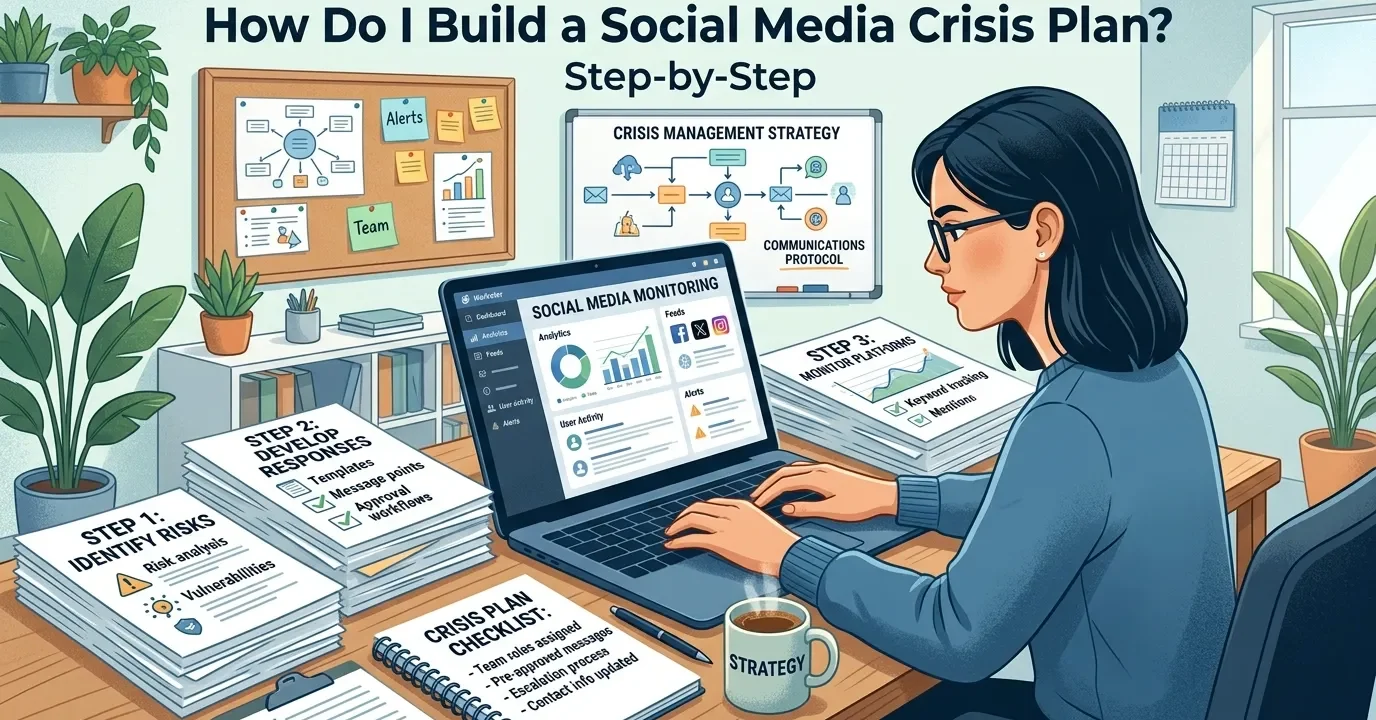
Learn how to build a social media crisis plan that protects brand reputation through risk assessment, response teams, communication workflows, monitoring, escalation procedures, response templates, and post-crisis reviews. Preparation, transparency, and speed are key to effective crisis management.
One angry tweet can spiral into a trending hashtag before lunch. A poorly timed post can wipe out years of goodwill in hours. If you have ever asked yourself, “How do I build a social media crisis plan?” you already understand the stakes—and you are smart to prepare before disaster strikes.
A social media crisis plan is your playbook for the worst moments. It tells your team who acts, what to say, how fast to respond, and when to escalate. Without one, you improvise under pressure, and improvising rarely ends well when thousands of people are watching.
In this guide, you will learn exactly how to build a social media crisis plan from the ground up. We will cover what counts as a crisis, who should be on your response team, how to write response templates, how to monitor threats, and how to review what happened afterward. You will also get a practical framework table, common pitfalls to avoid, and answers to the questions marketers ask most. By the end, you will have a clear blueprint to protect your brand reputation when the pressure is on.
What Is a Social Media Crisis?

Before you build a plan, you need to know what you are planning for. A social media crisis is any online event that threatens your brand reputation, disrupts normal operations, or sparks widespread negative attention across social platforms. It moves fast, attracts public scrutiny, and demands a coordinated response.
Not every complaint qualifies. A single unhappy customer is a service issue. A flood of angry comments, a viral accusation, or a trending negative hashtag is a crisis. The difference comes down to scale, speed, and potential damage.
Crisis vs. Routine Negativity
Understanding the line between everyday grumbling and a genuine social media crisis keeps your team from overreacting—or underreacting. Routine negativity is part of doing business. It includes isolated complaints, product questions, and the occasional harsh review.
A true crisis carries weight and momentum. It threatens to spread beyond your existing audience and pull in journalists, influencers, or competitors. Knowing which is which lets you match your response to the actual threat level rather than treating every frown like a five-alarm fire.
Common Types of Social Media Crises
Crises come in many shapes, and recognizing the categories helps you prepare tailored responses. Here are the most frequent types brands face:
- Customer service failures that go public and gain traction
- Insensitive or tone-deaf content posted by the brand
- Employee misconduct captured and shared online
- Product defects or safety concerns raised by users
- Misinformation or rumors spreading about your company
- Data breaches affecting customer trust and privacy
- Executive or spokesperson controversies that reflect on the brand
- Hacked accounts posting unauthorized or harmful content
Each type calls for a slightly different tone and response, but all of them benefit from the same underlying structure: a clear, rehearsed plan.
Why Speed Matters So Much
On social media, silence reads as guilt or indifference. The first hour of a crisis often determines how the story unfolds. Brands that respond quickly and thoughtfully can shape the narrative; those that hesitate let others write it for them.
This is why a documented plan matters more than raw talent. When emotions run high and the clock is ticking, you do not want your team debating basic questions. You want them executing a process they already know by heart.
Why You Need a Social Media Crisis Plan
Hoping a crisis never happens is not a strategy. Every brand with an online presence faces risk, and the question is not if but when something will go sideways. A solid plan turns chaos into a manageable sequence of steps.
Protecting Your Brand Reputation
Your brand reputation is one of your most valuable assets, and it is also one of the most fragile. It takes years to build and moments to damage. A crisis plan acts as a shield, helping you respond in ways that preserve trust rather than erode it.
When you handle a difficult moment with honesty and competence, audiences often respect you more afterward. A well-managed crisis can actually strengthen loyalty. The plan gives you the structure to turn a threat into an opportunity to demonstrate your values.
Reducing Response Time and Confusion
The biggest enemy during a crisis is internal confusion. Who approves the statement? Can we delete the post? Should the CEO comment? Without predefined answers, your team wastes precious time while the situation worsens.
A crisis plan eliminates that paralysis. It assigns roles, sets approval paths, and provides templates so your people can act decisively. Strong social media management depends on this kind of preparation—the work you do before a crisis is what makes your response during one look effortless.
Maintaining Consistency Across Channels
When pressure mounts, messaging can fragment. One team member apologizes on Twitter while another stays silent on Instagram, and a third posts something contradictory on Facebook. Mixed signals deepen public distrust.
A unified crisis strategy keeps every channel aligned. Everyone works from the same approved messaging, the same facts, and the same tone. Consistency signals control, and control reassures a worried audience.
How Do I Build a Social Media Crisis Plan? The Core Steps
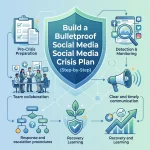
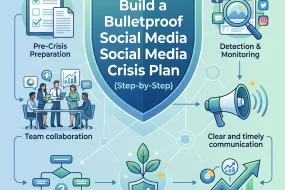
Now to the heart of the matter. Building a social media crisis plan involves several connected stages, each one strengthening the others. Follow these steps in order, and adapt them to your organization’s size and risk profile.
Step 1: Assess Your Risks and Vulnerabilities
Start by identifying where your brand is most exposed. Every company has weak spots—products that draw complaints, sensitive industry topics, or a history of past controversies. Map these out honestly.
Gather your team and brainstorm realistic scenarios. What could go wrong? What has happened to competitors? Which issues would hit hardest if they went viral? This risk audit becomes the foundation for everything that follows.
Document each risk along with its likelihood and potential impact. High-likelihood, high-impact risks deserve the most detailed planning. Lower risks still warrant a basic response outline so nothing catches you completely off guard.
Step 2: Define What Counts as a Crisis
Not every negative comment should trigger your full crisis protocol. You need clear thresholds that tell your team when to activate the plan. Define these levels precisely to avoid both panic and complacency.
A simple tiered system works well. Low-level issues get handled by community managers using standard replies. Mid-level situations involve team leads and closer monitoring. High-level crises activate the full response team and leadership.
Spelling out these tiers removes guesswork. When something happens, your team can quickly categorize it and respond with the appropriate level of urgency and resources.
Step 3: Build Your Crisis Response Team

A plan is only as good as the people executing it. Assign specific roles so everyone knows their responsibilities before a crisis hits. Ambiguity here causes delays and finger-pointing at the worst possible moment.
Your core team should include people who can monitor, decide, approve, and communicate. Smaller organizations may combine roles, while larger ones need dedicated specialists. The key is clarity: every task has an owner.
Key Roles and Responsibilities
Here are the essential roles for an effective crisis response team:
- Crisis Lead: Makes final decisions and coordinates the overall response
- Social Media Manager: Monitors channels, posts approved messages, and tracks sentiment
- Communications/PR Lead: Crafts messaging and handles media inquiries
- Legal Advisor: Reviews statements for legal exposure and compliance
- Executive Sponsor: Provides authority and steps in for major decisions
- Subject Matter Expert: Supplies accurate technical or operational facts
Make sure each person has a backup. Crises do not wait for vacations or sick days, so redundancy keeps your response intact no matter who is available.
Step 4: Create a Communication Workflow
Now connect your people with a clear workflow. This is the path a response takes from detection to publication. A defined workflow prevents bottlenecks and ensures nothing slips through the cracks.
A typical flow looks like this: a team member detects an issue, categorizes its severity, alerts the right people, drafts a response, secures approval, and publishes. Each handoff should be fast and documented.
Decide in advance how your team will communicate internally during a crisis. A dedicated chat channel, a phone tree, or a shared dashboard keeps everyone synced. The smoother your internal communication, the faster your external response.
Step 5: Prepare Response Templates and Messaging
When a crisis hits, you do not want to write from a blank page. Prepare templates for common scenarios so your team can respond quickly while still sounding human. Templates are starting points, not robotic scripts.
Draft holding statements, apologies, fact-corrections, and acknowledgment messages. Keep the tone authentic and adaptable. Each template should leave room to add specific details about the actual situation.
What Makes a Strong Crisis Response
Effective crisis messaging shares a few consistent qualities. Keep these principles in mind when writing your templates:
- Acknowledge quickly: Show you are aware and taking the issue seriously
- Be honest: Never lie or downplay; transparency builds trust
- Show empathy: Address how the situation affects people, not just the brand
- Take responsibility: Own your part without making excuses
- Explain next steps: Tell people what you will do and when
- Avoid defensiveness: Arguing publicly almost always backfires
A good response feels like a real person speaking, not a corporation hiding behind jargon. That authenticity is what protects your brand reputation when it matters most.
Step 6: Set Up Monitoring and Early Detection
You cannot respond to what you cannot see. Robust monitoring is the early warning system of any crisis strategy. The sooner you spot trouble, the more options you have to contain it.
Use social listening tools to track mentions of your brand, products, and key people. Set alerts for spikes in volume, shifts in sentiment, and trending keywords related to your company. Monitoring should run around the clock for brands with significant exposure.
Watch for early signals: an unusual cluster of complaints, a critical post gaining traction, or a journalist asking pointed questions. Catching these signs early often means the difference between a contained issue and a full-blown crisis.
Step 7: Establish Clear Escalation Procedures
Escalation defines how an issue moves up the chain when it grows beyond the front line. Without clear escalation rules, problems either get stuck at the bottom or overwhelm leadership unnecessarily.
Tie your escalation triggers to the severity tiers you defined earlier. A low-level issue stays with community managers. When it crosses a threshold—say, a certain number of negative mentions or coverage by a major outlet—it automatically escalates to the next level.
Document who gets notified at each stage and how. Include contact details, preferred communication methods, and expected response times. When seconds count, your team should never have to hunt for a phone number.
A Practical Crisis Response Framework
To tie these steps together, it helps to see how severity levels map to actions, owners, and timelines. The table below offers a simple framework you can adapt to your own organization.
|
Severity Level |
Example Scenario |
Who Responds |
Response Time |
Key Actions |
|---|---|---|---|---|
|
Level 1 – Low |
Isolated complaints or negative comments |
Community Manager |
Within 1–2 hours |
Reply directly, log the issue, monitor for escalation |
|
Level 2 – Moderate |
Cluster of complaints or a critical post gaining traction |
Social Media Manager + Team Lead |
Within 30–60 minutes |
Post holding statement, alert PR lead, increase monitoring |
|
Level 3 – High |
Viral negativity, media interest, or trending hashtag |
Full Crisis Team + Comms Lead |
Within 15–30 minutes |
Publish approved statement, brief leadership, coordinate channels |
|
Level 4 – Severe |
Data breach, safety issue, or major reputational threat |
Full Team + Executive Sponsor + Legal |
Immediate |
Activate full plan, legal review, executive communication, media response |
This framework keeps everyone aligned on what to do and how fast to do it. Print it, share it, and rehearse it so your team can act on instinct when the moment arrives.
How to Protect Your Brand Reputation During a Crisis
Your plan exists to safeguard one thing above all: trust. Protecting your brand reputation during a crisis requires both the right actions and the right mindset. Here is how to keep your reputation intact when it is under fire.
Lead With Transparency
Audiences forgive mistakes far more readily than cover-ups. When something goes wrong, acknowledge it openly and share what you know. Trying to hide or spin the truth almost always backfires and deepens the damage.
Transparency does not mean oversharing or speculating. Stick to confirmed facts, admit what you do not yet know, and promise updates as you learn more. Honesty under pressure builds credibility that lasts well beyond the crisis.
Respond With Empathy, Not Defensiveness
People want to feel heard. When you respond to a social media crisis, center your message on the people affected rather than your brand’s reputation. Defensiveness signals that you care more about yourself than your customers.
Empathy diffuses anger. A genuine “we hear you and we are sorry” goes much further than a legalistic non-apology. Train your team to lead with understanding, even when criticism feels unfair.
Keep Internal and External Messaging Aligned
During a crisis, your employees are watching just as closely as the public. Keep your internal teams informed so they do not spread confusion or contradict the official line. A leak or mixed message from inside can reignite the fire.
Coordinate your messaging across every audience: customers, employees, partners, and press. Consistent communication reinforces that your organization is in control and handling the situation responsibly.
Best Practices for Social Media Management Before a Crisis
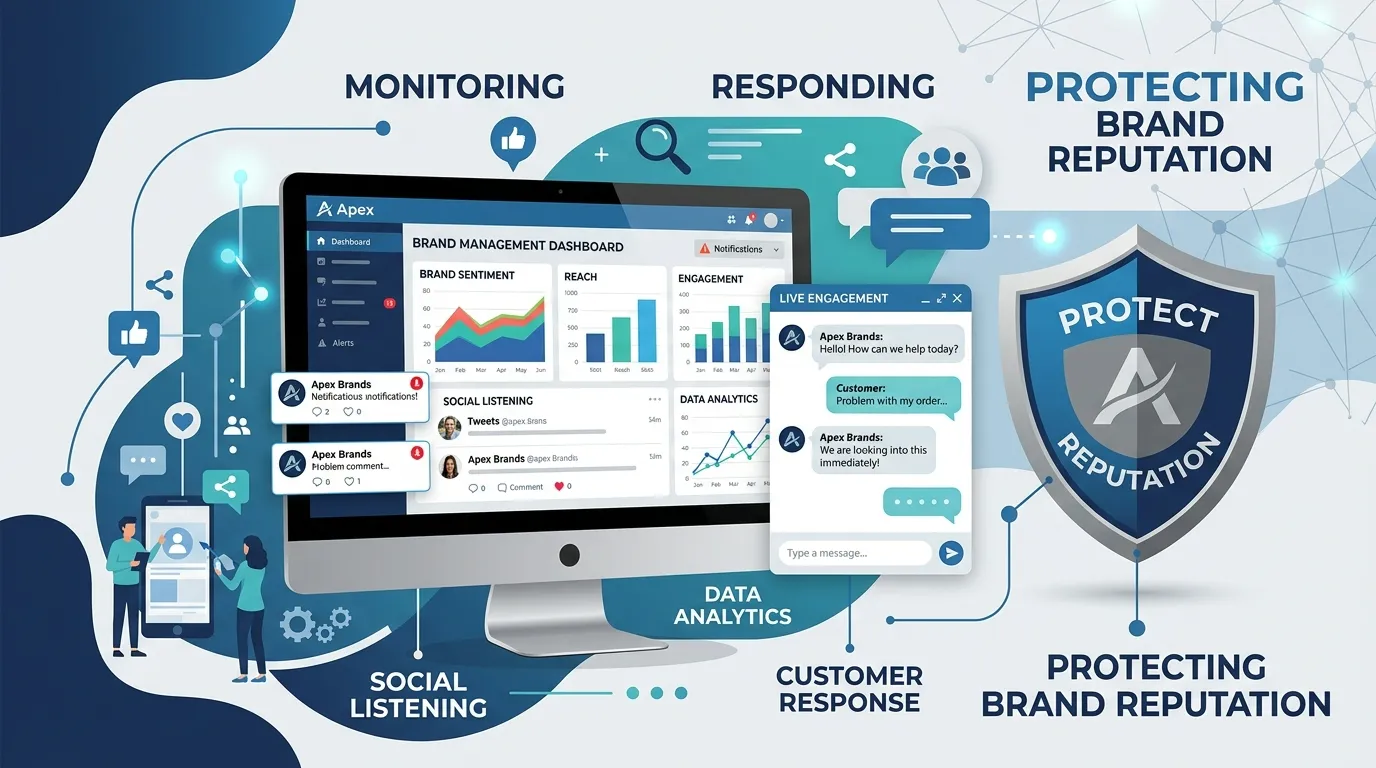
The strongest crisis response begins long before any crisis. Smart social media management in calm times builds the foundation that holds during turbulent ones. Invest in these habits now to make future crises far easier to manage.
Build Goodwill in Advance
Brands with a reservoir of goodwill weather storms better than those without. Engage authentically with your audience, respond to questions promptly, and treat customers well every day. This banked trust pays dividends when you need the benefit of the doubt.
A loyal community will often defend you during a crisis. They give you space to respond and resist piling on. That goodwill is earned through consistent, genuine social media management over time.
Train Your Team Regularly
A plan gathering dust is nearly useless. Run regular drills where your team practices responding to simulated crises. These rehearsals reveal gaps, build muscle memory, and reduce panic when a real situation hits.
Update your training as your team, products, and platforms evolve. New employees should learn the crisis plan as part of onboarding. The more familiar your people are with the process, the smoother your response will be.
Keep Your Plan Current
A crisis strategy written two years ago may not reflect today’s platforms, team structure, or risks. Review and update your plan at least twice a year, and after any major change to your business or the social landscape.
Check that contact information is accurate, roles are still correct, and templates match your current voice. An outdated plan creates false confidence. Regular maintenance keeps it ready for action.
Conducting a Post-Crisis Review
The crisis is over, but your work is not. A thorough post-crisis review turns a painful experience into valuable learning. Skipping this step means you are likely to repeat the same mistakes next time.
Gather the Team and Review the Timeline
Bring everyone involved together while memories are fresh. Walk through the entire event chronologically: when you detected it, how you responded, and how the situation resolved. Document what actually happened versus what your plan called for.
Encourage honest discussion without blame. The goal is improvement, not punishment. People share more openly when they feel safe, and those insights make your plan stronger.
Analyze What Worked and What Didn’t
Examine your response with a critical eye. Which actions calmed the situation? Where did you lose time or make missteps? Look at the data too—track how sentiment shifted, how far the story spread, and how your audience responded.
Identify the specific factors that helped or hurt. Maybe your response time lagged, or a template sounded too cold, or your monitoring missed an early signal. Each finding becomes an opportunity to refine your crisis strategy.
Turning Lessons Into Action
A review only matters if it changes what you do next. Convert your findings into concrete updates:
- Revise templates that did not land well with your audience
- Adjust escalation triggers if issues moved too slowly or too fast
- Add new scenarios to your plan based on what you experienced
- Improve monitoring to catch signals you missed this time
- Update training to address gaps the crisis revealed
Close the loop by assigning each action an owner and a deadline. This ensures your hard-won lessons actually improve your readiness rather than fading into forgotten meeting notes.
Common Mistakes to Avoid
Even with a plan, brands stumble in predictable ways. Watch out for these frequent errors that can turn a manageable situation into a lasting disaster.
- Responding too slowly: Silence in the early hours lets others control the narrative.
- Going on the defensive: Arguing with critics publicly almost always makes things worse.
- Deleting comments or posts: This looks like a cover-up and often provokes a stronger backlash.
- Issuing a non-apology: Phrases like “we’re sorry you feel that way” read as insincere and dismissive.
- Ignoring internal communication: Confused employees can contradict your message and spread the problem.
- Over-automating responses: Robotic replies during emotional moments feel cold and worsen anger.
- Failing to follow up: Promising action and then going quiet destroys the trust you worked to rebuild.
Avoiding these pitfalls is just as important as executing the right steps. Often, what you don’t do protects your brand reputation as much as what you do.
Further Reading and Resources
Building a strong crisis strategy benefits from understanding broader crisis management principles that apply across business functions.
Want a deeper look at crisis management fundamentals?
Explore the concept, frameworks, and best practices here: Grounding your social media plan in established crisis management theory gives your approach extra depth and resilience.
Bringing It All Together
Asking “How do I build a social media crisis plan?” is the first sign of a prepared brand. You now have a complete blueprint—from assessing risks and defining crisis levels to building your team, creating workflows, monitoring threats, and reviewing your performance afterward.
Here is a quick recap of the essentials:
- Know your risks and define clearly what counts as a crisis
- Assign roles so everyone knows their job before trouble starts
- Build workflows and templates to respond fast without sacrificing quality
- Monitor constantly to catch issues early when you have the most options
- Lead with transparency and empathy to protect your brand reputation
- Review every crisis and turn lessons into a stronger plan
Strong social media management is proactive, not reactive. The brands that survive crises with their reputations intact are the ones that prepared when the skies were clear.
Your next step is simple: gather your team, run your first risk assessment, and start drafting your plan today. The best time to build a social media crisis plan was yesterday. The second-best time is right now.
Frequently Asked Questions
What exactly is a social media crisis plan?
A social media crisis plan is a documented strategy that guides how your team responds when negative events threaten your brand online. It defines roles, response workflows, messaging templates, and escalation procedures. The plan ensures quick, consistent action under pressure. Having one prepared prevents panic and protects your brand reputation when every minute counts.
How do I build a social media crisis plan from scratch?
Start by assessing your risks and identifying where your brand is most vulnerable. Then define crisis severity levels, assign team roles, and create clear communication workflows. Prepare response templates, set up monitoring tools, and establish escalation procedures. Finally, test the plan through drills and update it regularly to keep it effective.
What counts as a social media crisis versus a normal complaint?
A normal complaint is an isolated issue from one customer that you can resolve through standard service. A social media crisis spreads quickly, attracts wide attention, and threatens your reputation. The difference lies in scale, momentum, and potential damage. When negativity gains traction or draws media interest, you are facing a genuine crisis.
Who should be on a crisis response team?
Your team should include a crisis lead, a social media manager, a communications or PR lead, and a legal advisor. Add an executive sponsor for major decisions and subject matter experts for accurate facts. Each role needs a designated backup. Clear ownership of tasks prevents delays and confusion during high-pressure moments.
How fast should I respond to a social media crisis?
Speed is critical, and the first hour often shapes the entire story. Aim to acknowledge serious issues within 15 to 60 minutes depending on severity. A quick holding statement buys time while you gather facts. Responding promptly shows you care and helps you control the narrative before others do.
How can I protect my brand reputation during a crisis?
Lead with transparency by acknowledging the issue and sharing confirmed facts honestly. Respond with empathy, centering the people affected rather than defending yourself. Keep your internal and external messaging aligned to avoid confusion. Genuine, consistent communication reassures your audience and preserves trust even in difficult moments.
What tools help with monitoring for a social media crisis?
Social listening platforms track brand mentions, sentiment shifts, and trending keywords across channels. Many tools offer alerts for sudden spikes in volume or negativity. These early warning systems help you catch problems before they escalate. Strong monitoring is the backbone of any effective crisis strategy and social media management routine.
How often should I update my social media crisis plan?
Review and update your plan at least twice a year, and after any major business or platform change. Check that contact details, team roles, and templates remain accurate. An outdated plan creates false confidence and can fail when you need it most. Regular maintenance keeps your crisis strategy ready for action.
What should a crisis response message include?
A strong response acknowledges the issue quickly and shows genuine empathy for those affected. It states confirmed facts honestly, takes responsibility, and explains your next steps. Avoid defensiveness, jargon, and non-apologies. The message should sound like a real person speaking, which builds trust far better than corporate-sounding statements.
Should I delete negative comments during a social media crisis?
Generally, no. Deleting comments often looks like a cover-up and can provoke a stronger backlash. The exception is content that is abusive, spam, or violates clear community guidelines. For legitimate criticism, respond openly instead. Transparency protects your brand reputation, while censorship usually fuels the very fire you are trying to extinguish.
What is a post-crisis review and why does it matter?
A post-crisis review is a structured analysis of how your team handled an event after it resolves. You examine the timeline, identify what worked, and pinpoint what failed. The goal is learning, not blame. Turning these insights into plan updates strengthens your readiness and prevents repeating the same mistakes next time.
How does social media management help prevent crises?
Proactive social media management builds goodwill and trust before any crisis hits. Engaging authentically and resolving complaints quickly creates a loyal community that defends you in tough times. It also keeps you tuned in to audience sentiment, helping you spot brewing issues early. Strong everyday management is your best preventive measure.


I’m a communication strategist and blogger at SMCrisis, where I cover topics on social media crises, digital reputation, and brand trust. I enjoy helping businesses stay prepared and proactive in the fast-changing online world. Every post I write aims to guide readers toward smarter crisis responses and stronger digital credibility.









One reply on “How Do I Build a Social Media Crisis Plan? A Complete Step-by-Step Guide”
[…] Remote and Hybrid Workers: Designing evacuation and crisis response plans exclusively for physical office buildings while completely neglecting the security and connectivity needs of distributed remote […]