



Influencer campaign success depends on clear goals, meaningful metrics, and proper tracking. By analyzing engagement, conversions, and sentiment with the right tools, brands can measure ROI effectively and continuously optimize future campaigns for stronger performance.
Influencer marketing serves as a foundational pillar for any modern digital strategy. Brands invest billions annually to collaborate with content creators. Yet, many teams struggle to determine if their expeditions actually drive meaningful results. Without proper measurement, you cannot optimize future campaigns or justify continuous investment.
Measuring your influencer campaign success requires a strategic approach that goes beyond vanity metrics like follower counts and basic likes. The most effective measurement frameworks combine quantitative data with qualitative insights. This provides a comprehensive view of campaign performance. This guide walks you through the metrics, tools, and strategies required to assess your influencer marketing efforts properly.
You will learn how to set clear objectives, track the most important performance indicators, and use data to improve future campaigns. Whether you are launching your first influencer partnership or looking to refine your measurement approach, this broad structure helps you show real ROI and achieve true influencer campaign success.
Introduction to Influencer Campaign Success
Influencer campaign success is more than just a buzzword—it’s an actionable goal that every brand should strive for. In today’s competitive marketing environment, influencer marketing offers unique opportunities to connect directly with your audience, tap into new markets, and present your brand with relatable authenticity. Still, a successful influencer campaign is never luck or guesswork; it’s the product of diligent planning, constant measurement, and continuous optimization. Focusing on influencer campaign success ensures your investments deliver meaningful, measurable business results while strengthening your brand reputation and digital footprint.
Setting Clear Campaign Objectives

Before measuring influencer campaign success, you must define what success looks like for your specific initiative. Different campaigns serve entirely different goals. Some brands focus strictly on awareness, while others focus heavily on driving immediate sales.
Identifying Your Primary Goal
Start by identifying your absolute primary goal. Are you launching a new product and need to generate massive market consciousness? Are you trying to drive highly qualified traffic to your website? Do you want to increase sales of a particular product line? Your primary purpose dictates which metrics matter most. It determines exactly how you should structure your measurement approach for optimal influencer campaign success.
Decision Factors for Primary Goals
Brands often struggle to define success because they set unclear or conflicting objectives. Before engaging an influencer, ask:
- Who is your target audience?
- Which platforms are they most active on?
- What specific action do you wish them to take?
- How does your influencer marketing complement your existing channels?
Answering these questions allows you to align influencer relationships with long-term business priorities, making influencer campaign success more attainable.
Managing Secondary Purposes
Secondary purposes often include building brand reliability, reaching new audiences, or generating user-generated content. While these goals matter, they must support rather than compete with your primary purpose. Trying to adapt to too many goals simultaneously leads to thin results and a highly confused measurement strategy.
Examples of Balanced Goal Setting
For example, if your primary goal is direct sales, a secondary goal like increasing user-generated content should act as a driver for sales, not as a distraction. Integrate these objectives carefully with KPIs that influence each other.
Make your goals specific and measurable. Instead of stating “Raising Brand Awareness,” frame it as “Reach 500,000 people in our target demographic with our brand messaging.” Instead of “Driving site traffic,” aim to “Generate 10,000 qualified website visits from impressive creator materials.” Specific goals make it easy to choose the right metrics and determine overall influencer campaign success.
Using Campaign Kickoff Meetings
A good practice is holding a campaign kickoff session where you and your influencer partners mutually understand all objectives. Ensure everyone recognizes success looks different for each campaign type, and set up regular check-ins to realign as needed.
Essential Metrics for Influencer Campaign Success
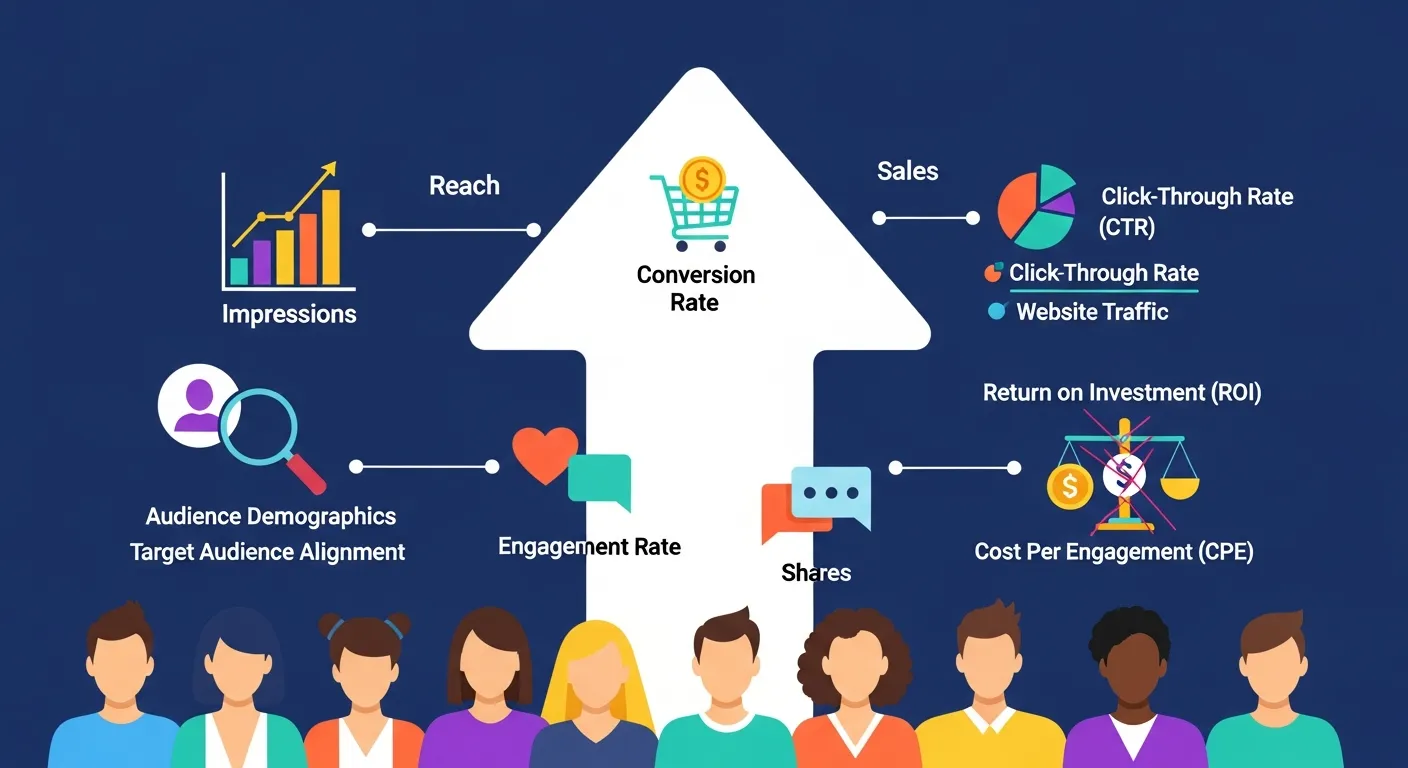
To truly gauge influencer campaign success, you must look at a variety of performance indicators. Social media marketing thrives on data, and understanding these numbers helps you avoid a potential social media crisis caused by poor investment choices.
Reach and Impressions
Reach measures how many unique people saw your influencer content. Impressions count the total number of times your content was displayed on a screen. These metrics help you understand the potential audience size for your campaign messaging.
Beyond Surface Numbers
However, reach and impressions alone do not guarantee influencer campaign success. A campaign with massive reach but zero engagement looks impressive on paper but delivers very little actual business value. Use these metrics to understand visibility while focusing on more meaningful performance indicators deeper down the funnel.
Calculating Cost Effectiveness
Compare your campaign reach to your total target audience size to determine your market penetration. If your target market includes 2 million people and your campaign reached 400,000, you achieved a 20% market penetration rate. Track reach efficiency by calculating your cost per impression (CPM) and cost per reach.
Engagement Metrics
Engagement metrics measure how actively audiences interact with your influencer content. Key engagement indicators include likes, comments, shares, saves, and click-through rates. These metrics provide deep insights into content resonance and audience interest.
Actionable Engagement Analysis
Calculate engagement rates by dividing total engagements by impressions or reach. Industry benchmarks vary significantly across platforms, so establish your own baseline by tracking engagement rates across multiple campaigns.
Evaluating Engagement Quality
Pay close attention to engagement quality, not just the raw quantity. Comments that ask specific questions about your product carry much more value than generic emoji responses. Shares and saves often indicate stronger interest than likes, as they require more effort from the user.
Example Engagement
|
Platform |
Avg. Engagement Rate |
Engagement Value Notes |
|---|---|---|
|
|
1-3% |
High value for comments, shares > likes |
|
TikTok |
4-9% |
Focus on shares and saves for strong content |
|
Twitter/X |
0.5-1.5% |
Retweets are powerful indicators |
|
YouTube |
1.5-2.5% |
Comments signal deep engagement |
Conversion Tracking
The conversion funnel measures how many people take your desired action after seeing the content. Conversions may include website visits, email sign-ups, app downloads, or direct purchases. High conversion rates strongly indicate influencer campaign success.
Funnel Stage Monitoring
Use analytics to track micro-conversions (like click-throughs, quiz completions, or email signups) in addition to main conversion events. This gives a clearer picture of where users are dropping off and where influencer content is most effective.
Use unique tracking codes, custom URLs, or promotional codes to attribute direct conversions to specific influencers. This approach gives obvious attribution and helps you identify your most effective partnerships. Make sure the tracking codes are easy to remember to reduce friction.
Brand Sentiment and Awareness
Brand sentiment measures how people feel about your brand after exposure to the content. While sentiment can be challenging to quantify, it provides valuable insights into campaign impact beyond immediate conversions.
Social Listening Tools
Monitor comments, mentions, and user-generated content for positive, negative, and neutral brand references. Use social listening tools to track brand mentions across platforms and identify sentiment trends. If sentiment turns negative, swift measurement helps you pivot and avoid a full-blown social media crisis.
Example Sentiment Analysis
|
Source |
Positive |
Neutral |
Negative |
Key Takeaway |
|---|---|---|---|---|
|
Instagram Posts |
74% |
20% |
6% |
Most viewers resonate with brand story |
|
YouTube Comments |
68% |
25% |
7% |
Product tutorials drive positivity |
|
Twitter Mentions |
55% |
30% |
15% |
Negative spikes tied to delayed reply |
Metric Tracking Summary
|
Metric Category |
Key Indicators |
Business Value |
|---|---|---|
|
Visibility |
Reach, Impressions, Views |
Brand awareness and market penetration |
|
Engagement |
Likes, Comments, Shares, Saves |
Content resonance and audience interest |
|
Conversion |
Clicks, Sign-ups, Purchases |
Direct ROI and sales generation |
|
Sentiment |
Brand Mentions, Positive Feedback |
Long-term brand perception and loyalty |
Tools and Platforms for Measurement

Achieving influencer campaign success requires the right technology stack. You cannot track performance manually at scale.
Native Platform Analytics
Each platform provides built-in analytics tools that offer valuable insights. Instagram Insights, YouTube Analytics, and TikTok Analytics provide direct data on reach, impressions, engagement, and audience demographics.
These native tools are free and provide platform-specific metrics. However, they do not offer cross-platform comparisons or advanced attribution tracking. Access to native analytics often requires business or creator accounts, so ensure your partners can provide this data seamlessly.
Third-Party Analytics Tools
Comprehensive measurement often requires third-party tools that aggregate data across platforms. These specialized tools offer cross-platform tracking, detailed reporting, and competitor analysis. They also offer better data visualization capabilities for presenting results to stakeholders.
Vendor Comparison
|
Tool Name |
Platform Support |
Key Features |
Pricing Model |
|---|---|---|---|
|
Hootsuite |
Instagram, Facebook, Twitter, LinkedIn |
Scheduling, analytics, reporting |
Subscription |
|
Sprout Social |
Instagram, Facebook, Twitter, LinkedIn |
Social listening, engagement, analytics |
Subscription |
|
CreatorIQ |
Instagram, TikTok, YouTube |
Influencer database, campaign management |
Enterprise |
|
Upfluence |
Multi-platform |
Influencer discovery, reporting |
Tiered pricing |
For a deeper dive into platform selection and overall strategy, check out this Ultimate Guide to Influencer Marketing to refine your approach.
UTM Parameters and Link Tracking
UTM parameters are tags added to URLs that help you track the source, medium, and campaign name for website traffic. They are absolutely essential for attributing website visits and conversions to specific creators.
Create unique UTM parameters for each partner and content piece. Use consistent naming conventions to ensure accurate tracking. Use link-shortening services like Bitly to create branded, trackable links that look professional and encourage clicks.
Tips for Effective Link Tracking
- Always use descriptive UTM values for source, medium, campaign, and content
- Shorten URLs for easy sharing
- Validate your links before going live
Advanced Measurement Strategies
As your influencer marketing program matures, your measurement techniques must evolve to accurately capture influencer campaign success.
Multi-Touch Attribution
Multi-touch attribution recognizes that customers often interact with multiple touchpoints before converting. This approach provides a much more accurate picture of how content contributes to conversions alongside other marketing channels.
Implement tracking that follows users across multiple interactions with your brand. This might include initial content exposure, website visits, email interactions, and final purchases. Understanding the complete customer journey helps you properly value these contributions.
Attribution Models
- First Touch: Credits the first influencer interaction in the journey
- Last Touch: Credits the very last interaction before conversion
- Linear: Distributes equal value across every touchpoint
- Time Decay: Weighs recent touchpoints more heavily
For insights into how these advanced strategies shift public relations paradigms, read about The Power of Influencer Marketing and its broader industry impact.
Incrementality Testing
Incrementality testing measures the additional impact of campaigns beyond what would occur naturally. This approach helps you understand true effectiveness rather than just correlated results.
Conduct hold-out tests where you exclude certain geographic regions from your campaign. Compare results between test and control groups to measure the incremental impact. Use brand lift studies to measure changes in brand awareness, consideration, and purchase intent.
Incrementality Tips
- Always define a control group not exposed to influencer content
- Measure both direct conversions and aided brand recall
- Consider seasonal factors that might affect your results
Cohort Analysis
Cohort analysis groups customers based on shared behaviors, such as when they first interacted with your content. Track customer lifetime value (CLV) for customers acquired through these campaigns compared to other channels. Influencer-acquired customers might have entirely different purchasing patterns or referral behaviors that affect their total value to your business.
Example Cohort Analysis
|
Cohort Month |
Size |
30-day Retention |
CLV |
Churn Rate |
|---|---|---|---|---|
|
Jan 2024 |
2,000 |
40% |
$145 |
18% |
|
Feb 2024 |
2,150 |
37% |
$130 |
21% |
|
Mar 2024 |
2,300 |
42% |
$155 |
15% |
Creating Comprehensive Reports
Data only matters if you can communicate it effectively. Reporting is a critical component of influencer campaign success.
Key Performance Indicators (KPIs)
Select KPIs that directly relate to your campaign objectives and provide actionable insights. Avoid overwhelming stakeholders with too many metrics. Focus strictly on the handful of numbers that best indicate success and areas for improvement.
Create KPI dashboards that provide real-time visibility into campaign performance. Establish KPI thresholds that trigger specific actions to ensure you stay on track.
Common KPI Examples
- Engagement rate per platform
- Conversion rate for tracked URLs
- Cost per acquisition from influencer channels
- Growth in brand sentiment score post-campaign
Storytelling with Data
Transform raw metrics into compelling narratives that explain campaign impact and business value. Provide context for your metrics by comparing them to benchmarks, previous campaigns, or industry standards.
Include qualitative insights alongside quantitative data. Screenshots of positive comments, examples of user-generated content, or testimonials from customers help illustrate the human impact of your campaigns beyond numerical metrics.
Sample Data Story
“In February, our collaboration with health-and-wellness influencers resulted in a 40% month-over-month jump in website traffic. Notably, follower sentiment on product reviews shifted 10% more positive, and UTM-linked conversions exceeded our projected benchmarks by 23%. These trends, paired with customer photo submissions, paint a clear story of growing influence and trust in our target community.”
ROI Calculation
Calculate return on investment by comparing campaign costs to generated revenue or other business value. Include all costs such as partner fees, product samples, agency fees, and internal time investment.
For campaigns focused on awareness, assign monetary values to achieved outcomes. This might include cost savings from reduced advertising needs or the estimated value of earned media coverage. Present ROI calculations with confidence intervals to acknowledge measurement limitations while providing useful guidance.
ROI Calculation Formula
ROI = [(Revenue from Campaign – Total Cost of Campaign) / Total Cost of Campaign] x 100%
Optimizing Future Campaigns
True influencer campaign success is an iterative process. You must learn from every campaign to improve the next one.
Performance Analysis
Analyze campaign data to identify patterns and success factors that can inform future strategies. Look for strict correlations between creator characteristics, content types, posting times, and performance outcomes.
Compare performance across different partners to understand what qualities drive success. Identify top-performing content formats and themes that resonate deeply with your audience.
Brainstorming Questions for Analysis
- Which influencers consistently exceed KPIs?
- What posting times generate the most engagement?
- Are video, static images, or stories more impactful in your niche?
Budget Allocation
Use performance data to optimize budget allocation across partners, platforms, and content types. Invest more heavily in approaches that deliver strong results while quickly reducing spend on underperforming strategies.
Consider the relationship between costs and performance when making budget decisions. Higher-cost creators might deliver better results per dollar spent, while micro-creators might provide better overall efficiency for niche objectives.
Budget Allocation
|
Influencer Tier |
Avg. Cost per Post |
Avg. Engagement Rate |
Conversion Efficiency |
|---|---|---|---|
|
Mega |
$15,000 |
2.1% |
$120 per purchase |
|
Macro |
$6,000 |
3.4% |
$68 per purchase |
|
Micro |
$1,500 |
5.6% |
$44 per purchase |
|
Nano |
$350 |
7.2% |
$32 per purchase |
Continuous Improvement
Establish regular review cycles to assess campaign performance and identify improvement opportunities. Create tight feedback loops with your partners to understand their perspectives on audience response. Test new measurement approaches regularly to ensure you capture the most relevant and accurate data possible.
Examples of Continuous Improvement
- Monthly retrospectives with influencer partners
- Quarterly updates to KPI dashboards based on new learnings
- Regular A/B testing of content formats and offers
FAQ About Influencer Campaign Success
What defines influencer campaign success?
Influencer campaign success is defined by how well the campaign meets its predetermined primary objectives. Whether the goal is brand awareness, engagement, or direct sales, success means hitting those specific, measurable targets efficiently. Consistent tracking ensures you understand exactly what works.
How do I choose the right metrics for my campaign?
You choose the right metrics by aligning them directly with your primary business goals. If your goal is brand awareness, focus heavily on reach and impressions. If your goal is sales, prioritize conversion rates, click-through rates, and total return on investment.
Why are engagement rates more important than follower counts?
Follower counts only show potential reach, while engagement rates show actual audience interest and interaction. A smaller, highly engaged audience provides much better business value than a massive audience that completely ignores the content. High engagement indicates strong content resonance.
How can I effectively communicate with content creators?
Effective communication requires clear expectations, professional respect, and ongoing dialogue. Treat them as true partners rather than simply transactional vendors. For actionable tips on this process, learn How to Build Relationships with Influencers to improve your outreach.
What is a good engagement rate for a campaign?
A good engagement rate generally falls between 1% and 3%, depending on the platform and industry. Rates above 3% typically indicate very strong content performance and high audience loyalty. Always benchmark against your own historical campaign data for the most accurate assessment.
How do we plan a cohesive content strategy with creators?
Planning requires aligning your brand guidelines with the creator’s unique voice and style. You must co-create a content calendar and agree on key messaging points beforehand. To streamline this workflow, explore proven Influencer Collaboration Strategies that drive mutual success.
How do UTM parameters help track success?
UTM parameters are simple tags added to your URLs that identify exactly where website traffic originates. They allow your analytics platform to attribute specific clicks, sessions, and purchases directly to an individual creator. This removes the guesswork from your conversion tracking.
Should we focus more on traditional PR or digital creators?
Both avenues offer distinct advantages depending on your target audience and specific campaign goals. Traditional PR builds broad institutional credibility, while creators drive highly targeted, niche community engagement. To understand the best balance, compare the nuances in PR vs Influencer Marketing to guide your strategy.
What is multi-touch attribution?
Multi-touch attribution is an analytics model that assigns credit to multiple touchpoints in a customer’s journey before they make a purchase. Instead of only crediting the final click, it recognizes the initial content exposure and subsequent interactions. This provides a much fairer assessment of a creator’s impact.
How often should we report on campaign performance?
You should monitor key performance indicators in real-time using live dashboards to catch early trends. However, comprehensive reporting should occur at the end of specific campaign phases, typically monthly or at the conclusion of a major push. Regular reporting allows for swift budget and strategy optimization.


I’m a passionate digital strategist and content creator focused on crisis communication, social media management, and online reputation. At SMCrisis, I share insights, tips, and real-world strategies to help brands navigate challenges, protect their image, and build trust in the digital space. My goal is to make crisis management simple, smart, and actionable for every business.
















No Comments