


This guide explains when to apologize or stay silent during a social media crisis, helping brands assess severity, respond strategically, and protect reputation through clear communication, emotional intelligence, and appropriate crisis management decisions.
Social platforms move at lightning speed. A poorly timed tweet, an insensitive post, or a misunderstood marketing campaign can spiral into a fully developed social media crisis within hours. When your brand faces extreme online backlash, the pressure to respond quickly becomes overwhelming.
Many business leaders wonder if they should apologize immediately. They also worry that a rushed apology might make the situation worse. Deciding when to apologize for social media crisis events requires careful thought, strategic planning, and emotional intelligence.
Not all online controversy requires a formal apology. Some situations call for simple clarification. Others require strategic silence. A few demand a complete strategy overhaul and a deeply sincere public statement.
This comprehensive guide will help you navigate these turbulent digital waters. You will learn how to assess severity, decide when an apology is truly necessary, and craft a message that repairs your reputation instead of fueling the fire.
Understanding Social Media Crisis Severity
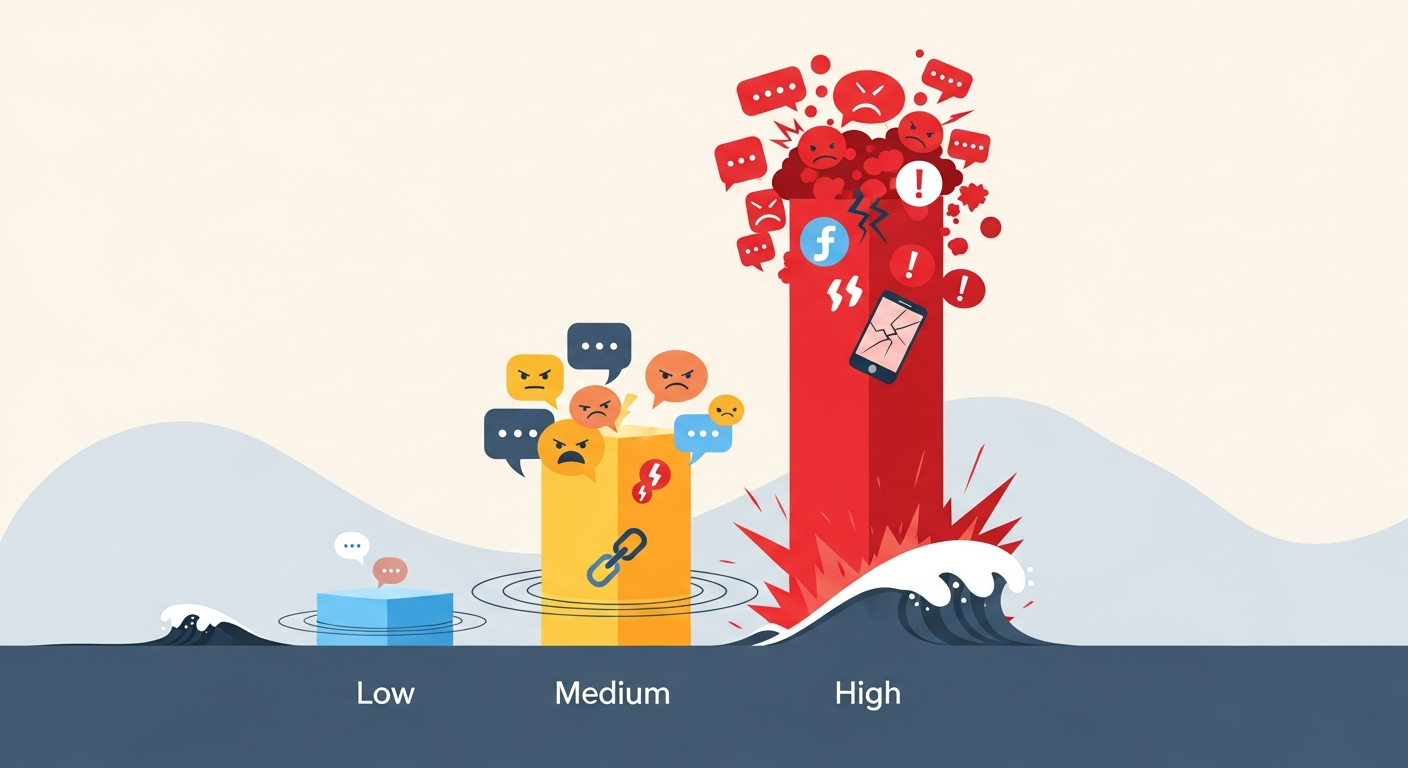
Before you jump into damage control mode, you must assess the situation objectively. Every social media crisis carries a different weight. Your response strategy must perfectly match the severity of the specific issue at hand.
If you apologize for social media crisis events that are actually minor hiccups, you might look weak or overly defensive. If you ignore a massive violation, you risk destroying your brand completely.
Minor Missteps vs. Major Violations
Minor problems happen to the best brands. These might include a harmless typo that creates unexpected humor, a broken promotional link, or a misunderstood joke. These conditions often resolve themselves within 24 to 48 hours.
For minor issues, you usually only require a brief explanation or a lighthearted acknowledgment. You do not need to launch a massive campaign to apologize for social media crisis events of this size.
Large violations present a completely different challenge. These include documented discrimination, employee harassment, the active spread of misinformation, or actions that physically or emotionally harm communities. These severe conditions require immediate executive attention.
When facing major violations, you must prepare to apologize for the social media crisis impacts comprehensively. You also need solid, transparent action plans to fix the root cause.
Real-World Example – Minor vs. Major
Imagine your brand posts a product photo with a harmless typo—users might share jokes or poke fun, but the situation blows over with a quick, witty response. Compare this to a case like a fashion brand releasing an ad campaign with racist undertones—a scenario that sparks outrage across platforms, draws media scrutiny, and requires the brand to apologize for social media crisis impacts in a direct and far-reaching way.
Assessing Real Impact vs. Online Noise
Digital platforms naturally amplify outrage, but not all loud criticism represents your actual target audience. You must look beyond the immediate angry comments. You need to understand the true extent of the problem before you apologize for social media crisis situations.
Ask your crisis team these vital questions:
- Have our established, loyal customers expressed genuine disappointment?
- Has the online dispute reached traditional media outlets or news networks?
- Are our internal employees or corporate partners expressing serious concern?
You must actively monitor specific metrics. Track your engagement rates, follower calculations, and overall brand mentions. A few angry tweets do not constitute a true social media crisis. However, a sustained pattern of negative feedback across multiple platforms indicates the absolute need for serious intervention.
Assessing Crisis Severity
|
Indicator |
Minor Misstep |
Major Social Media Crisis |
|---|---|---|
|
Origin |
Small typo, broken link, mild joke |
Offensive content, data breach, harassment |
|
Spread Rate |
Slow, contained to one platform |
Fast, viral, cross-platform |
|
Media Attention |
None |
High traditional media coverage |
|
Action Needed |
Brief clarification |
Full strategy to apologize for social media crisis |
When NOT to Apologize for Social Media Crisis
Counter-intuitively, apologizing is not always the right strategic move. Premature or completely unnecessary apologies can actually harm your brand’s overall credibility. Sometimes, trying to apologize for social media crisis events creates severe problems where none originally existed.
Standing Firm on Core Values
If your brand actively takes a strong stance on important social issues, you must expect some public pushback. Companies that openly support environmental causes, social justice initiatives, or specific political positions will always face criticism from those who disagree.
Apologizing for your core values sends incredibly mixed messages to your loyal audience. It can instantly alienate your biggest supporters who expect absolute consistency. If you believe in your message, stand your ground. Do not apologize for social media crisis noise generated by people who simply oppose your mission.
Example – Standing by Core Values
Consider a sportswear brand that chooses to support a social justice campaign. Some online users criticize the move. Standing by the campaign—instead of apologizing—can strengthen loyalty among core customers, showing that you’re not swayed by temporary backlash.
Responding to Bad Faith Criticism
Some online criticism comes directly from individuals or organized groups looking to create intentional controversy. They do not want to engage in a genuine, productive dialogue. These bad-faith actors often misrepresent your published content or take your statements completely out of context.
If you apologize for social media crisis events manufactured by these groups, you legitimize their toxic tactics. This validation only encourages further attacks against your brand.
Practical Tip
Before reacting, analyze the profiles and intentions behind the loudest critics. If it’s clear that their intent is to provoke or goad your brand, a measured, fact-based clarification—rather than an apology—is the safest path.
When Simple Clarification Suffices
Sometimes the core issue is not what you actually said, but how the audience interpreted it. If users misunderstood your message due to unclear wording, a simple clarification works much better than a deep apology.
This approach acknowledges the public confusion without admitting fault for a malicious act. You simply state your true intent clearly. This form of communication often diffuses tension, especially in cases of honest mistakes.
Learn more about making things right:
How to make an effective post-crisis apology
When an Apology is Absolutely Necessary
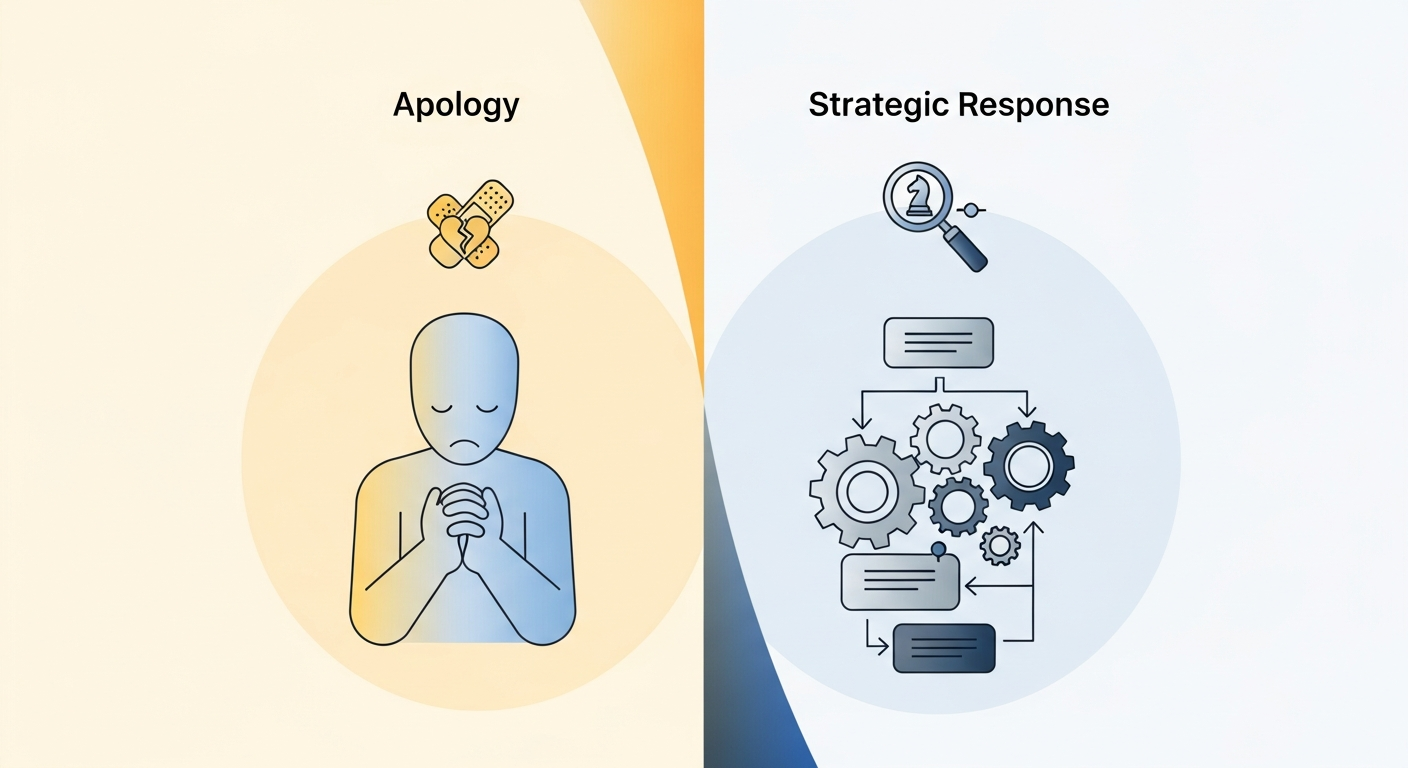
Certain situations demand a highly sincere apology, regardless of your original intent. Recognizing these critical moments quickly can prevent minor issues from becoming a disastrous social media crisis.
When you know you are wrong, you must apologize for social media crisis events immediately to stop the bleeding.
Factual Errors and Misinformation
If your brand shares incorrect information, you must apologize immediately. This applies to wrong industry statistics, false claims about your direct competitors, or the spread of debunked theories.
Misinformation rapidly erodes consumer trust. Your audience needs to know they can rely on you for highly accurate information. If you lie or mislead, you must apologize for social media crisis fallout right away.
Case in Point – Factual Correction
Suppose a technology company claims its device has a feature it doesn’t actually possess. Customers purchase it based on this claim, then complain post-launch. A swift, complete apology for social media crisis confusion—offering refunds or exchanges—often prevents protracted damage.
Offensive or Insensitive Content
Content that marginalizes, stereotypes, or deeply offends specific demographic groups requires an immediate, unreserved apology. This includes any posts deemed racist, sexist, homophobic, or otherwise discriminatory.
Cultural insensitivity, even when completely unintentional, causes real human harm. It alienates significant portions of your loyal audience. You cannot clarify your way out of offensive content. You must apologize for social media crisis damage and remove the content.
Promises You Cannot Keep
If you make strong commitments to customers and fail to fulfill them, you must own the failure. This includes missing product delivery dates, removing advertised features, or dropping service levels.
Broken promises damage consumer trust heavily. Acknowledging your failure directly shows deep respect for your customers’ valuable time and money.
Employee or Partner Misconduct
When internal team members or sponsored partners act inappropriately while representing your brand, you hold the ultimate responsibility. This might involve an executive making inappropriate comments online or a partner displaying behavior that conflicts with your stated corporate values.
You must address these actions publicly. You must apologize for social media crisis events caused by the people you hire or sponsor.
Crafting an Effective Apology for Social Media Crisis

An effective response requires extremely careful consideration of tone, content, and timing. Generic, copied templates simply will not work. Your response needs to address the specific, unique situation while demonstrating genuine corporate understanding.
When you apologize for social media crisis events, your words carry massive legal and emotional weight.
The Anatomy of a Strong Apology
1. Clear Acknowledgment: Start with a direct statement of what went wrong. Don’t hide behind generalities; be specific and transparent.
2. Full Responsibility: Accept the role your organization played, without shuffling blame onto individuals, circumstances, or external factors.
3. Genuine Remorse: Express sincere regret, focusing on those impacted, not on the brand’s feelings or potential losses.
4. Corrective Action: Outline what you’re doing to make it right—internally and externally—with timelines and measurable outcomes.
Example Apology Structure
- “We acknowledge that our post included hurtful language that did not meet our standards and caused offense.”
- “We take full responsibility for this mistake and have taken immediate steps to remove the post and review our editorial process.”
- “We are deeply sorry for the impact this has had on our followers and affected communities.”
- “Our team will undergo sensitivity training this month, and we will publicly share updates on these changes.”
What to Avoid in Your Apology
Do not include any justification when you apologize for social media crisis events. Sentences starting with “We tried to…” or “We had thought that…” shift the focus away from the actual loss. Save your detailed explanation of communication breakdowns for a later date, if necessary.
Avoid conditional language entirely. Phrases such as “If we made anyone angry” or “We are sorry you feel like that” are highly toxic. These sentences show the public that you do not truly believe you did anything wrong. They prove you have not taken real responsibility.
Do not mention the brand’s reputation or your financial concerns in the apology. Comments like “This does not represent our values” often sound self-serving rather than truly repentant.
Find more details on structuring your response:
Social media apologies and crisis management
Timing and Platform Considerations
Speed matters immensely in social media crisis management. However, rushing blindly can lead to poorly crafted, inaccurate responses that multiply the damage.
Take just enough time to understand the factual situation fully. Craft a highly thoughtful response based on verified data. Just do not wait so long that your corporate silence becomes the main news story.
Post your apology directly on the exact same platform where the specific issue occurred. Consider cross-posting the message to your other primary channels if the situation warrants broader, national attention.
Always match your tone to the specific platform. A formal, structured statement might work perfectly on LinkedIn. A more conversational, direct-to-camera video approach usually suits Twitter or Instagram better. When you apologize for social media crisis situations, the medium is just as important as the message.
Platform Example
|
Platform |
Best Tone & Approach |
Character Limit / Format |
|---|---|---|
|
|
Concise, threaded, direct, use a pinned tweet |
280 characters per tweet |
|
|
Visual + lengthy captions, Stories for follow-up |
Visual, up to 2,200 characters |
|
|
Detailed post, friendly but professional language |
No practical character limit |
|
|
Formal, leadership voice, clear corrective steps |
Professional, longer format |
Following Up: Actions Speak Louder Than Words
An apology without concrete follow-through is completely meaningless. Your audience will judge your character based on exactly what you do after the crisis ends. They do not just care about what you say during the intense heat of the moment.
If you apologize for social media crisis events but change nothing, you will lose your audience forever.
Implementing Concrete Changes
Identify highly specific steps you will take to prevent these similar issues in the future. This might involve updating your entire content review process. You might need to provide additional diversity training to your marketing team. Sometimes, you must change fundamental company policies.
Share these systemic changes publicly when appropriate. This clearly demonstrates your long-term commitment to actual improvement.
Making Things Right
If your specific actions caused tangible, measurable harm, figure out how you can make amends directly. This might involve making large financial donations to relevant community causes. You might provide free replacement services to affected customers.
Sometimes, making things right means partnering long-term with organizations that align with the core values you originally failed to uphold.
Consistent Follow-Through
Crisis management absolutely does not end when the immediate online controversy finally dies down. You must monitor your brand’s reputation over a long period. Ensure your daily corporate actions perfectly align with your original apology.
Inconsistent behavior shortly after a crisis can easily reignite massive criticism. This will damage your credibility even further.
Learning from a Crisis Case Study
Every single crisis offers incredibly valuable lessons. These lessons help you improve your overall social media and crisis management strategies. You must document exactly what happened. Record how you responded and summarize what you learned from the painful experience.
Reviewing a crisis case study from your own brand history makes your team infinitely stronger.
Building Better Processes
Use your past crisis experiences to strengthen your daily content approval process. Improve your ongoing team training and update your formal crisis response protocols.
Create strict editorial guidelines that help your junior team identify potentially problematic content long before it ever goes live on the internet.
Maintaining Authentic Communication
Your goal is not to avoid all online controversy. Your goal is to communicate authentically while remaining highly mindful of your direct impact on others. Brands that desperately try to please every single person often end up saying absolutely nothing meaningful at all.
Moving Forward With Confidence
A social media crisis can feel incredibly heavy and stressful. However, these events are also rare opportunities to show the true character and values of your brand. When you handle these tough conditions with a real commitment to grace, honesty, and improvement, you actually strengthen your relationship with your audience.
The key involves knowing exactly when to apologize for social media crisis events and when to stand firmly fixed. You must prepare reactions that address real consumer problems instead of chasing empty online noise.
Your audience does not expect your brand to achieve robotic perfection. They simply expect deep honesty, real responsibility, and a genuine effort to improve after a failure. Focus heavily on consistent, authentic communication that reflects your real values. You will be perfectly prepared to navigate whatever challenges come your way.
Expanding on Crisis Case Studies and Best Practices
A Historical Example: The Social Media Apology That Worked
One notable crisis case study is the swift response Coca-Cola made during the “Share a Coke” campaign controversy. When a limited-edition set of cans mistakenly omitted key names and caused social media backlash, Coca-Cola did not panic. Instead, their team opted for a public, heartfelt apology, followed by targeted make-goods for those feeling left out. Their transparency, clarity, and action transformed the social media crisis into a lesson for future crisis case study textbooks.
Another Example: When Silence Was Golden
Conversely, Buick faced negative comments online regarding a color option elimination. Instead of issuing a public apology, they posted a factual explanation clarifying the decision based on supply chain trends without admitting wrongdoing. The measured response proved that not every social media crisis requires an apology—sometimes silence, paired with facts, restores order. This crisis case study highlights the importance of measured, situation-appropriate actions.
Tools and Resources for Social Media Crisis Management
To consistently know when to apologize for social media crisis events, investing in the right tools and frameworks is critical.
- Social Listening Platforms: Tools like Brandwatch, Sprout Social, and Hootsuite let you track sentiment, monitor keywords, and see viral posts in real time.
- Crisis Protocol Templates: Pre-drafted apology and clarification templates empower your team to act swiftly, ensuring no time is lost debating language while the crisis swells.
- Regular Scenario Drills: Monthly or quarterly crisis scenario simulations keep your staff ready and ensure that “muscle memory” kicks in when a genuine social media crisis arises.
Document every step—even the missteps. Over time, these records form the backbone of your evolving crisis case study database. Use these references not just for post-mortems but as training tools to educate new team members and reinforce best practices for when you must apologize for social media crisis incidents.
Frequently Asked Questions (FAQ)
1. When should a brand immediately apologize for social media crisis events?
A brand must apologize immediately when it shares blatant misinformation, posts highly offensive material, or causes measurable harm to a specific community. Fast accountability stops the outrage cycle and shows respect for the affected audience.
2. How do we know if our accounts were compromised during a crisis?
If highly uncharacteristic, offensive posts suddenly appear on your feeds, malicious actors might have control. Reviewing a guide on a social media security breach helps your IT team lock down access quickly to prevent further reputational damage.
3. Should we delete the offensive post before or after we apologize?
You should usually delete the highly offensive post immediately to stop it from spreading further. However, you must explicitly mention that you deleted it in your official apology statement to maintain total transparency.
4. How can we train our marketing team to avoid these crises?
Prevention requires aligning your entire team under strict editorial guidelines and approval workflows. Following social media crisis management best practices ensures your staff knows the exact boundaries of appropriate, safe online communication.
5. Why is the phrase “I apologize if anyone was offended” bad?
This phrase is a classic non-apology that shifts the blame entirely onto the audience’s emotional reaction. It tells the public that you do not actually believe your original action was wrong, which always makes the backlash much worse.
6. What are the most frequent triggers for online brand backlash?
Most backlash stems from culturally tone-deaf marketing campaigns, broken customer service promises, or rogue employee behavior. Understanding the common causes of social media crisis events helps your brand identify blind spots before you hit publish.
7. Can reviewing a past crisis case study actually help us?
Absolutely. Analyzing a detailed crisis case study shows your team exactly how the public reacts to specific damage control tactics. Learning from other brands’ costly mistakes allows you to navigate your own emergencies much more effectively.
8. Should the CEO deliver the apology or the social media manager?
For severe crises that impact the brand’s core reputation or stock price, the CEO must deliver the apology to show ultimate accountability. For minor service outages or small typos, a PR spokesperson or social media manager is perfectly sufficient.
9. How long does a typical social media crisis last?
The acute, highly viral phase of a crisis usually peaks within 48 to 72 hours if handled correctly. However, if the brand responds defensively or ignores the issue entirely, the intense public backlash can drag on for several weeks.
10. When is it appropriate to remain silent instead of apologizing?
You should remain silent or simply stand your ground when the criticism comes from bad-faith internet trolls looking for a reaction. You also should not apologize when people attack your brand simply for upholding its stated, core moral values.


I’m a passionate digital strategist and content creator focused on crisis communication, social media management, and online reputation. At SMCrisis, I share insights, tips, and real-world strategies to help brands navigate challenges, protect their image, and build trust in the digital space. My goal is to make crisis management simple, smart, and actionable for every business.









No Comments