


A strong social media crisis statement helps brands respond quickly, show accountability, and rebuild trust. With clear messaging, empathy, and platform-specific strategies, businesses can control narratives and recover effectively from damaging online crises.
When disaster strikes your brand online, the clock immediately starts ticking. Every single minute that passes without a response can amplify negative sentiment, alienate your audience, and damage your hard-earned reputation. A well-crafted Social Media Crisis Statement is often the only difference between a rapid recovery and long-term, irreversible brand damage.
Crises escalate within hours. A localized issue can reach thousands or even millions of people before your team has a chance to draft a formal response. The absolute key to effective management lies in intense preparation, swift action, and exceptionally clear communication. This comprehensive guide will walk you through the essential steps to create a Social Media Crisis Statement that protects your brand, addresses the core crisis causes, and helps restore trust with your audience.
Understanding the Social Media Crisis Statement and Its Urgency
A Social Media Crisis Statement serves as your brand’s official, public-facing response to a negative situation that has gained massive traction online. Unlike traditional public relations press releases, a Social Media Crisis Statement must be concise, immediate, and heavily tailored to the specific digital platform where the marketing crisis originated.
You cannot treat a marketing crisis like a standard bad review. A true SM crisis threatens the foundation of your business. Therefore, your Social Media Crisis Statement requires a vastly different approach than a formal corporate memo. It needs to feel deeply authentic and highly human while maintaining strict professionalism.
The Importance of Crisis Readiness
Preparedness is essential in the digital age because crises erupt fast and unpredictably. Set up rapid-response protocols for monitoring online sentiment and flagging sudden surges of negative attention. Designate key team members for rapid reaction, and run simulations or table-top exercises regularly. This ongoing training ensures that crafting a Social Media Crisis Statement in the heat of an event feels less intimidating and more like a rehearsed drill. Your tone should be ready-made: empathetic, direct, and transparent.
Identifying the Primary Crisis Causes
Before you can draft an effective Social Media Crisis Statement, you must accurately identify the exact nature of the emergency. Different crisis causes require entirely different response strategies. If you misunderstand the core issue, your Social Media Crisis Statement will miss the mark entirely.
- Product or Service Issues: These involve manufacturing defects, physical safety concerns, or massive digital service outages that directly affect your paying customers.
- Employee Misconduct: This occurs when inappropriate behavior by staff members—either offline or online—reflects poorly on the entire company.
- Miscommunication: These crisis causes involve poorly worded posts, unintentional cultural insensitivity, or innocent marketing messages taken completely out of context.
- External Associations: You might face a marketing crisis due to negative publicity stemming from your partnerships, suppliers, or third-party influencer relationships.
- Data Breaches: Severe security incidents that compromise sensitive customer information instantly trigger a massive SM crisis requiring immediate legal and public responses.
Understanding the exact trigger empowers your team to tailor each Social Media Crisis Statement to provide relevant answers and assurance. To ensure your team is organized enough to identify these crisis causes quickly, you must optimize your daily operations.
GPL tools boost WordPress workflow
The Anatomy of a Marketing Crisis
A marketing crisis moves through specific stages. It begins with the spark—the initial offensive post, the leaked video, or the broken product. Next comes the amplification phase, where users share the content, and algorithms push the negativity into viral territory. By the time it reaches mainstream awareness, you are in a full-blown SM crisis.
Your Social Media Crisis Statement must be deployed during the amplification phase to prevent the issue from reaching mainstream media. If you wait until journalists are calling your office, your Social Media Crisis Statement will hold significantly less power. You must act decisively to regain control of the narrative.
The Golden Hour of Crisis Communication
The period immediately following the public’s first awareness of your crisis is called “the golden hour.” Your reputation depends on what you do in those sixty minutes. Set up monitoring dashboards and notification triggers so you’re alerted to problems the instant they arise. Empower your team to make quick—but well-considered—decisions, so you can deliver an initial holding statement that reassures your audience and signals accountability.
Essential Elements and the Step-by-Step Writing Process
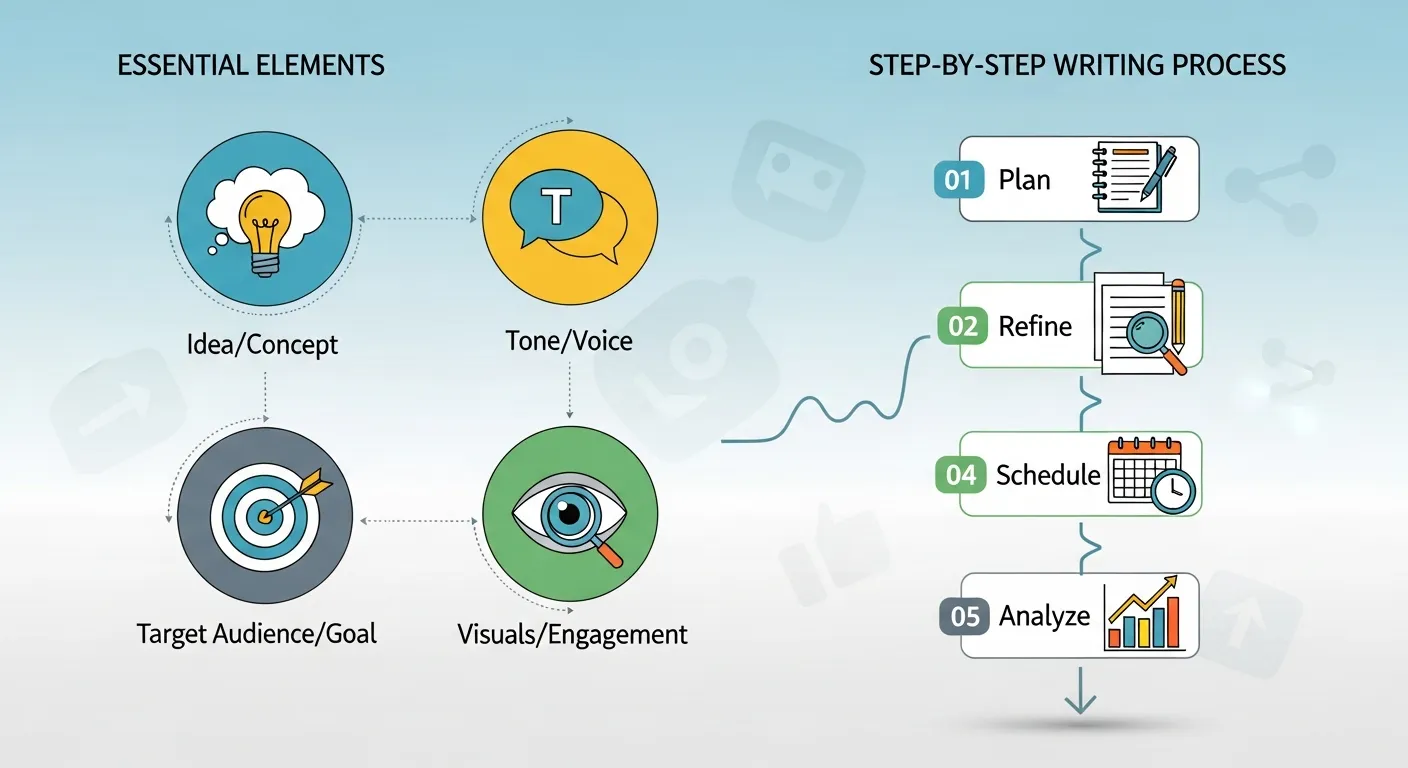
Creating a Social Media Crisis Statement under immense pressure is incredibly difficult. You need a structured approach to ensure your messaging hits all the necessary psychological and operational touchpoints. A successful Social Media Crisis Statement must acknowledge the pain, take accountability, and map out the exact road to recovery.
Core Components of a Social Media Crisis Statement
Speed matters immensely in crisis communication. You must acknowledge the situation within hours, not days. Even if you do not have all the details finalized, a brief initial Social Media Crisis Statement shows you are aware and taking the matter seriously.
- Take Direct Responsibility: If your organization is at fault, own up to it immediately in your Social Media Crisis Statement. Avoid making excuses. Active voice shows accountability and leadership.
- Express Genuine Empathy: Show that you truly understand how the situation affects your customers. A great Social Media Crisis Statement humanizes your brand.
- Outline Concrete Next Steps: Tell your audience exactly what you are doing to address the crisis causes. Vague promises will only escalate the SM crisis.
- Provide Direct Contact Channels: Make it incredibly easy for affected parties to reach your support team directly, moving the conversation away from public forums.
Clear, actionable steps in your Social Media Crisis Statement help move conversations from open criticism to collaborative solution-finding. To track how the public reacts to your Social Media Crisis Statement, you need robust data analytics in place.
Choose tracking tools for business success
Transparency is Non-negotiable
People demand honesty in times of turmoil. Don’t sugarcoat or try to minimize the issue in your Social Media Crisis Statement. Address the facts candidly, share what you know, and be clear about what you don’t know yet. This candor builds trust—even when you’re not yet able to offer a full fix.
Evaluating Statement Quality
Understanding what makes a Social Media Crisis Statement effective is easier when you compare good and bad examples.
|
Element |
Ineffective Social Media Crisis Statement |
Effective Social Media Crisis Statement |
|---|---|---|
|
Acknowledgment |
“We have heard some complaints recently.” |
“We are fully aware of the service outage affecting our premium users.” |
|
Accountability |
“Mistakes were made by our partners.” |
“We made a massive error in our recent marketing campaign.” |
|
Empathy |
“We are sorry if anyone was offended.” |
“We understand this deeply frustrated our community, and we sincerely apologize.” |
|
Action Plan |
“We will try to do better next time.” |
“We have suspended the campaign and are retraining our entire marketing team.” |
The Step-by-Step Drafting Process
First, gather all the facts. Before writing your Social Media Crisis Statement, collect every available detail about the SM crisis. Speak with relevant departments, review all documentation, and understand the full scope of the crisis causes.
Next, define your key messages. Determine exactly what happened, who was affected, what you are doing about it, and how you will prevent it from happening again. Choose the right tone for your Social Media Crisis Statement. A marketing crisis involving physical safety requires a much more serious tone than a temporary website glitch. Write multiple versions of your Social Media Crisis Statement tailored to different digital platforms. Finally, have multiple stakeholders review the document before hitting publish.
Example Statement Construction
Imagine a data breach involving customer information:
- Acknowledge Promptly: “We are aware of a recent security incident impacting customer data on our platform.”
- Express Empathy: “We recognize the trust you place in us and are deeply sorry for this breach.”
- Take Responsibility: “This is our responsibility, and we are committed to taking all necessary steps.”
- Outline Actions: “We are working with cybersecurity experts, have notified authorities, and will keep you updated.”
- Next Steps: “Affected customers will receive detailed instructions via email and can contact our dedicated hotline at [phone number].”
Platform-Specific Strategies and Post-Crisis Recovery
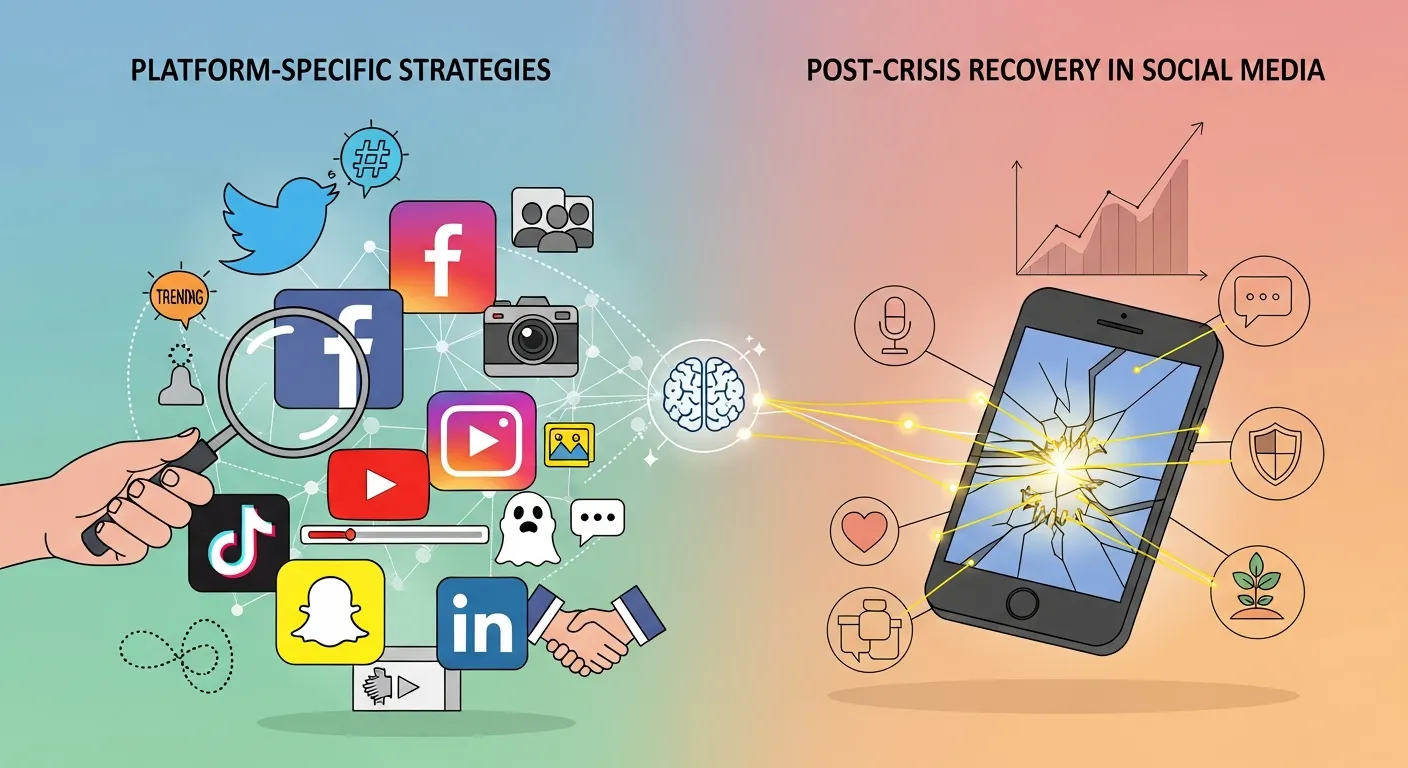
Your Social Media Crisis Statement cannot be a simple copy-and-paste job across every network. Different platforms demand different formats, tones, and lengths. Adapting your Social Media Crisis Statement to fit the medium ensures your message resonates properly with that specific audience.
Tailoring the Social Media Crisis Statement
- Twitter: Requires extreme brevity. Use threads for complex issues needing multiple points. Pin your main Social Media Crisis Statement for visibility.
- Facebook: Allows longer posts. Use for detailed Social Media Crisis Statements and supporting multimedia, such as video apologies.
- Instagram: Consider a text-based graphic post for visual authenticity. Use Stories for real-time updates and create a crisis highlight for ongoing reference.
- LinkedIn: Lean into professional, detailed explanations. A Social Media Crisis Statement here should address stakeholders, partners, and industry peers.
For B2B brands, a statement on LinkedIn can be key to maintaining confidence with partners and investors. For B2C brands, Facebook and Instagram are often more critical for real-time customer engagement.
To manage these platforms efficiently during a marketing crisis, you need the right software stack.
Marketing tools and software guide
Monitoring and Feedback Loops
A Social Media Crisis Statement is not “set it and forget it.” Assign staff to monitor replies, DMs, and commentary across all channels. Set up regular reporting intervals to leadership with screenshots, sentiment analysis, and community reactions. Use these real-time insights to iterate on your initial Social Media Crisis Statement or supplementary updates as needed.
Common Mistakes That Ruin a Social Media Crisis Statement
Delaying your response is the most common mistake. Silence during a marketing crisis is always interpreted as guilt. Using heavy legal jargon in your Social Media Crisis Statement makes your brand look cold, defensive, and corporate.
Never make promises in your Social Media Crisis Statement that you cannot realistically keep. Overpromising will only trigger a second SM crisis when you fail to deliver. Furthermore, never ignore or delete negative comments. Hiding criticism backfires completely. Instead, use your Social Media Crisis Statement as an anchor point to address those concerns professionally.
Misalignment Across Teams
One subtle but devastating error is inconsistent messaging between your marketing, PR, customer service, and executive teams. Use a single shared Social Media Crisis Statement resource—distributed internally—to keep everyone on-message. Strong cross-team communication ensures that every reply or escalation echoes your primary statement’s tone and intent.
Rebuilding Trust After the SM Crisis
After the immediate marketing crisis passes, you must follow up. Keep your audience informed about your progress in resolving the root crisis causes. Regular updates show an ongoing commitment to your initial Social Media Crisis Statement.
Share what you have learned and how you are implementing permanent changes. Be open about policy updates, process improvements, and any additional support for affected customers. Recovery takes significant time. Continue demonstrating your core values through consistent actions. By delivering a flawless Social Media Crisis Statement and following through on your promises, you can actually emerge from an SM crisis with a stronger, more loyal customer base.
Turning Apology into Opportunity
The truth is, a Social Media Crisis Statement can leave a positive legacy. Brands that model humility, integrity, and progress during difficult times often come away with more engaged and loyal followers than before the crisis. Make a point of spotlighting real improvements—both internally and externally—so that your statement isn’t just empty words, but a springboard for lasting change.
Frequently Asked Questions (FAQ)
What is a Social Media Crisis Statement?
A Social Media Crisis Statement is a brand’s official, immediate public response to a viral negative event. It is designed to acknowledge the issue, show accountability, and outline the steps being taken to resolve the emergency. It serves as your primary defense during a severe marketing crisis.
How quickly should we publish a Social Media Crisis Statement?
You should aim to publish your initial Social Media Crisis Statement within the first hour of noticing the SM crisis. Speed is critical to controlling the narrative before misinformation spreads. Even a brief holding statement is better than absolute silence.
What are the main crisis causes we should watch out for?
The most common crisis causes include offensive marketing campaigns, massive product failures, employee misconduct, and severe data breaches. Identifying these early helps you draft a highly specific and accurate Social Media Crisis Statement.
How do we handle public anger during an SM crisis?
You must respond with genuine empathy and absolute transparency rather than getting defensive. Ensure your Social Media Crisis Statement directly validates their frustration. For more strategies, learn about managing a social media crisis effectively.
Should we use the exact same Social Media Crisis Statement everywhere?
No, you must adapt your Social Media Crisis Statement to fit the format and audience expectations of each specific platform. Twitter requires short threads, while LinkedIn requires a more formal, corporate explanation of the marketing crisis.
What is the worst mistake to make in a Social Media Crisis Statement?
The worst mistake is using the phrase “we are sorry if you were offended,” as it deflects blame onto the audience. A proper Social Media Crisis Statement takes full accountability for the brand’s actions. Never make excuses during an SM crisis.
How does digital tracking help during a marketing crisis?
Digital tracking allows you to monitor exactly how the public is reacting to your Social Media Crisis Statement in real time. This data tells you if your apology is working or failing. Read this complete guide for digital media to understand tracking metrics.
Who needs to approve the Social Media Crisis Statement?
Your Social Media Crisis Statement should be rapidly reviewed by your legal team, PR director, and senior leadership. However, you must establish an emergency approval workflow so this review process does not delay the release during a marketing crisis.
How do PR and social teams coordinate the Social Media Crisis Statement?
The PR team typically drafts the core messaging to ensure legal and corporate safety. The social media team then adapts that exact messaging into a platform-friendly Social Media Crisis Statement. Discover more about what is media relations to align these efforts perfectly.
Can a brand survive a massive SM crisis?
Yes, brands can fully recover if they issue a sincere Social Media Crisis Statement and take immediate, concrete actions to fix the crisis causes. Consistent transparency and dedication to doing the right thing will eventually rebuild broken consumer trust.


I’m a passionate digital strategist and content creator focused on crisis communication, social media management, and online reputation. At SMCrisis, I share insights, tips, and real-world strategies to help brands navigate challenges, protect their image, and build trust in the digital space. My goal is to make crisis management simple, smart, and actionable for every business.









No Comments